
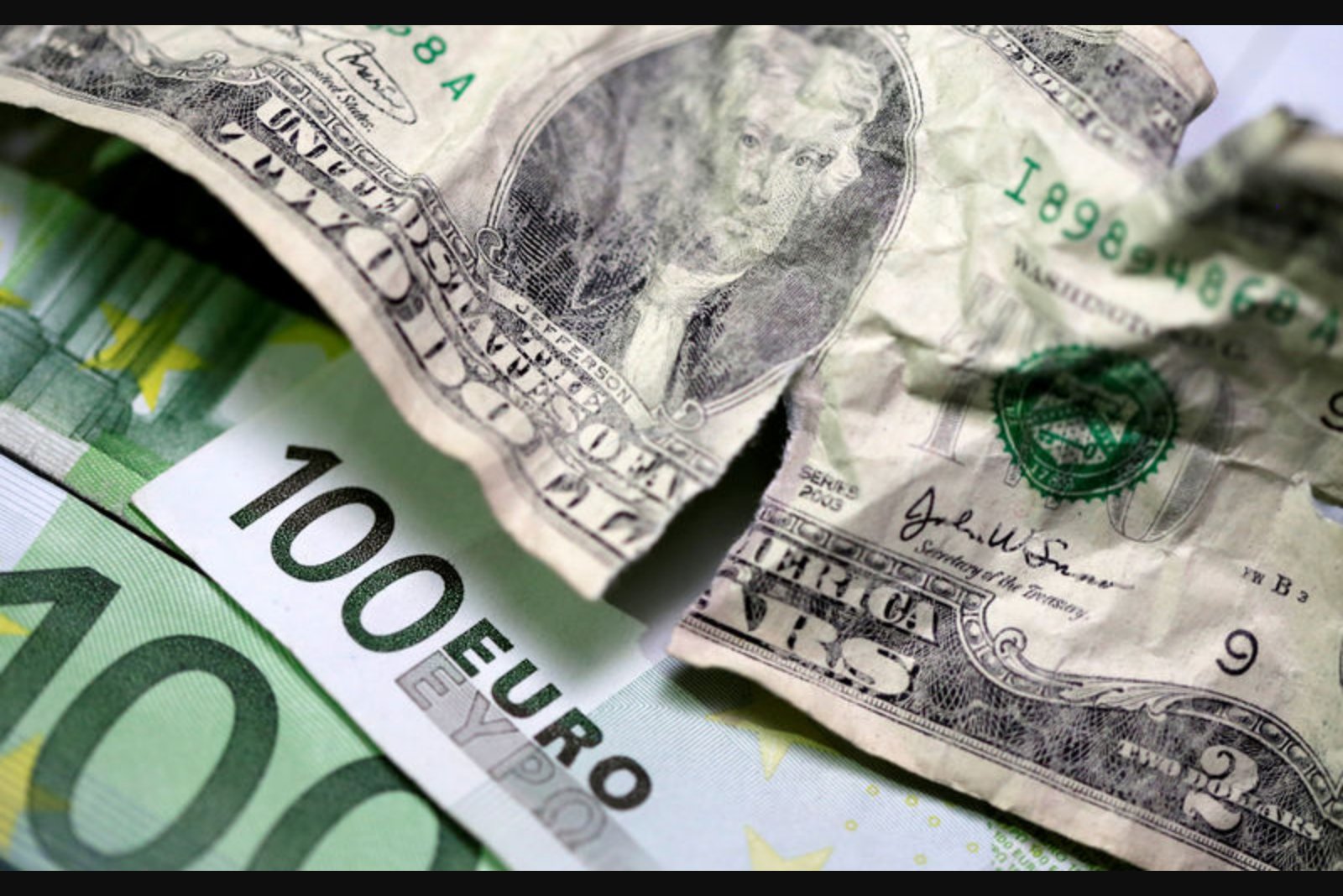
The U.S. dollar consolidated at higher levels on Wednesday as market participants reacted to escalating tensions in the Middle East that have renewed concerns about global energy supplies.
At 04:55 ET (09:55 GMT), the Dollar Index - which measures the greenback against six major currencies - was trading marginally lower at 98.995, having earlier touched its strongest point since November 28.
Heightened volatility in energy markets followed a sequence of military actions around the region. Coordinated strikes by U.S. and Israeli forces on Iran over the weekend, followed by Iranian retaliation, raised the prospect that flows through the Strait of Hormuz could be disrupted. That risk has helped drive a sharp rally in crude prices and stoked concerns about a renewed wave of inflation across global economies.
Commenting on this dynamic, ING noted the dollar's recent performance, writing: "The dollar has had a very good week so far based on the factors described above. DXY traded as high as 99.68 yesterday." The bank cautioned that investors are unlikely to push exposure through the 100.00/100.35 highs seen over the past eight months without clearer signals, adding: "But equally, we will need to see some clear improvement in the energy story before investors are prepared to enter short dollar positions again."
ING highlighted two near-term factors likely to determine market direction: whether energy prices can retreat if the Straits of Hormuz reopen, and whether central banks will be able to cut rates to support activity - or at least avoid further policy tightening. The bank also pointed to upcoming economic releases that could influence expectations on U.S. monetary policy, noting the monthly ADP employment report and the Federal Reserve's Beige Book ahead of the mid-March FOMC meeting.
"Any signs that price pressures remain sticky could see the market further scaling back expectations for two Fed cuts this year," ING said.
European currencies were mixed as the euro recovered from earlier lows. EUR/USD was up 0.1% at 1.1616 after earlier touching its weakest level since late November. That move followed Eurozone inflation data published on Tuesday, which showed higher-than-expected prices in February prior to the escalation of the Iran conflict.
ING observed that the length of the current energy shock will be a key determinant of euro performance, stating: "The duration of this energy shock will determine whether EUR/USD needs to trade down to 1.10/12 or can find support near 1.15." The bank added that its base case is the latter, in which it expects operational intensity to decline over the coming week and for the Straits of Hormuz to slowly reopen.
Across other major pairs, GBP/USD rose 0.1% to 1.3363 but remained near lows not seen since December. In Asia, USD/JPY eased 0.1% to 157.47 yet stayed close to five-week highs hit in the previous session. USD/CNY climbed 0.2% to 6.9128, marking a fourth consecutive day of gains for the pair.
Data from China painted a mixed picture of manufacturing activity. Official PMI readings indicated contraction in factory activity, while private-sector surveys from RatingDog PMI showed above-expectation expansionary conditions, underscoring divergence in signals about the country’s economic momentum.
Risk-sensitive currencies continued to underperform. AUD/USD slipped 0.3% to 0.7026 as the Australian dollar weakened amid the broader safe-haven bid into the dollar driven by higher crude prices.
In sum, markets are watching whether energy supply risks abate and whether price pressures remain elevated enough to alter central bank rate plans. Those developments - alongside the upcoming ADP report and the Fed's Beige Book - will likely dictate near-term positioning in currencies and risk assets.