
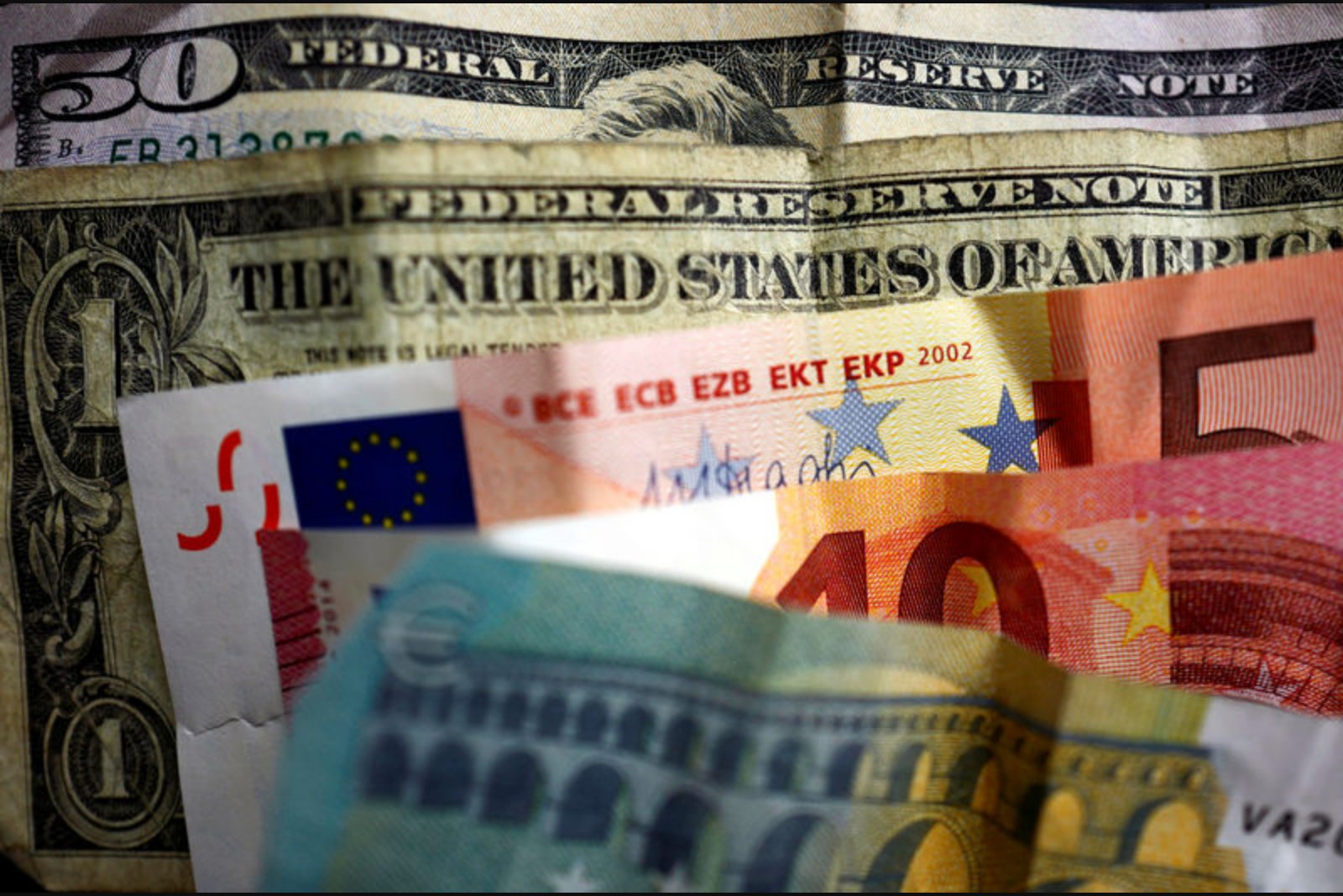
The U.S. dollar regained some ground on Tuesday, following a pullback in the prior session that came amid fresh uncertainty over Washington's tariff stance. At 03:55 ET (08:55 GMT), the Dollar Index - which measures the greenback against six major currencies - was trading 0.1% higher at 97.765, after having fallen as much as 0.5% on Monday.
Market attention has returned to trade policy after a legal ruling limited the president’s use of a 1977 emergency statute to impose tariffs, prompting an immediate policy response. In the wake of that ruling, the president announced an increase in a temporary tariff from 10% to 15% on imports from all countries. That escalation has left a number of trading partners uncertain about the durability of previously negotiated trade arrangements.
European institutions reacted quickly to the shift in U.S. import taxes. The European Parliament decided to postpone a vote on the European Union’s trade pact with the United States, citing the new tariff as a complicating factor. That development fed into an environment of heightened trade-risk that has coincided with growing questions about how sustainable some large-scale investments remain - notably spending tied to artificial intelligence - and about the broader strength of the U.S. economy following weak growth data released last week.
Currency traders are also focused on a busy domestic calendar. The session includes the release of ADP employment figures and consumer confidence data, several planned remarks by Federal Reserve officials, and a major policy-oriented speech from the president. These events add layers of information that could shift expectations for monetary policy and economic momentum.
Analysts at ING noted the Dollar Index has encountered resistance near the 98.00 level on multiple occasions and described the recent action as confined to a roughly 97.50-98.00 range. That caution reflects how quickly volatility can re-emerge when policy uncertainty intensifies.
Euro and European policy context
EUR/USD was trading 0.1% higher at 1.1788, largely subdued after European Central Bank President Christine Lagarde said the bank’s interest-rate posture remains in a "good place" at a conference in Washington. She emphasized the need to continuously assess whether policy remains appropriate, and to remain agile in response to changing conditions.
Market strategists observed that, absent a major downward correction in global equities, EUR/USD should find support in the 1.1750-1.1760 area. The single currency’s muted movement reflected a balance between ongoing trade-related headlines and the ECB’s steady policy messaging.
British pound and the Bank of England
GBP/USD edged lower by 0.1% to 1.3487 as sterling traded cautiously ahead of parliamentary testimony from four Bank of England rate setters. Commentary from these officials could influence sentiment ahead of the BoE’s policy meeting in March.
ING analysts highlighted the likely voting stances of individuals on the rate-setting committee, noting one member is viewed as dovish and likely to support an early cut, while another is seen as firmly hawkish. They singled out the governor as the member most likely to influence any swing toward easing in the March vote.
Asia - yen, China policy and commodity-linked currencies
In Asia, USD/JPY jumped about 1% to 156.12 as market expectations for near-term policy tightening from the Bank of Japan appeared to diminish. The yen also took pressure from a newspaper report that U.S. authorities led last month’s so-called rate checks aimed at supporting the currency, a dynamic traders weighed as markets reopened after a holiday.
USD/CNY traded 0.3% lower at 6.8888 after the People’s Bank of China left its one-year and five-year loan prime rates unchanged. The decision reinforced Beijing’s preference for calibrated support measures as it seeks to balance efforts to stabilize growth with measures to contain financial risks. Chinese financial markets reopened on Tuesday following the Lunar New Year break.
Commodities-linked currencies showed small gains: AUD/USD rose 0.1% to 0.7062, and NZD/USD was up 0.1% at 0.5961, reflecting modest appetite for riskier, growth-sensitive currencies amid the mixed macro backdrop.
The market is navigating a mix of trade-policy noise, central bank positioning and imminent data that together are producing a cautious tone across currency markets. Traders will be watching incoming U.S. employment and confidence data, central bank commentary, and political signals closely for guidance on the next directional moves.