
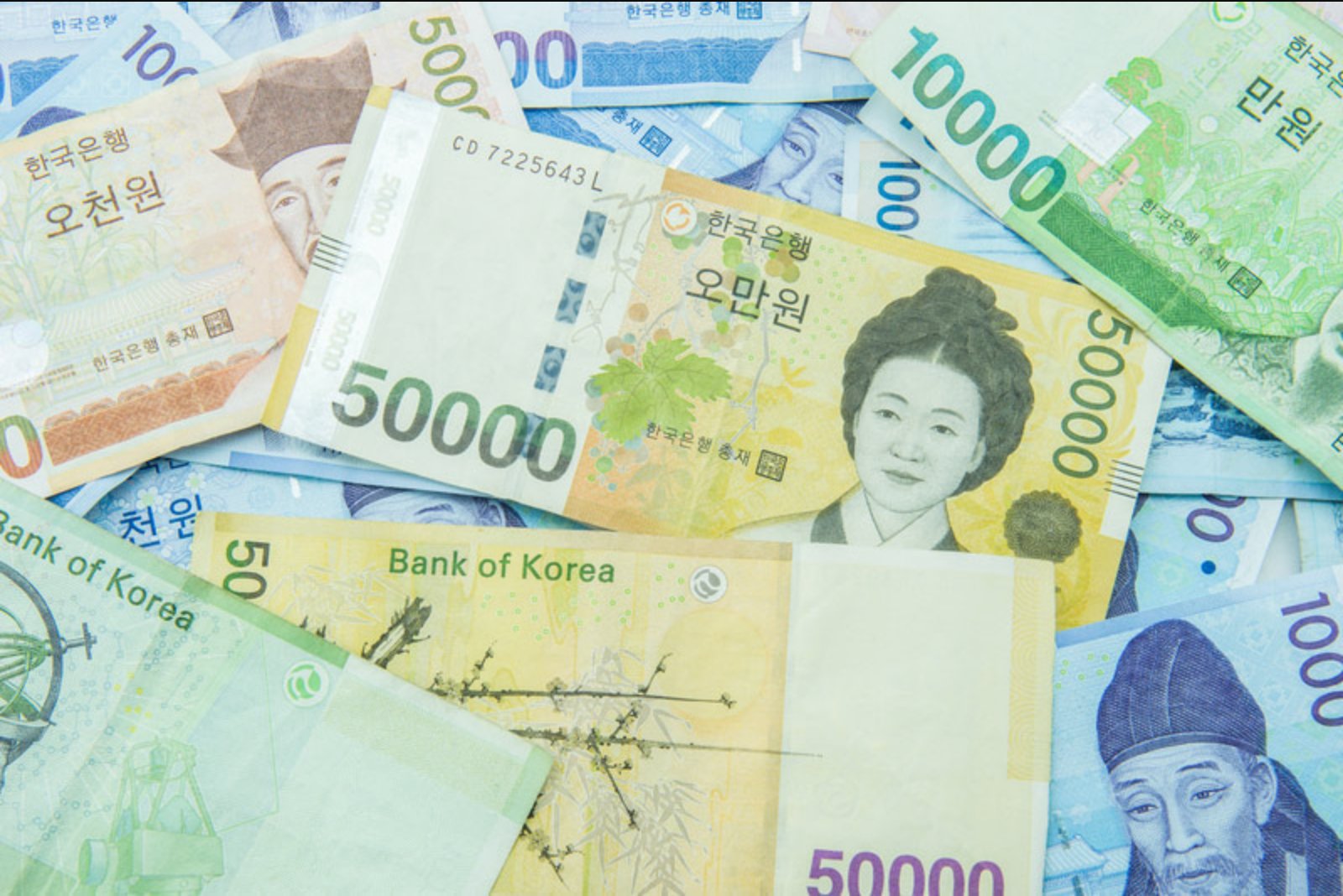
Bank of America says South Korea is positioned to benefit from a convergence of macro and market forces that should support further appreciation of the Korean won in 2026. In a note outlining four principal reasons to back the Korean market next year, the bank emphasizes a semiconductor-driven export boom, a firmer Bank of Korea stance, active government measures to reduce dollar demand and support inflows, and a reduction in external pressure from Japanese currency weakness.
Semiconductor cycle and trade strength
The bank highlights a pronounced memory-chip upcycle as the leading element behind the improved outlook. Data for January 2026 show exports up 33.9% year on year to $65.85 billion, resulting in an $8.74 billion trade surplus. Chip shipments surged, with memory exports doubling to $20.5 billion and representing nearly 30% of total exports. Early February trade data continued this momentum, with exports rising 44.4% year on year. BofA notes that stronger export performance has coincided with corporate foreign exchange deposits topping $100 billion for the first time - a signal it interprets as an improving external position for Korea.
Bank of Korea policy stance
Bank of America points to a more hawkish tone from the Bank of Korea as a second pillar supporting the won. The central bank raised its 2026 growth forecast to 1.8% and signaled upside risks to the outlook, a shift that BofA says makes additional rate cuts increasingly unlikely. Market pricing now incorporates nearly two rate hikes over the coming year; BofA argues that the narrowing of the short-term interest-rate differential versus the United States should help sustain KRW valuation.
Government actions to curb dollar demand and attract inflows
The third factor cited is a set of policy measures intended to improve the external balance and reduce pressure on the currency. BofA highlights the National Pension Servicereducing overseas equity allocations, which it estimates could trim net dollar demand by roughly $17 billion to $20 billion. The bank also flags extended foreign-exchange hedging programs, progress on the Reshoring Investment Account, and the prospect of significant inflows tied to World Government Bond Index (WGBI) inclusion, which BofA anticipates could amount to $50 billion to $60 billion beginning in April 2026.
Japanese yen stabilization and external dynamics
Finally, strategists point to a firmer Japanese yen as removing a recurrent external headwind for the won. With the yen finding a firmer floor and expectations of continued tightening by the Bank of Japan, BofA argues that a stable-to-stronger JPY eliminates some competitive devaluation pressure that historically weighed on KRW performance.
Overall, BofA sets a year-end 2026 USD/KRW forecast at 1,395, while noting that risks are skewed toward further won strength. The bank packages these elements as a multi-pillar foundation for sustained KRW appreciation into 2026.
Key points
- Semiconductor-led export surge: Memory-chip super-cycle is driving record trade surpluses and higher corporate FX deposits, supporting Korea's external position - sectors affected include semiconductors and export-oriented manufacturing.
- Monetary policy supports currency: A more hawkish Bank of Korea and markets pricing near-term rate hikes narrow interest-rate differentials versus the U.S., which should bolster the won - impacting banking, fixed income and interest-sensitive sectors.
- Policy and flows: Government measures such as reduced overseas equity allocations by the National Pension Service and expected WGBI inflows could materially lower net dollar demand and attract capital - relevant to sovereign bonds, asset managers and FX markets.
Risks and uncertainties
- Forecast skew: BofA explicitly states that downside risks are limited and that risks are skewed toward further won strength - this affects FX-sensitive investors and exporters.
- Policy path uncertainty: The shift to a more hawkish Bank of Korea and market-implied rate expectations introduce uncertainty around interest-rate dynamics, with implications for banks, bond markets and interest-rate dependent sectors.
- Realization of inflows: Anticipated WGBI-related inflows of $50 billion to $60 billion beginning in April 2026 are a material input to the outlook but remain an expected development rather than a guaranteed outcome - this could influence sovereign bond demand and cross-border capital flows.