
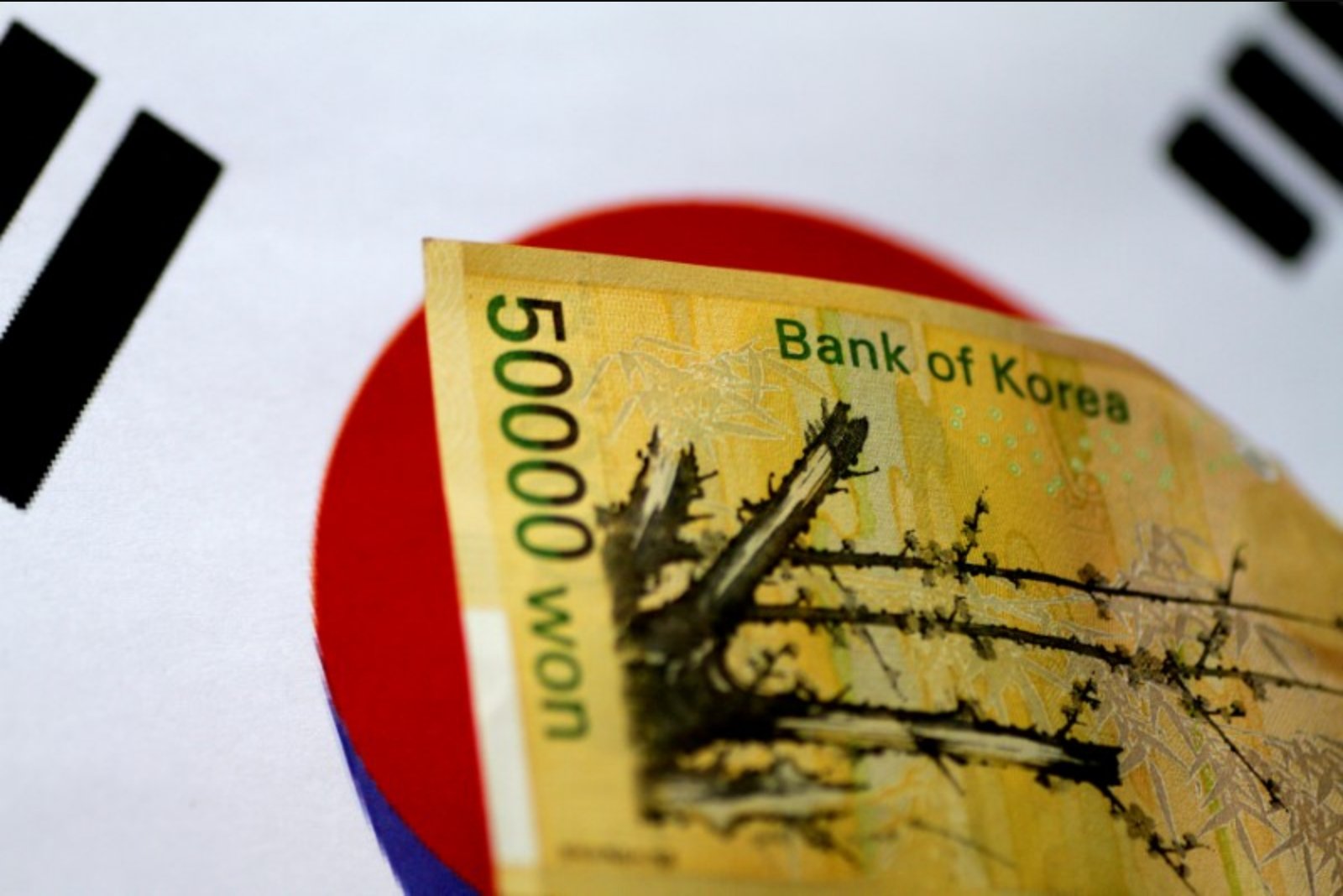
Most Asian currencies found a measure of stability on Thursday after heavy losses the day before, with the U.S. dollar trading near a two-month peak and the US Dollar Index little changed in Asian hours after rising to its strongest level in roughly two months overnight.
Regional ceasefire offer provides temporary calm
Traders showed tentative signs of relief after Washington said Israel and Lebanon had agreed to implement a ceasefire deal, although that agreement was explicitly conditional on Hezbollah halting its hostilities. The potential lull in fighting provided a respite for risk-sensitive assets, but market participants remained cautious because of several fresh incidents of violence earlier in the week.
Reported Iranian missile strikes on Kuwait and Bahrain, together with U.S. strikes on Iran's Qeshm Island near the Strait of Hormuz, kept geopolitical risk priced into markets and limited the scope for a broad rally in regional currencies.
Currency moves across the region
Individual Asian currency moves were mixed but generally reflected a pause after the prior session's sharp swings. The South Korean won eased modestly on the day, with the USD/KRW pair down about 0.3% after a 1.2% jump in the previous session. The Indian rupee traded flat against the dollar following a 0.5% rise on Wednesday.
The Australian dollar was also largely unchanged on Thursday after falling 0.7% in the prior session. China's onshore yuan saw the USD/CNY pair tick up roughly 0.1%, while the Singapore dollar's USD/SGD was little changed.
Yen clings near 160 as intervention risk remains
Japan's currency continued to hover close to the psychologically important 160-per-dollar level, with the USD/JPY pair last quoted at 159.97. That proximity to 160 left market participants alert to the possibility of intervention by Japanese authorities, particularly after policymakers issued fresh warnings earlier in the week.
Bank of Japan Governor Kazuo Ueda said policymakers would need to consider raising interest rates if upside inflation risks become more significant than risks to economic growth. The yen has been under renewed pressure amid widening yield differentials with the United States, though market expectations that the BOJ may eventually tighten policy have helped cap losses.
"We think markets will keep testing the topside in USD/JPY, also considering June is a seasonally weak month for the yen," ING analysts said in a recent note.
U.S. data bolsters dollar and complicates Fed outlook
The dollar's firmness received an additional lift from stronger-than-expected U.S. economic releases on Wednesday. Private payrolls processor ADP reported that U.S. employers added 122,000 jobs in May, a sign of continued resilience in the labour market.
At the same time, the Institute for Supply Management's services index rose to 54.5 in May from 53.6 in April, signalling ongoing expansion in the sector. Investors paid particular attention to the ISM's inflation component: the prices-paid gauge climbed to its highest reading in nearly four years, reinforcing concerns that inflation pressures remain elevated.
Those readings led markets to pare back expectations for imminent Fed easing and kept the prospect of a 'higher-for-longer' Fed policy on the table. Attention now turns to the closely watched U.S. nonfarm payrolls report due on Friday for further signals on the Fed's path.
Outlook
With geopolitical risks still present and U.S. data underlining inflationary persistence, Asian currencies appear likely to trade with cautious bias in the near term. Central bank rhetoric - particularly from the BOJ - and incoming U.S. labour market data will be key near-term drivers. Market participants will watch for any re-escalation in regional hostilities that could quickly tilt sentiment back toward safe-haven demand for the dollar, as well as for signs in U.S. payrolls that would alter expectations for Federal Reserve policy.