
Asian foreign exchange markets extended losses on Wednesday amid an intensifying geopolitical crisis, a sharp jump in crude prices and a firmer U.S. dollar.
The U.S. Dollar Index, which measures the dollar against a basket of currencies, closed 0.6% higher overnight and was about 0.1% firmer in Asian trade. U.S. Dollar Index Futures were up roughly 0.2% as of 00:24 ET (05:24 GMT).
Geopolitical shock and oil-driven inflation concerns
Market attention has centered on a widening Middle East confrontation after coordinated U.S. and Israeli strikes on Iran over the weekend were followed by Iranian retaliation. That sequence of events has raised the prospect of disrupted energy flows through the Strait of Hormuz, reinforcing a jump in Brent crude that has climbed as much as 14% since last Friday.
Rising oil costs have fed worries about higher inflation globally and have eroded market expectations for near-term Federal Reserve rate cuts. In that environment, analysts say Asian currencies are being pulled between higher crude, a stronger U.S. dollar and worsening risk sentiment.
Indian rupee sets record low
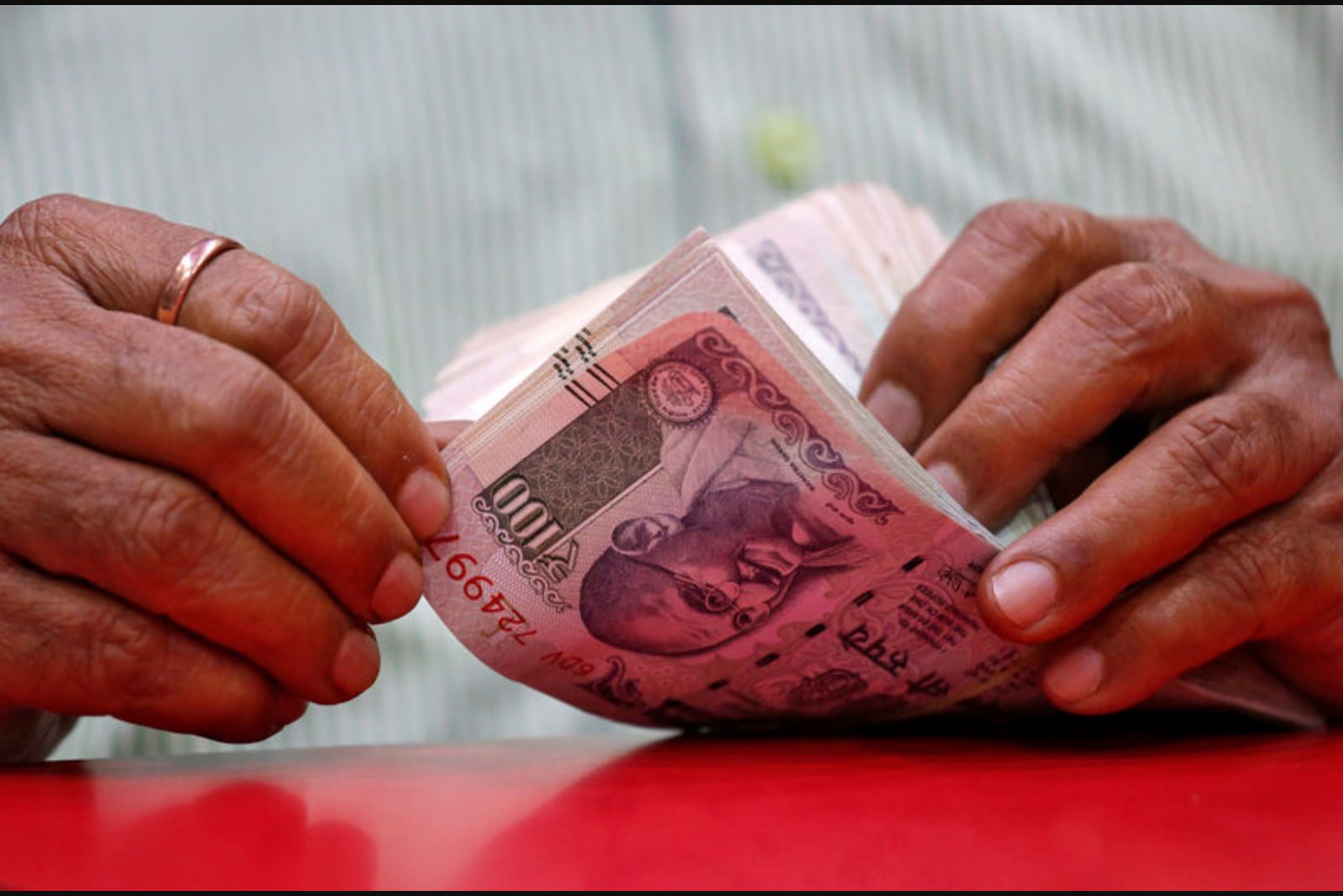
The Indian rupee weakened to a record low on Wednesday. The USD/INR pair rose about 0.3% to 92.325 rupees, with the currency facing pressure from surging crude import bills and capital outflows. The rupee was tracking a fifth straight session of depreciation.
Elsewhere in the region, the South Korean won saw the USD/KRW pair trade flat in Asian hours after jumping nearly 2% overnight. The Bank of Korea said it would watch closely for any excessive divergence of won exchange rates and bond yields from domestic fundamentals, even while recognizing external factors.
The Japanese yen remained near gains it booked in the prior session. USD/JPY edged down roughly 0.2% but stayed close to five-week highs. The Singapore dollar extended recent strength, with USD/SGD up about 0.1%.
The onshore Chinese yuan continued to weaken, with USD/CNY gaining about 0.3% and tracking a fourth consecutive day of gains.
Domestic data paint mixed picture
Domestic economic releases provided contrasting signals across the region. Australia reported stronger-than-expected gross domestic product, with annual growth accelerating to around 2.6% and quarterly expansion coming in ahead of forecasts, bolstering expectations for further Reserve Bank of Australia tightening. Despite that, the Australian dollar slipped roughly 0.6% amid the broader Asian FX selloff.
China's activity gauges diverged. Official purchasing managers' index readings pointed to contraction in factory activity, while private-sector measures from RatingDog PMI indicated above-expectation expansion, highlighting a split view of the economy's near-term momentum.
For market participants, the immediate balance to watch remains the interaction of geopolitics, energy prices and dollar strength, and how those factors influence capital flows, local inflation readings and central bank policy expectations across Asia.