
Asian currency markets were largely steady on Wednesday as participants balanced three distinct sources of uncertainty: renewed hostilities in the Middle East, a wide-ranging U.S. tariff proposal and the prospect of Japanese authorities intervening if the yen weakens too far.
The U.S. Dollar Index moved up about 0.1% during Asian trading, with U.S. Dollar Index futures also trading roughly 0.1% higher. Market attention remained fixed on escalating tensions around the Gulf and a U.S. trade measure that could affect flows of imported goods.
Military developments in the Middle East kept investor focus on geopolitical risk. Israeli forces continued operations in southern Lebanon, while Kuwait reported its air defenses had intercepted missile and drone strikes. U.S. forces also carried out strikes on Iran's Qeshm Island, the U.S. Central Command said in a post on X; the island is located near the Strait of Hormuz.
At the same time, U.S. authorities proposed tariffs of at least 10% on imports from 60 economies, saying those countries had not effectively blocked goods produced with forced labor, a factor the U.S. said distorted global trade and harmed American commerce. That proposal added to market caution by introducing a potential trade-policy element to global flows.
Yen pressure, intervention risk
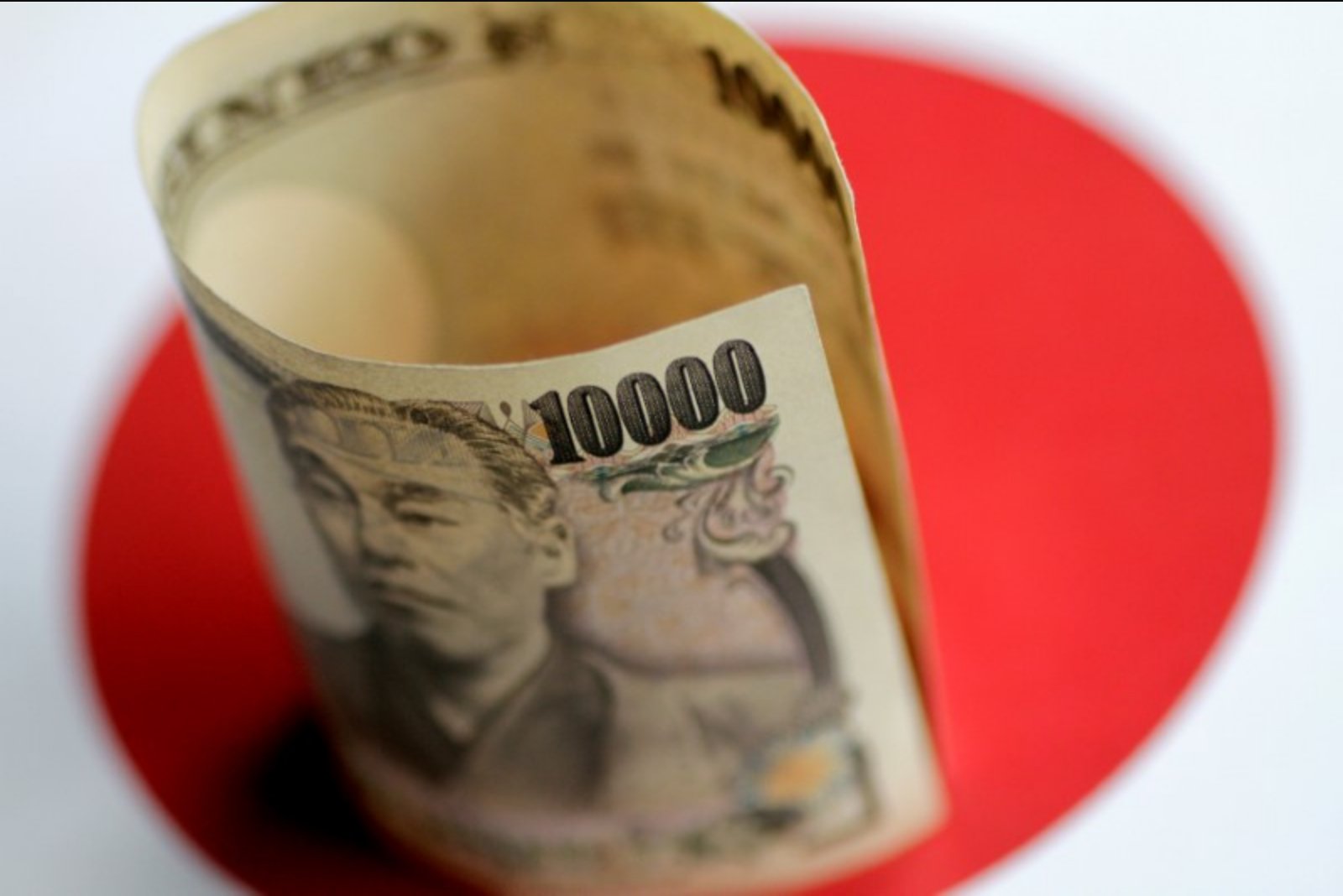
The Japanese yen was under renewed pressure, with the USD/JPY pair trading around 159.9 yen after briefly touching the 160 level earlier in the session. That 160 threshold previously prompted Japanese intervention in April, prompting authorities to reiterate their readiness to act.
Finance Minister Katsunobu Kato issued fresh warnings that officials were closely monitoring currency moves and would respond appropriately to excessive volatility. Investors were also awaiting a speech by Bank of Japan Governor Kazuo Ueda later in the day for potential signals on the timing of further policy normalization.
Market drivers behind the yen's weakness include firm expectations that U.S. interest rates will remain higher for longer following stronger-than-expected U.S. economic data, as well as rising oil prices related to Gulf hostilities, which add pressure on energy-importing Japan.
Other Asian currencies
- The South Korean won strengthened modestly, with USD/KRW down 0.2%.
- The Singapore dollar moved slightly, with USD/SGD edging up about 0.1%.
- The Indian rupee weakened versus the dollar, with USD/INR rising 0.4%.
- The Australian dollar slipped 0.1% against the U.S. dollar after data showed Australia’s economy grew at a slower-than-expected pace in the first quarter; GDP rose 2.5% year-on-year, below forecasts for 2.7% and down from the prior quarter's 2.6% increase.
- The Chinese yuan ticked up around 0.1% against the dollar, as markets digested stronger-than-expected Chinese services activity data that pointed to improving domestic demand.
U.S. labour data and outlook
Investor expectations about U.S. monetary policy remain influenced by recent data. A day earlier, U.S. job openings unexpectedly increased in April, reinforcing views that the Federal Reserve could keep interest rates elevated for longer. Market attention is now turning to the ADP private payrolls report and the ISM services index due later on Wednesday, ahead of Friday's nonfarm payrolls report, which investors regard as the next major test of the U.S. economic outlook and the Fed’s policy trajectory.
Taken together, geopolitical developments, proposed changes to trade policy and incoming economic data are maintaining an environment of cautious positioning in Asian FX markets, with the yen in particular subject to close policy scrutiny given recent moves toward the 160-per-dollar level.