
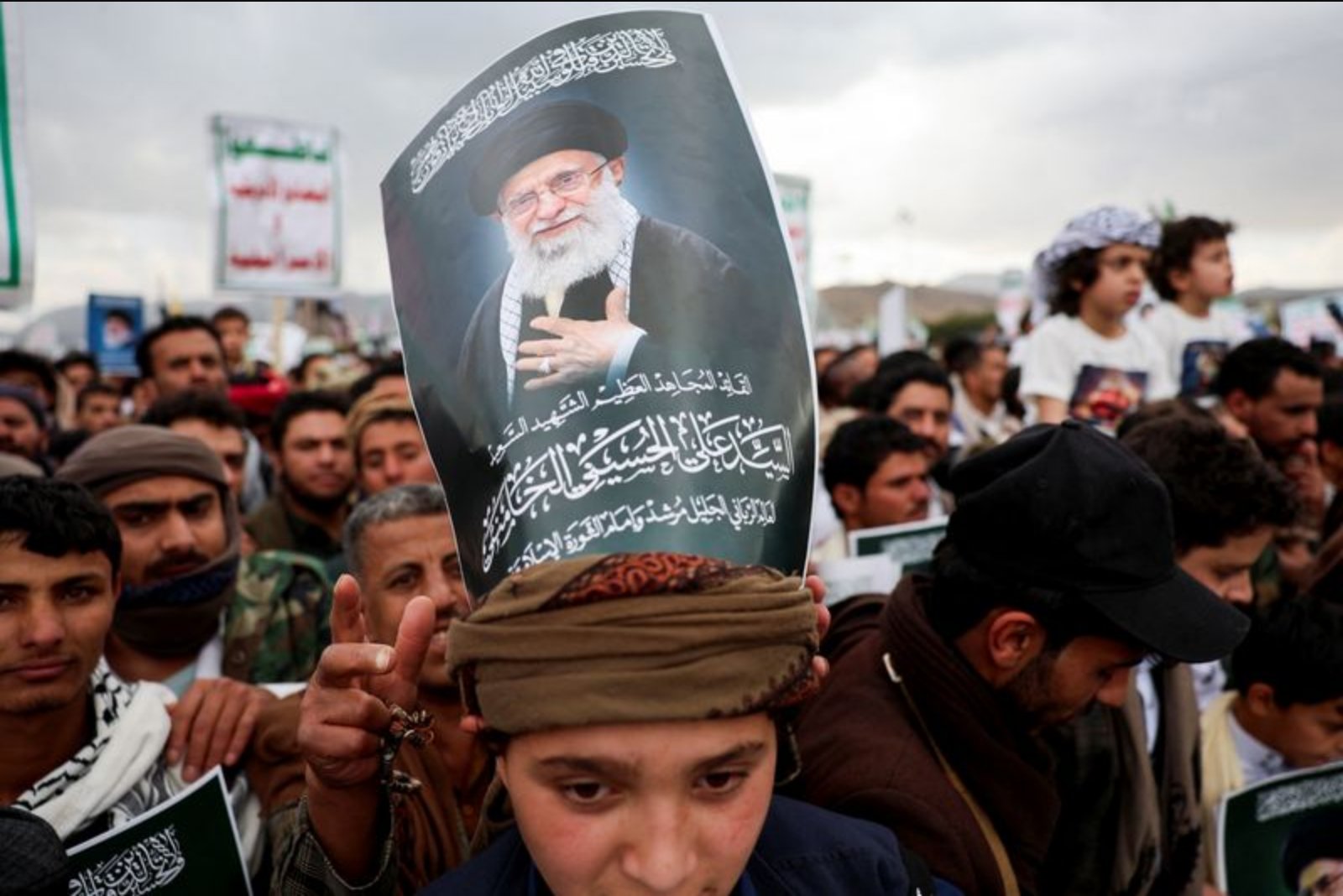
Overview
The Houthi movement in northern Yemen is militarily potent and politically influential inside the country, but it has refrained from formally joining the wider regional war that has followed strikes on Iran by the United States and Israel. Their absence as an announced belligerent contrasts with involvement by other Iran-aligned armed groups in Lebanon and Iraq, and it has attracted scrutiny given the Houthis’ demonstrated ability to target Gulf neighbours and to disrupt maritime traffic around the Arabian Peninsula.
Who are the Houthis?
The group is a military, political and religious movement centered on the Houthi family and rooted in northern Yemen. Followers of the Zaydi branch of Shi’ite Islam, the Houthis fought recurrent guerrilla campaigns against Yemen’s army before expanding their hold on power after the 2011 Arab Spring unrest. In 2014 the movement captured the Yemeni capital Sanaa, a pivotal step in its domestic consolidation.
In 2015 a Saudi-led coalition of Arab states launched a military intervention aimed at dislodging the Houthis from the capital. Over subsequent years the Houthis displayed sizeable missile and drone capabilities, launching attacks on oil installations and critical infrastructure inside Saudi Arabia and the United Arab Emirates. The conflict contributed to a severe humanitarian emergency in Yemen. A U.N.-brokered truce in 2022 between the warring sides has held since then.
Red Sea attacks and wider confrontation
After the October 7, 2023 attack on Israel led by Hamas, the Houthis said they would act in support of Palestinians and began targeting international shipping in the Red Sea. The group also launched drones and missiles at Israel. Israel responded with air strikes against Houthi targets, and the United States conducted strikes as well. The Houthis stopped those attacks following a U.S.-brokered ceasefire between Israel and Hamas in October 2025.
Why they have not formally entered the war
On March 5 Houthi leader Abdul Malik Al-Houthi said the group was prepared to strike at any moment. In a televised address he stated:
“Regarding military escalation and action, our fingers are on the trigger at any moment should developments warrant it.”
Yet the movement has not issued a formal declaration of entry into the wider regional war, unlike Hezbollah in Lebanon and certain Iraqi armed factions. Analysts point to several intertwined explanations based on the group’s organization and priorities.
Religiously and doctrinally, Houthi authority does not map onto Iran’s supreme leader in the same way that Hezbollah and some Iraqi groups do. While Iran promotes the Houthis as part of a regional "Axis of Resistance," experts emphasise that the movement’s motivations are driven primarily by domestic political and military objectives. The Houthis maintain a political affinity with Iran and Hezbollah, but their internal agenda appears to remain dominant in decision-making.
The United States asserts that Iran has armed, funded and trained the Houthis, with support from Hezbollah. The Houthis reject characterisation as an Iranian proxy, insisting that they develop their own weaponry.
Possible actions and strategic calculations
Observers remain divided over the Houthi trajectory. Some diplomats and analysts contend the group may already have carried out individual strikes on neighbouring states, although such reports have not been substantiated. Others suggest the Houthis could be deliberately conserving resources and waiting for a coordinated moment to act with Iran to maximise leverage.
One potential strategic opening would arise if the Strait of Hormuz were effectively closed to Gulf Arab hydrocarbon exports, forcing a heavier reliance on Red Sea routes and thereby elevating the strategic value of attacks there. That scenario could present an incentive for the group to engage more directly.
At the same time, internal economic pressures in Yemen and the prospect of intense retaliatory strikes from the United States, Israel and potentially Saudi Arabia weigh on the calculus. These risks lead some analysts to conclude the Houthis may opt to remain on the sidelines rather than escalate into a broader confrontation.
Conclusion
The Houthis’ position reflects a blend of military capability and cautious strategic calculation. While the movement retains the capacity to disrupt Gulf security and international shipping, doctrinal distinctions with other Iran-aligned groups, a focus on domestic objectives, the continuing effect of a 2022 truce in Yemen, and the potential costs of wider conflict have so far kept it from formally joining the regional war.