
Overview
Producers of roughly half the world’s cocoa - Ivory Coast and Ghana - have encountered major difficulties selling beans this season and meeting payments to farmers. The problem stems from a combination of abundant global harvests, a sharp fall in world cocoa futures and reduced buying from chocolate manufacturers. Both countries operate regulated marketing systems that set a fixed price for farmers at the start of the main crop season, and that mechanism has become a source of stress as international traders pulled back after suffering losses on the futures market.
How the sales system works
Cocoa in Ivory Coast and Ghana is not traded on the open market in the same way as many other commodities. Regulators appointed by the governments of each country typically pre-sell around 80% of their cocoa output to global traders a year in advance. Those forward sales then underpin a fixed farmer price that is announced at the beginning of the season in October. Farmers receive that set price when they sell beans to local collectors, who then transfer the beans to licensed buyers. Licensed buyers either sell straight to global traders or to local intermediaries that then sell on to global firms.
The price fixed in October generally covers the main crop harvested from October through March. Regulators typically revise the farmer price for the mid-crop, collected from April to September, which is generally judged to be of lower quality and therefore priced differently.
Price settings and the market collapse
Last October, Ivory Coast fixed its main crop price at about $5,000 per metric ton, while Ghana set its main crop price at nearly $5,300 per metric ton. World cocoa futures have since plunged to around $3,100 per ton, having lost half their value this year alone. That sharp divergence has left global traders exposed: beans bought under the earlier, higher-priced contracts would be worth substantially less if sold into the futures market at current levels, creating immediate losses for traders.
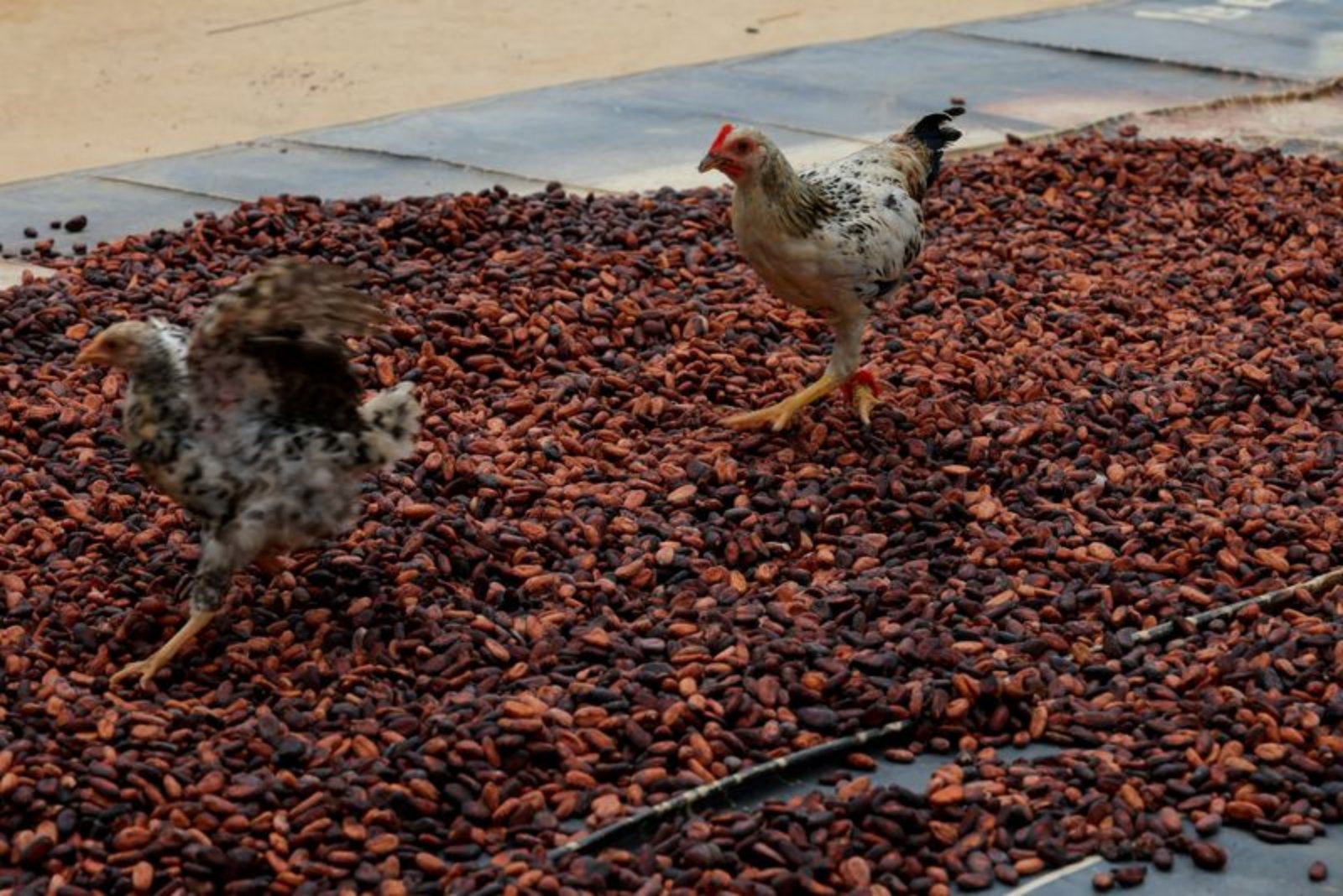
Faced with those losses, many international buyers scaled back or halted purchases. As a consequence, Ghanaian farmers reported not being paid for beans delivered since November, and industry contacts said the payment situation was similar for many Ivorian farmers. Observers and market participants have noted that unsold cocoa stocks have accumulated across Ivory Coast.
Responses from governments and regulators
Both countries have taken steps to address farmer liquidity and encourage sales. To provide cash to farmers, Ivory Coast launched a programme late last month to buy 100,000 tons of unsold main crop cocoa from farmers at a cost of roughly half a billion dollars. In Ghana, the national cocoa regulator on February 12 cut the fixed farmer price by nearly a third to around $3,580 per ton after assessing that the country held about 50,000 tons of unsold cocoa stocks.
Ivory Coast has also indicated plans to reduce its fixed farmer price by about a third from March 1 in the hope that a lower official price will entice international traders to resume purchases. The government said it will announce a new farmer price by the end of February, a month earlier than its usual schedule.
Why world cocoa prices tumbled
Prices surged to record levels in 2024 but then collapsed: after nearly tripling to record levels in 2024, world cocoa prices have since lost about three quarters of their value. Several factors are cited within the market for the downturn. High prices prompted chocolate manufacturers to take demand-reducing measures such as shrinking bar sizes, increasing the share of non-cocoa ingredients like wafers or nuts and replacing cocoa butter with alternative fats where possible. These shifts reduced the need for cocoa even as supply rose.
At the same time, favourable weather contributed to stronger and larger harvests, leaving the global market on track for a surplus estimated by traders at around 300,000-400,000 tons for the season. Much of that excess is concentrated in Ivory Coast and Ghana, which, unlike large global traders and processors, lack the financial capacity and storage infrastructure to hold beans in warehouses for extended periods.
Market dynamics are further complicated by timing: there is roughly a year-long lag between cocoa futures prices and any observable impact on chocolate products sold to retail consumers, a factor that can delay demand-side adjustments.
Economic stakes and vulnerabilities
Cocoa is a cornerstone export for both countries. It represents nearly 40% of Ivory Coast’s export revenue and almost 15% of Ghana’s, making it a major source of foreign exchange. For Ghana, the situation is particularly acute because the country is still recovering from a deep economic crisis that included a sovereign default and a subsequent restructuring of much of its roughly $30 billion of overseas debt. That crisis has made it more difficult and expensive for Ghana’s cocoa regulator to obtain financing for purchases of cocoa.
Across the two countries, nearly 2 million cocoa farmers and their dependents rely on the crop for income, and many of those households live below the poverty line. Payment delays, unsold stocks and the prospect of lower official prices put significant pressure on their livelihoods.
Outlook and remaining constraints
Regulatory price cuts and government buyback programmes aim to restore cash flow to farmers and to coax international buyers back into the market. However, the concentration of surplus beans in the producing countries, their constrained storage capacity and the limited financing options for regulators and buyers mean that resolving the build-up of unsold stocks could take time. The scale of the global surplus and the observed changes in chocolate industry purchasing behaviour both point to a protracted adjustment process rather than an immediate market correction.