
Commodities March 6, 2026

White House Says U.S. Progressing Toward Control of Iranian Airspace

Administration projects key objectives achievable within a month to six weeks; officials also discuss potential Iranian leadership candidates and conditions for a settlement

By Sofia Navarro
White House Says U.S. Progressing Toward Control of Iranian Airspace

The White House said the United States is making significant progress toward asserting control over Iranian airspace and expects achievable objectives to be completed within four to six weeks. Press secretary Karoline Leavitt also confirmed the administration is reviewing potential candidates to replace Iran’s leadership, and reiterated the president’s stance that no deal with Iran will be reached except through what he terms 'unconditional surrender.'

Key Points

  • White House says U.S. is progressing toward control of Iranian airspace with achievable objectives expected in four to six weeks - sectors affected include defense and aviation.
  • Officials are looking at potential candidates to lead Iran, but the administration declined to name individuals - this has implications for geopolitical risk and markets sensitive to leadership uncertainty.
  • The president has stated there will be no deal with Iran except "unconditional surrender," which the administration defines in terms of military objectives being met; this stance affects defense, diplomatic policy, and markets tied to geopolitical risk.

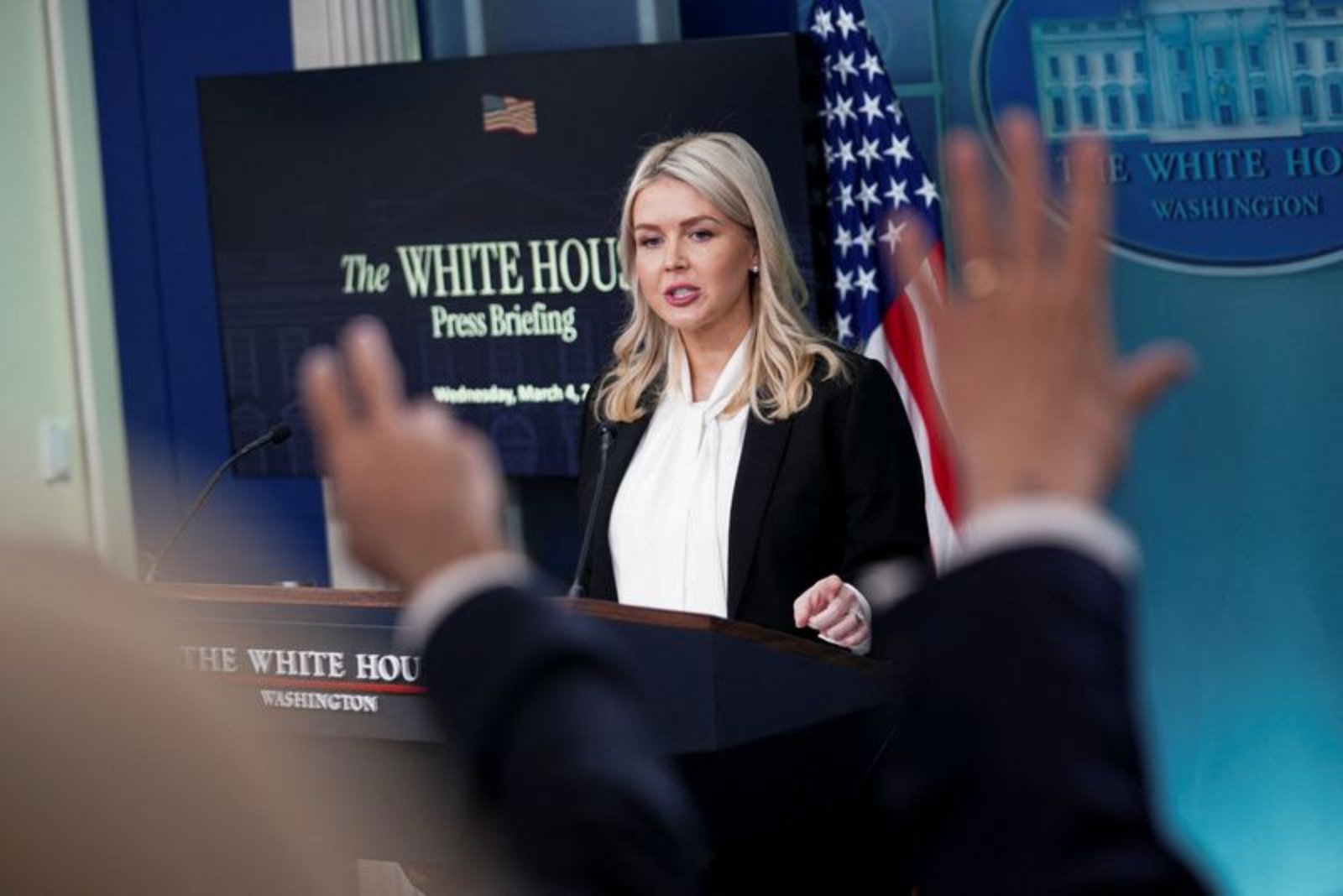
Washington - The White House said on Friday that the United States is advancing toward control of Iranian airspace, with officials projecting that attainable U.S. objectives could be met within a four- to six-week window.

Speaking at the White House, press secretary Karoline Leavitt outlined the administration’s expectations for the near term and addressed questions about leadership in Iran following recent developments in the conflict. Leavitt said that Washington is evaluating possible candidates to lead Iran, though she declined to provide further detail.

"I know there’s a number of people that our intelligence agencies and the United States government are looking at, but I won’t get any further on that," Leavitt told reporters.

The comments came a day after President Donald Trump said in an interview that the United States must be involved in selecting Iran’s next leader, and indicated skepticism that the late Supreme Leader Ayatollah Ali Khamenei’s son - a figure who has emerged publicly as a potential successor - will be the eventual replacement.

Earlier on Friday, the president reiterated a hardline negotiating stance, saying there would be no deal with Iran except "unconditional surrender." Leavitt expanded on that remark, explaining how the administration interprets the term in practical, military and strategic terms.

"What the President means is that when he, as Commander in Chief of the US Armed Forces, determines that Iran no longer poses a threat to the United States of America, and the goals of Operation Epic Fury has been fully realized, then Iran will essentially be in a place of unconditional surrender, whether they say it themselves or not," she said.

Leavitt’s remarks tied the administration’s diplomatic posture to military objectives and an internal timeline for achieving specific goals. She also emphasized that while the government is considering leadership options in Iran, she would not elaborate on names or assessments from intelligence agencies.

Details on the precise milestones that would constitute control of Iranian airspace, and what specific conditions would signal that the goals of Operation Epic Fury have been "fully realized," were not enumerated in the briefing.


Summary

The White House reported progress toward controlling Iranian airspace, forecasting that achievable objectives could be completed in four to six weeks. Officials are reviewing potential successors in Iran, and the president has framed any settlement as requiring "unconditional surrender," a condition the administration describes in terms of eliminated threats and completed military objectives.

Risks

  • Timeline uncertainty - the administration projects a four- to six-week horizon for achievable objectives, but details on milestones and verification were not provided; this creates unpredictability for defense and aviation sectors.
  • Leadership transition ambiguity - officials said they are assessing potential Iranian leaders but offered no specifics, leaving political risk and market responses to remain unsettled, particularly in energy and regional investment flows.
  • Negotiation posture - the demand for "unconditional surrender" as the sole acceptable outcome raises the possibility of prolonged conflict if parties do not accept those terms, impacting defense spending and markets sensitive to geopolitical instability.

More from Commodities

Treasury Official Denounces JPMorgan Assessment of DFC Oil Insurance as 'Completely Irresponsible' Mar 6, 2026 Iran conflict lifts U.S. Gulf heavy crudes to multi-year highs Mar 6, 2026 Senator Proposes Temporary Suspension of Federal Gas Tax Through October to Ease Pump Prices Mar 6, 2026 Japan, France and Canada Pursue Alternatives to U.S.-Led Critical Minerals Bloc Mar 6, 2026 Goldman Sachs Says Oil Could Top $100 Next Week if Hormuz Flows Do Not Recover Mar 6, 2026