
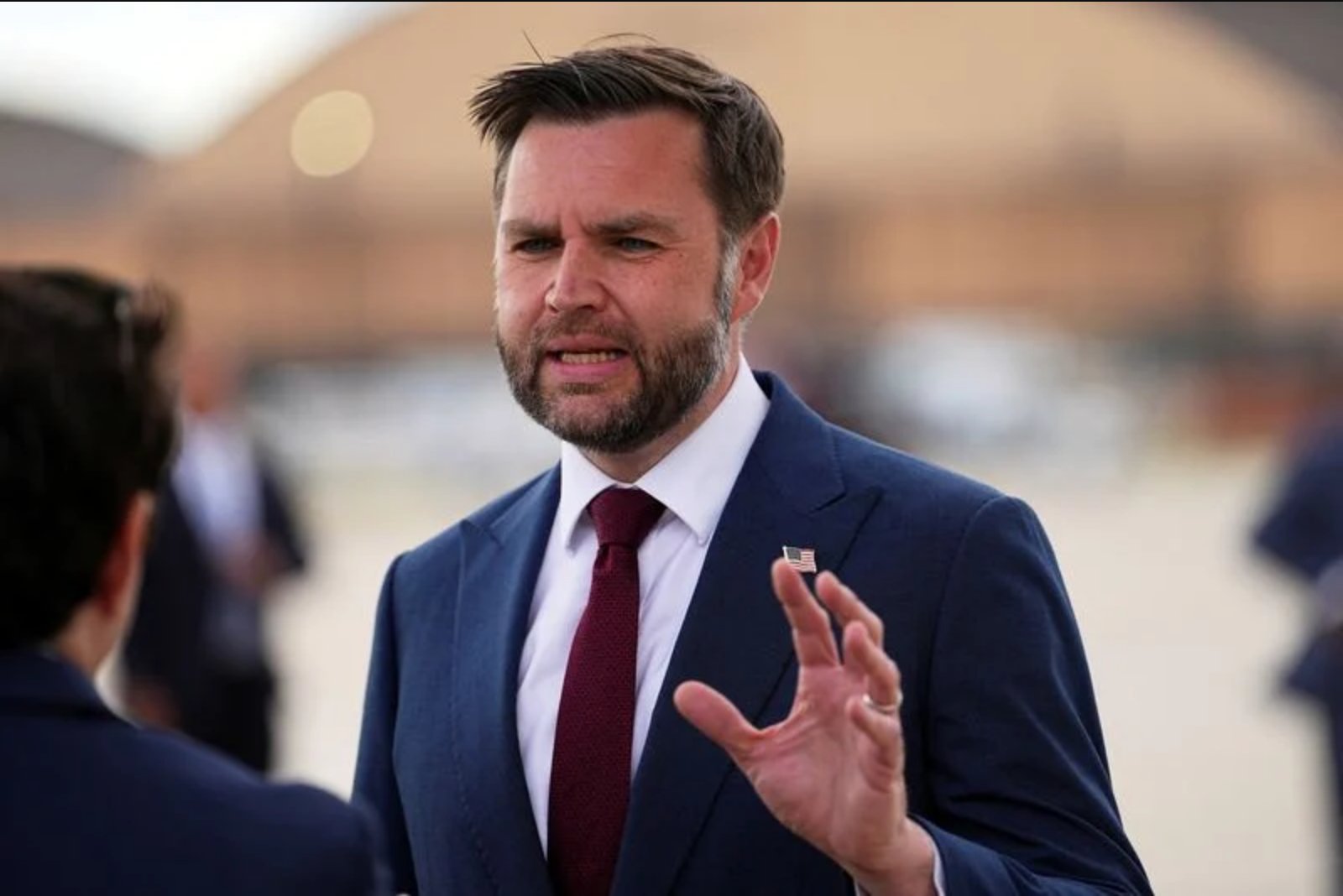
WASHINGTON, June 15 - U.S. Vice President JD Vance said on Monday he hopes the written text of an agreement intended to halt the war in Iran and to reopen the Strait of Hormuz will be made public this week, as negotiators continue to work through outstanding details.
In a television interview on CNBC, Vance said the United States expects that the economically vital waterway will be accessible on a long-term basis without tolls. "Our expectation is that the Strait is going to be opened in a toll-free way for the long-term," he said. He added that the precise arrangements would be resolved in ongoing technical negotiations: "That’s the sort of thing that we’re going to figure out in these technical negotiations. You know that there are a lot of very important details to figure out that we’re actually going to sit at the table and discuss together and figure out a path forward."
The United States and Iran have said they agreed terms aimed at ending their war and reopening the strait, a development that relieved markets. However, the reported pact may depend on an end to hostilities in Lebanon and defers talks on Tehran’s nuclear programme, leaving several elements unresolved.
Although still presented as a framework rather than a finalized accord, officials described the agreement as the most significant step yet toward resolving a conflict that has killed thousands and disrupted energy markets since it began with joint U.S.-Israeli strikes on Iran in February.
Vance said Iran’s foreign minister and the speaker of its parliament will represent Iran at a signing ceremony scheduled to take place in Switzerland on Friday. He noted that many specifics remain to be negotiated and did not identify who would represent the United States at the signing.
Summary
The vice president indicated the text of an agreement to stop the Iran war and reopen the Strait of Hormuz should be released this week. The United States expects toll-free, long-term access to the strait, but technical negotiations are ongoing. Iran plans to send senior officials to sign in Switzerland on Friday, while several substantive matters remain unresolved, including linkage to hostilities in Lebanon and deferred nuclear talks.
Key points
- The agreement text is expected to be published this week, according to Vance.
- The United States anticipates the Strait of Hormuz will be open on a long-term, toll-free basis.
- Iran will be represented at the Swiss signing by its foreign minister and the parliament speaker; U.S. representation at the signing was not announced.
Risks and uncertainties
- The pact is still a framework with many details outstanding, leaving room for further negotiation and potential changes.
- The agreement’s implementation may be contingent on an end to hostilities in Lebanon, introducing geopolitical uncertainty.
- Talks on Iran’s nuclear programme have been deferred, meaning a significant element related to broader security concerns remains unaddressed.
Negotiators have signalled progress, but the coming days of technical talks and the planned signing in Switzerland will be watched closely by markets and stakeholders that rely on the Strait of Hormuz for energy shipments.