
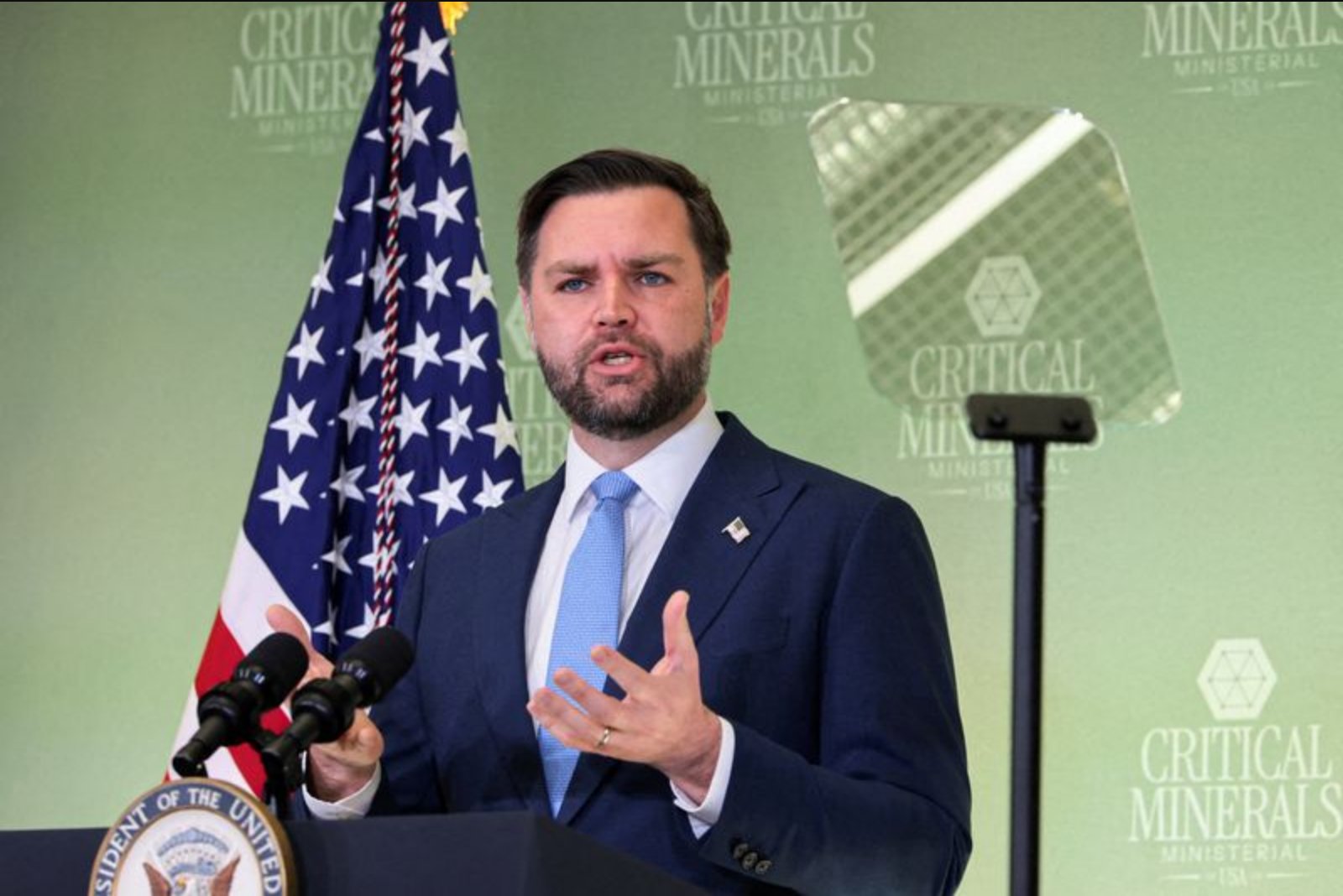
U.S. Vice President JD Vance is set to visit Armenia and Azerbaijan this week in an effort to advance a U.S.-facilitated peace agreement and promote new trade and energy transit routes across the South Caucasus. The vice president's schedule begins with a two-day stop in Armenia starting later on Monday, and continues with meetings in Azerbaijan on Wednesday and Thursday, according to official statements.
The trip comes roughly six months after the leaders of Armenia and Azerbaijan signed an agreement at the White House that has been framed as an initial step toward ending nearly four decades of intermittent conflict. Vance is the first U.S. vice president to travel to Armenia, and his presence is intended to press forward on implementation of the Trump Route for International Peace and Prosperity, or TRIPP.
TRIPP is a proposed 43-kilometre corridor that would traverse southern Armenia to provide Azerbaijan with a direct land connection to its Nakhchivan exclave and onward access to Turkey, an ally of Baku. Under the terms agreed last year, a private U.S. company, the TRIPP Development Company, has been granted exclusive rights to develop the corridor. At the same time, Yerevan would retain full sovereignty over the area with control of borders, customs, taxation and security.
Supporters of the plan, and U.S. officials involved in its promotion, describe the potential corridor as a way to better link Asia and Europe by diversifying transit routes - an objective that also carries strategic weight for Washington by providing a route that bypasses Russia and Iran. This is particularly salient at a time when Western countries are seeking alternative energy and trade paths amid concerns over Russia's actions in Ukraine.
"Vance's visit should serve to reaffirm the U.S.'s commitment to seeing the Trump Route through," said Joshua Kucera, a senior South Caucasus analyst at Crisis Group. "In a region like the Caucasus, even a small amount of attention from the U.S. can make a significant impact."
Officials in Yerevan have confirmed that Vance will hold talks with Prime Minister Nikol Pashinyan, after which both leaders are expected to make statements, though the Armenian government did not provide further details on the public remarks.
Beyond immediate border connectivity, officials and analysts note that TRIPP could become an important transit corridor for Central Asian mineral exports. The route has the potential to move critical minerals such as uranium, copper, gold and rare earths from Central Asia to Western markets, which would also align with U.S. interest in securing access to strategic materials.
The historical context for the proposal is one of disrupted routes and closed borders. During the Soviet era, the South Caucasus featured interconnected railways and oil pipelines. A sequence of conflicts beginning in the 1980s fractured those links and led to long-standing closures, including the sealed border between Armenia and Turkey.
Armenia and Azerbaijan were engaged in protracted conflict largely over Nagorno-Karabakh - an internationally recognised part of Azerbaijan that broke away during the collapse of the Soviet Union. The two countries fought multiple wars over the territory, with Azerbaijan regaining control in 2023. Following that shift, the entire ethnic Armenian population of Nagorno-Karabakh, estimated at around 100,000 people, relocated to Armenia.
In recent months the neighbours have taken steps to normalise relations, including restarting some energy shipments. However, significant obstacles remain on the path to durable peace. One of the most prominent unresolved issues is Azerbaijan's demand that Armenia amend its constitution to remove language that Baku interprets as implying claims on Azerbaijani territory. That constitutional request constitutes a substantive political hurdle that must be addressed for broader normalisation to proceed.
During his visits, Vance is expected to press the corridor proposal and related economic opportunities while also addressing the political and security questions that persist between the two states. How those conversations translate into concrete progress on TRIPP, constitutional changes, or expanded energy shipments will determine the extent to which the initiative reshapes trade and energy flows in the region.
Key points
- Vance will visit Armenia for two days beginning later on Monday, then travel to Azerbaijan on Wednesday and Thursday to promote the TRIPP corridor and a Washington-brokered peace framework - impact: medium on regional infrastructure and trade markets.
- TRIPP is a proposed 43-kilometre corridor across southern Armenia to connect Azerbaijan to Nakhchivan and Turkey; development rights have been granted exclusively to a private U.S. firm while Armenia retains sovereignty over the corridor - impact: high for transport, energy logistics, and critical minerals transit.
- The corridor could provide a route for Central Asian critical minerals to reach Western markets, aligning with U.S. interest in diversifying supply chains away from Russia and Iran - impact: medium for mining and materials sectors.
Risks and uncertainties
- Political and constitutional hurdles: Azerbaijan's demand that Armenia amend its constitution to remove language Azerbaijan views as territorial claims remains unresolved, creating a major political barrier to full normalisation - sectors affected: government, legal frameworks, diplomatic relations.
- Security and sovereignty sensitivities: Although Armenia retains sovereignty under the corridor agreement, local and regional security arrangements and enforcement details could complicate development and operations - sectors affected: infrastructure development, logistics, and energy transport.
- Fragile progress on normalization: While energy shipments have restarted and diplomatic engagement is underway, the history of conflict and population displacement means progress could be reversed or slowed without durable agreements - sectors affected: energy, trade, and regional investment climates.