
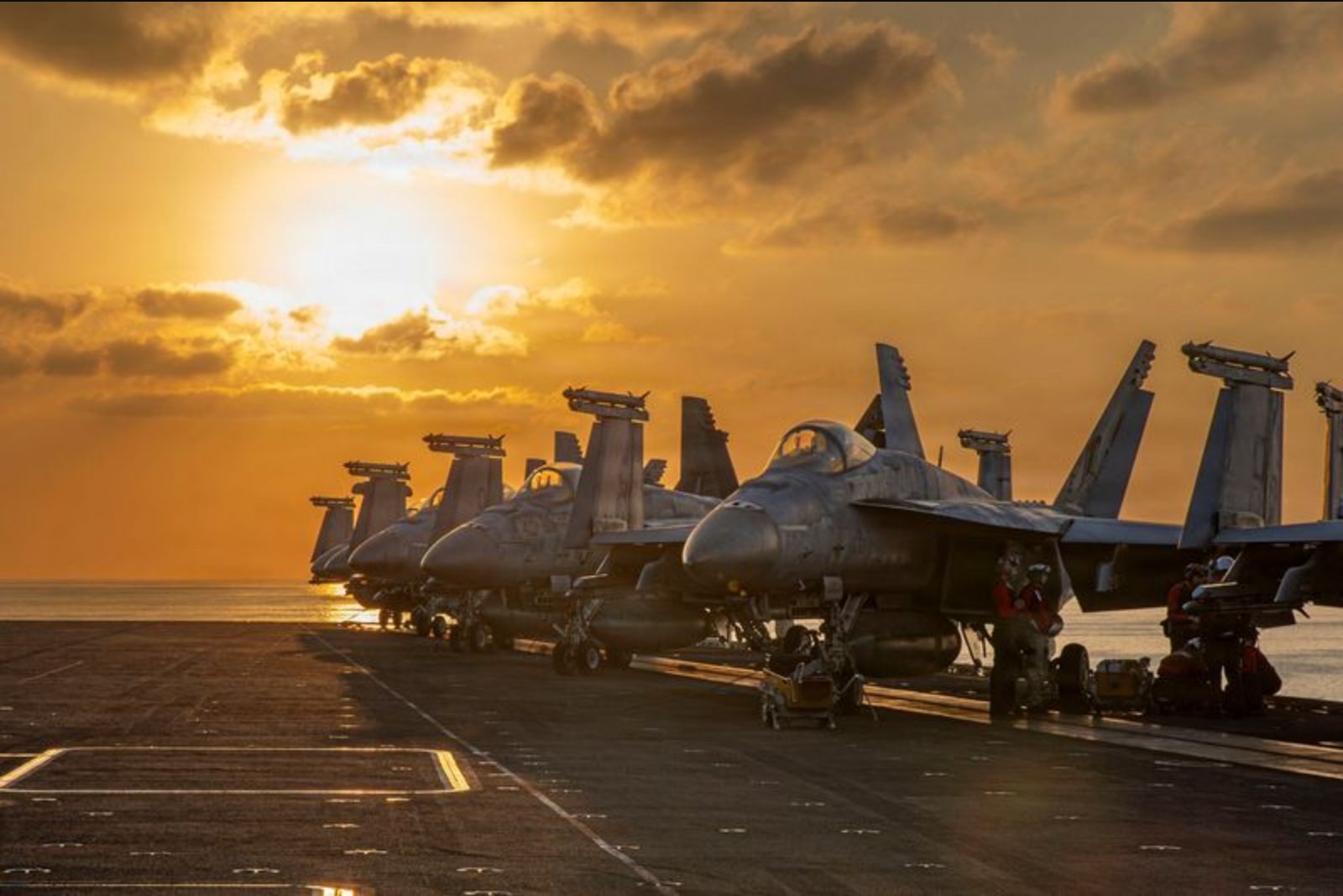
The confrontation between the United States, Israel and Iran intensified on Wednesday when a U.S. submarine sank an Iranian naval vessel off Sri Lanka's southern coast, killing dozens and leaving many sailors unaccounted for, and NATO air defences destroyed a ballistic missile that had been launched toward Turkey.
U.S. and allied strikes have extended beyond the immediate Gulf region, with the submarine action occurring thousands of miles - kilometres - from the Strait of Hormuz at a time when shipping through the strategic waterway remained paralysed for a fifth successive day. The broader campaign, launched five days earlier by the United States and Israel, has already resulted in hundreds of fatalities and has created substantial dislocations in global markets.
Military and strategic developments
U.S. Central Command said it had "struck or sunk to the bottom of the ocean" more than 20 Iranian ships. Among those, a warship was downed off Sri Lanka in what the Pentagon described as the first such action by a U.S. submarine since World War Two. A Sri Lankan official identified the vessel as the frigate IRIS Dena and said it had been returning to Iran from eastern India.
Local authorities reported that 32 people had been rescued and 87 bodies recovered following the strike, with roughly 60 sailors still unaccounted for from the vessel's estimated 180-strong crew. The U.S. defence secretary, Pete Hegseth, described the sinking in stark terms: "An American submarine sunk an Iranian warship that thought it was safe in international waters. Instead, it was sunk by a torpedo. Quiet death." Earlier in the day Hegseth also said the submarine strike struck an Iranian vessel off Sri Lanka's southern coast, emphasising how the fighting had extended far beyond the Gulf.
In a separate incident, NATO air defences shot down an Iranian ballistic missile that was en route to Turkey, marking the first time that Ankara - which borders Iran and fields NATO's second-largest military - has been directly drawn into exchanges of fire. U.S. Defense Secretary Hegseth said there was no sense that the missile engagement would automatically trigger NATO's collective-defence clause, despite Turkey's involvement.
Impact on shipping and energy
Fighting around the Strait of Hormuz has effectively choked off major Middle East oil and gas flows. President Donald Trump pledged to provide insurance and naval escorts for vessels exporting energy from the region in an effort to limit the rise in costs; oil prices were reported to be at their highest in more than a year. Reuters estimates cited in the reporting put at least 200 commercial vessels anchored off regional coasts as shippers waited for the security situation to stabilise.
These disruptions have fed through to financial markets. Asian exchanges suffered sharp losses on the uncertainty, with a market rout that included a record-breaking crash in Seoul. European markets, after two days of steep declines, recovered and turned higher later on Wednesday, and U.S. equities closed up on the day amid hopes that the conflict might be brought to an end soon.
Some traders attributed improved sentiment to a published account suggesting Iranian intelligence had reached out to the CIA about a path toward ending the fighting; Iranian intelligence ministry sources rejected that account as "absolute lies and psychological warfare in the midst of war," according to Iran's semi-official Tasnim news agency.
Statements on the battlefield
At a Pentagon briefing, Secretary Hegseth framed the U.S. approach in uncompromising terms, saying: "This was never meant to be a fair fight, and it is not a fair fight. We are punching them while they’re down. We can sustain this fight easily for as long as we need to."
The chairman of the U.S. Joint Chiefs of Staff, Dan Caine, commented that Iran appeared to be firing fewer missiles, which he said indicated markedly diminished Iranian military capabilities.
Israel, continuing its own campaign against Iran, reported strikes on a compound in eastern Tehran said to house the country's principal security bodies - including the Revolutionary Guard, intelligence, cyber warfare units and the internal police force responsible for suppressing protests. Israel also ordered residents to evacuate a corridor in southern Lebanon as it intensified assaults on Hezbollah, the Iran-backed militia that has launched drones and rockets into Israel earlier in the week.
Within Israel, military authorities relaxed public safety restrictions for a three-day period through Saturday, allowing businesses to open provided they are within an acceptable distance of shelters and other protected locations; schools, however, remained closed.
Political reverberations in Iran
The widening conflict coincided with significant uncertainty over Iran's leadership following the death of the country's supreme leader, Ayatollah Ali Khamenei, aged 86, who was killed by an Israeli strike earlier in the week. The anticipated funeral arrangements were thrown into doubt as explosions continued in Tehran; state authorities announced that three days of farewell ceremonies were indefinitely postponed and no new funeral date was set.
Two Iranian sources, speaking on condition of anonymity, told Reuters that Mojtaba Khamenei, the son of the slain supreme leader and a figure viewed as a frontrunner to succeed him, was not in Tehran at the time of his father's killing. Iran stated that the Assembly of Experts - the body that will select the new supreme leader - would announce its selection soon, a choice that would mark only the second such decision since the Islamic Republic's founding in 1979. Assembly member Ayatollah Ahmad Khatami said on state television that the candidates had already been identified but did not provide names.
Israel warned it would pursue whoever was selected as the new leader. Other names mentioned as potential candidates include Hassan Khomeini, the grandson of the Islamic Republic's founder, who is associated with the reformist faction. Reporting from Iranian sources suggested Mojtaba Khamenei was the favourite, given his senior security roles and influence within the extensive business holdings tied to security institutions; choosing him would, those sources said, indicate that hardline elements remain dominant.
Domestic reactions in Iran were mixed. Some citizens reportedly celebrated the death of the supreme leader, while others described the practical constraints on public protest as bombardment continued. One woman, Farah, 45, who spoke by phone from Tehran, said protesters were unlikely to mobilise: "We have nowhere to go to protect ourselves from strikes, how can we protest? We have to think about the safety of my two children," she said, adding concern about the omnipresence of security forces and the risk of lethal repression.
Allied responses and regional deployments
European governments, although some had publicly voiced reservations about the war, moved to protect citizens and strategic interests. Britain and France announced they would deploy naval and air assets to help guard against Iranian retaliation. Greece repositioned aircraft and warships near Cyprus.
Casualties, rescue efforts and maritime operations
Authorities involved in rescuing survivors from the sunken ship reported multiple recoveries and continued searches for missing sailors. The casualty figures and the number still missing underline the human cost of the naval engagement and the complexity of search-and-rescue operations far from Iran's immediate maritime zone.
U.S. Central Command's declaration that it had engaged more than 20 Iranian vessels signalled a broad campaign at sea aimed at degrading Iran's maritime capacity. Officials characterised the deployment of submarine-launched torpedoes as a decisive tool in that effort.
This account is based on reporting of military actions, official statements and claims made by parties involved. Some details, including casualty figures and the precise disposition of forces, remain subject to confirmation as operations and investigations continue.