
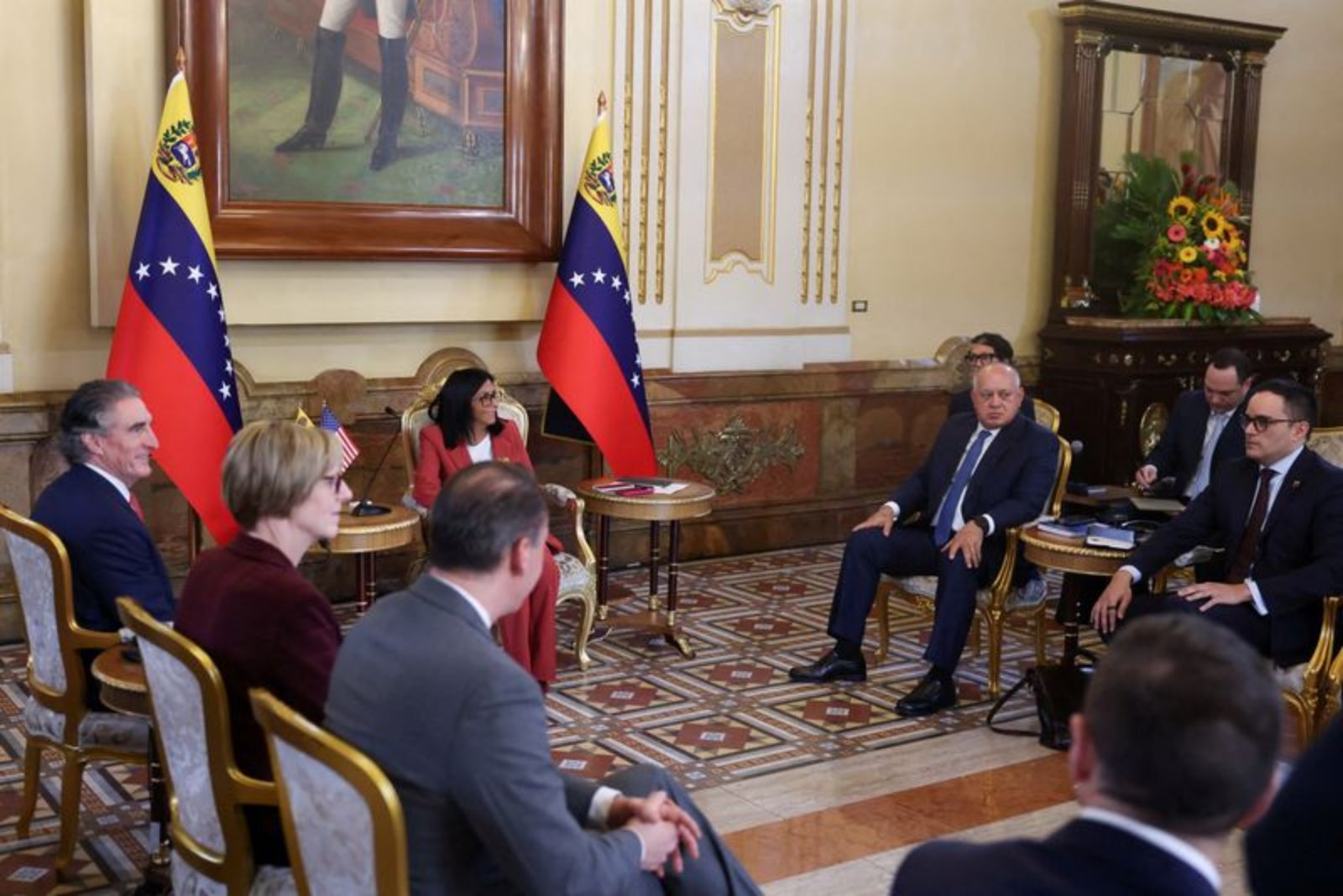
March 4 - U.S. Interior Secretary Doug Burgum arrived in Venezuela and held a meeting on Wednesday afternoon with acting President Delcy Rodriguez at the Miraflores presidential palace in Caracas. The encounter, which included the U.S. representative in Venezuela, Laura Dogu, was briefly captured on film by media outlets.
Prior to the afternoon meeting with Rodriguez, Burgum spent part of the day in separate discussions with executives from foreign mining companies, according to two sources. Those meetings came as Venezuela's interim government considers altering mineral regulations to potentially open more opportunities for foreign firms.
The visit comes amid a broader U.S. effort to encourage American investment in Venezuela's oil, gas and mineral sectors. U.S. engagement has intensified after a January U.S. raid that resulted in the capture of President Nicolas Maduro, and the current trip by Burgum is the second by a U.S. cabinet secretary since Maduro's ouster. In public statements, President Trump has praised Rodriguez for her cooperation and referred to Venezuela as "our new friend and partner" in his annual State of the Union address.
At the same time, reporting has indicated that the Trump administration has been applying pressure behind the scenes. Reuters reported Tuesday, citing four people familiar with the matter, that officials are building a legal case against Rodriguez that could include allegations of corruption and money laundering.
Burgum, who leads the U.S. Energy Dominance Council - a body focused on increasing U.S. energy production - is in Caracas in part to discuss supply chains for critical minerals, the Venezuela Affairs Unit said in a post on X. Critical minerals, including rare earths, figure prominently in the discussions, given their role in manufacturing technologies that convert power into motion.
Mining law reform and investor interest
Venezuela's national assembly is preparing a revision of the country's principal mining statute, which currently dates from 1999. Jorge Rodriguez, the head of the assembly and brother of the acting president, said this week that the proposed overhaul would incorporate provisions to permit foreign companies to exploit gold, diamonds and rare earths.
Sources told Reuters that Burgum is closely watching the mining law proposal. He met on Wednesday morning with several mining companies and is expected to hold meetings with oil and gas company representatives on Thursday to discuss possible expansion and investment opportunities.
U.S. Energy Secretary Chris Wright visited Venezuela last month, underscoring ongoing U.S. engagement with Venezuelan officials on energy and mineral matters.
Uncertainties around mineral deposits and past nationalizations
Exploration work to confirm Venezuela's rare earth reserves has not yet been conducted, leaving the true extent of those deposits unverified. A 2018 government report on mineral deposits used terms such as "reserve" and "resource" interchangeably, complicating efforts to determine accurate measurements. A 2021 official map identified the presence of antimony, copper, nickel, coltan, molybdenum, magnesium, silver, zinc, titanium, tungsten and uranium, but it did not quantify volumes for those materials.
The country also carries outstanding obligations to industrial conglomerates, oil and mining firms stemming from waves of nationalizations about two decades ago. Venezuela owes billions to companies including Crystallex, Gold Reserve and Rusoro Mining. Past bilateral arrangements saw Iranian companies explore for mining resources in Venezuela, but those efforts did not result in sustained investment.
As Burgum engages with Venezuelan officials and industry executives, the discussions are framed by both the potential to open new avenues for U.S. investment in energy and minerals and by lingering questions about legal, fiscal and geological clarity in the country.