
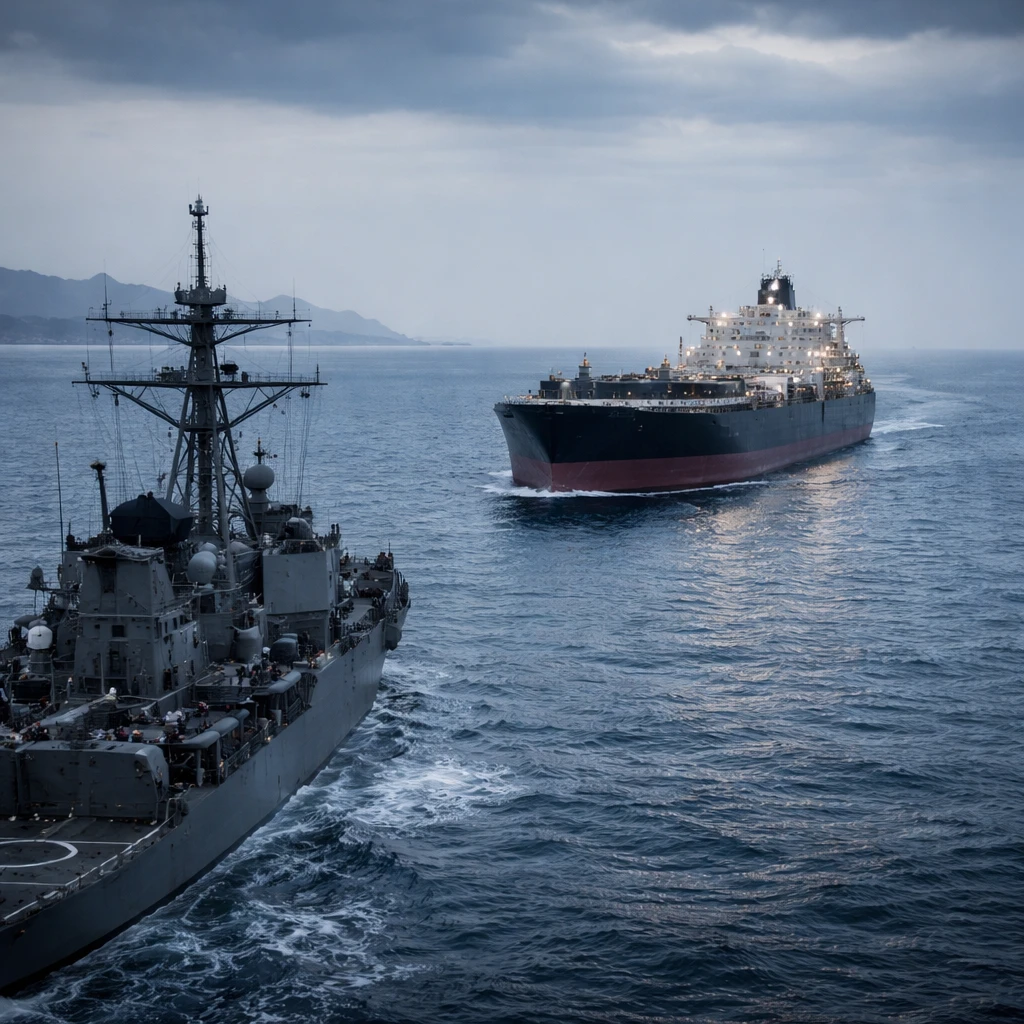
Summary: A post on Energy Secretary Chris Wright’s official X account that incorrectly stated the U.S. Navy had escorted an oil tanker through the Strait of Hormuz was the result of a captioning error by Department of Energy staff and was removed, a department spokesperson said. The message had briefly raised expectations within the global oil industry about the resumption of shipments through a critical chokepoint that has been effectively closed since strikes on Iran beginning Feb. 28.
The Department of Energy confirmed that staff were responsible for a now-deleted post on the secretary’s official X account which had indicated the U.S. Navy had escorted a tanker through the Strait of Hormuz. The social post was removed after the department determined the accompanying video clip had been incorrectly captioned.
A department spokesperson provided a statement in an emailed message that included the following: "A video clip was deleted from Secretary Wright’s official X account after it was determined to be incorrectly captioned by Department of Energy staff." The statement reiterated that senior administration officials and the energy team are actively monitoring developments.
The spokesperson added: "President Trump, Secretary Wright, and the rest of the President’s energy team are closely monitoring the situation, speaking with industry leaders, and having the U.S. military draw up additional options to keep the Strait of Hormuz open, including the potential for our Navy to escort tankers." This language indicates planning is under way, but not that an escort has yet been executed.
Officials in the White House provided a separate clarification on the same day that the Navy had not yet escorted any vessels through the strait. The clarification followed the deleted post, which had briefly suggested an operational development that had not occurred.
The Strait of Hormuz, the narrow maritime passage between Iran and Oman, typically carries about a fifth of the world’s oil and gas. The waterway has been effectively closed since Israeli and U.S. strikes on Iran that began on Feb. 28. The resulting disruption has contributed to a spike in global energy prices, according to the department’s statement and the context surrounding the deleted post.
The incident highlights how communications from government accounts can rapidly shape market expectations when a major chokepoint in global energy logistics is involved. Department officials emphasized ongoing engagement with industry leaders and that military options are being developed to address the navigation challenge in the strait, including the contingency of naval escorts.