
Overview
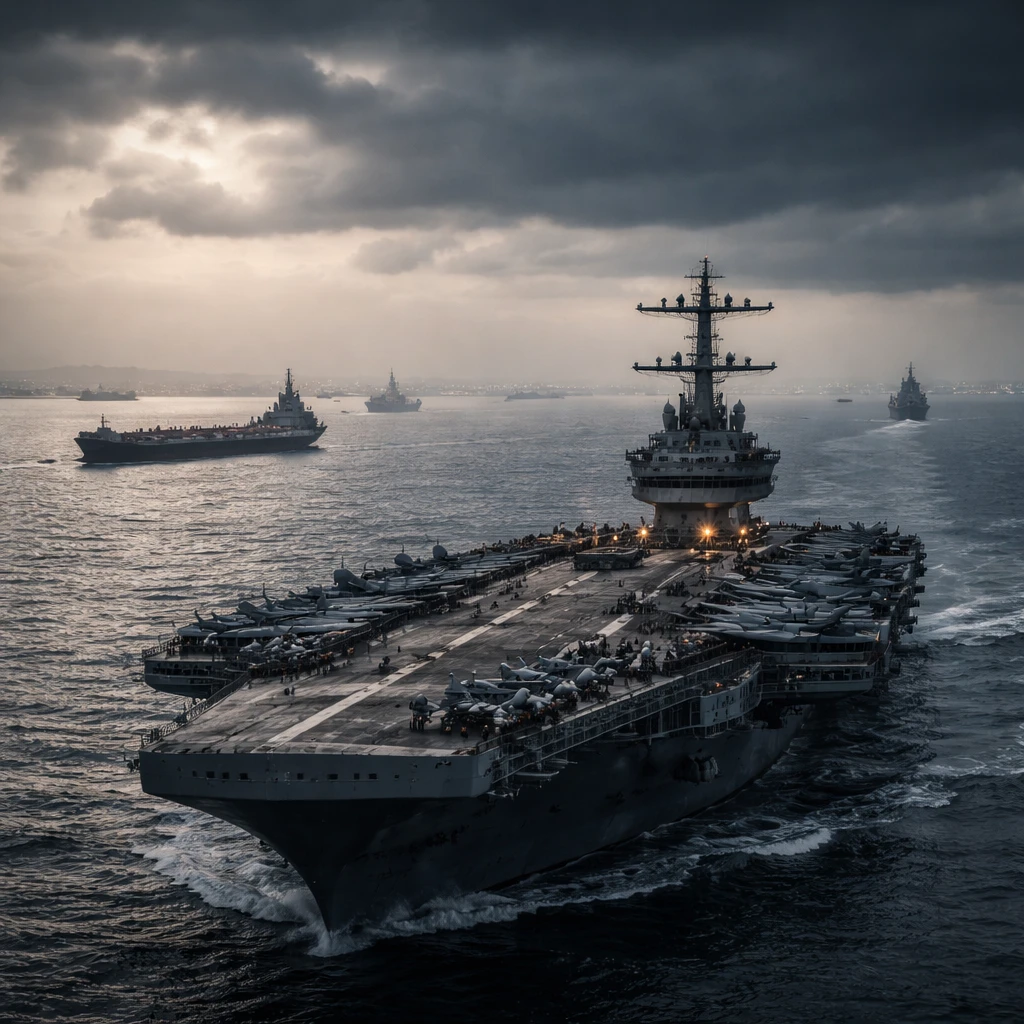
Officials from multiple governments and diplomats operating across the Gulf and Europe say that a diplomatic resolution to the standoff between the United States and Iran has diminished rapidly, and that the two countries are sliding toward potential military confrontation. Washington has moved significant naval, air and ground assets into the region - a deployment described by some officials as among the largest since the invasion of Iraq in 2003 - while Tehran appears to be holding firm on core demands related to its nuclear programme and missile development.
Regional and allied assessments
Gulf oil producers and Israel now consider a military clash more probable than a negotiated settlement, according to multiple regional officials. In Jerusalem, Israeli government planners assess that Washington and Tehran are at an impasse and are preparing for the possibility of joint military operations with U.S. forces, although sources say no final decision has been taken about executing such action.
Two Israeli officials told sources monitoring the situation that the differences separating Washington and Tehran are irreconcilable and that the chances of near-term military escalation are high.
Stalled diplomacy
Two rounds of bilateral talks have failed to reconcile core disagreements - chiefly Iran’s uranium enrichment activities, its ballistic missile programme and demands for sanctions relief. A source familiar with the discussions said that when mediators from Oman delivered an envelope from the U.S. delegation containing proposals related to missiles, Iran’s Foreign Minister Abbas Araqchi refused to open it and returned it.
Following a session in Geneva, Araqchi said negotiators had agreed on "guiding principles," but senior White House officials maintained there remained significant distance between the parties. U.S. officials said Iran was expected to provide a written proposal in the coming days, and Araqchi indicated he planned to produce a draft counterproposal within days.
Military signals and timelines
The United States has dispatched aircraft carriers, warships and jet squadrons to the Middle East and President Donald Trump warned that Iran must accept a deal on its nuclear activities or face consequences he described as "really bad things." The president suggested a 10- to 15-day window as a timeframe for Iran to agree, prompting Tehran to threaten retaliation against U.S. bases in the region if attacked.
U.S. officials say that Mr. Trump has not yet decided definitively to use military force, though he acknowledged he might order a limited strike intended to pressure Iran into an agreement. A senior U.S. official indicated it could be mid-March before all U.S. forces that have been ordered arrive in the theatre of operations. Separately, a senior U.S. official said a planned U.S. meeting with Israeli Prime Minister Benjamin Netanyahu was scheduled for February 28 to discuss Iran.
Possible military objectives and conduct
European and regional representatives note that the scale of the U.S. deployment appears large enough to allow strikes against Iranian targets while simultaneously providing defence for U.S. bases, regional partners and Israel. The central U.S. demand remains unchanged - that Iran cease uranium enrichment on its soil. Iran, for its part, insists it must retain its nuclear capability and declines to discuss its ballistic missiles; Iranian officials deny intentions to build nuclear weapons.
Defence analyst David Des Roches described a possible sequence of action if talks collapse: initial efforts would focus on degrading Iranian air defences, followed by strikes on elements of the Islamic Revolutionary Guards Corps naval forces - which regional officials say have been responsible for tanker attacks and threats to close the Strait of Hormuz, a maritime chokepoint that carries roughly a fifth of global oil shipments.
Questions on strategic endgames
Some Arab and European authorities remain uncertain about the specific objectives U.S. policymakers would seek from any strikes. They want clarity on whether strikes would aim to remove or degrade Iran’s nuclear and missile capabilities, to deter further escalation, or to pursue more comprehensive goals such as forcing leadership change. Several regional and European voices caution that military strikes, even if initially successful, may be difficult to control and may not translate cleanly into a political outcome inside Iran.
These officials note that Iran’s leadership under Supreme Leader Ayatollah Ali Khamenei and the protection provided by the Islamic Revolutionary Guards Corps leave open the possibility that strikes would not produce an alternative political trajectory. In short, military action could be easier to initiate than to manage and might not achieve strategic objectives.
Domestic calculations and bargaining positions
Some regional officials say Tehran is misjudging the situation by clinging to maximalist positions, while U.S. officials say President Trump may be constrained by the large military posture he has assembled - arguing he would find it politically difficult to scale back forces without securing substantive concessions from Iran. Alan Eyre, a former U.S. diplomat and Iran specialist, was quoted as saying that neither side appears willing to retreat from red lines and that the president would be reluctant to scale back a substantial military presence if the outcome were only a modest diplomatic package, adding: "If he attacks, it’s going to get ugly quickly."
Concessions and limitations
Signs of possible compromise have been limited. Ali Larijani, a close adviser to the supreme leader, told Al Jazeera TV that Iran was prepared to allow extensive monitoring by the International Atomic Energy Agency to demonstrate it was not pursuing nuclear weapons - and Tehran has informed the IAEA chief of that decision. A source familiar with the talks said that Iran's support for regional militias had not been formally raised during discussions, although Tehran has no principled objection to addressing U.S. concerns about proxy forces.
According to three regional officials, Iranian negotiators conveyed that substantive concessions would ultimately depend on Khamenei, who regards both enrichment and missile development as sovereign prerogatives.
Perceptions of mutual restraint and expectations
Observers quoted in the discussions argue each side is placing its bet on the other's limits: Washington apparently believes overwhelming force could compel Tehran to yield, while Tehran assesses that the U.S. lacks the appetite for a sustained campaign. Israel, meanwhile, views the gaps between the parties as sufficiently wide that confrontation looks increasingly probable.
Rising tensions have already affected markets, with oil prices responding to the threat of a wider regional conflict.
Closing observations
Diplomatic exchanges over enrichment, missiles and sanctions relief have so far failed to bridge fundamental differences between Washington and Tehran. With large U.S. forces being positioned in the Gulf, regional governments and their allies are preparing for contingencies even as they seek clarity on the objectives of any possible military strikes and the likely consequences for regional stability and global markets.
Reporting in multiple capitals and by government and diplomatic sources informed this analysis. Quotations and assessments here reflect statements made by officials, analysts and negotiators involved in or close to the talks.