
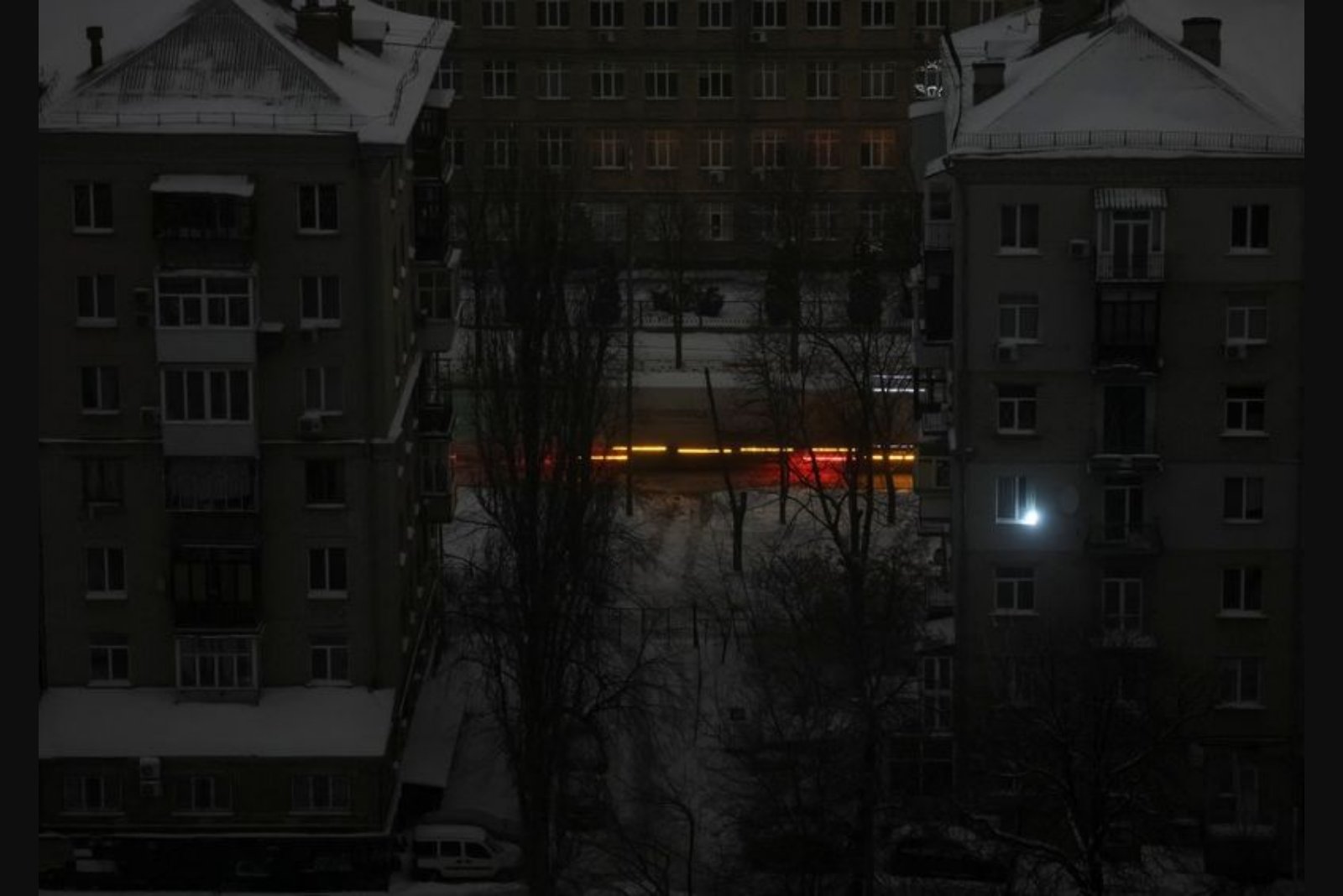
Ukrainian officials said a heavy Russian air offensive overnight on Saturday targeted the country's energy network, striking generation capacity, distribution substations and essential transmission lines. President Volodymyr Zelenskiy described the assault as involving more than 400 drones and some 40 missiles of various types aimed at the electricity grid, generation facilities and distribution points.
Nearly four years after the start of the full-scale invasion, Ukraine's energy sector continues to falter under repeated strikes, accumulated wartime damage and sharply colder weather, officials and regional authorities said.
Government statements and immediate damage reports
Moscow did not immediately provide a comment on the reported strikes.
Energy Minister Denys Shmyhal reported that the strikes struck two thermal power stations in western regions and core elements of the electricity distribution system - specifically substations and key distribution lines. Shmyhal posted on the Telegram app that, in his words, "Russian criminals carried out another massive attack on Ukraine's energy facilities." He added that energy workers stand ready to begin repairs as soon as the security environment permits.
"Every day, Russia could choose real diplomacy, but it chooses new strikes," Zelenskiy wrote on X, adding that "It is crucial that everyone who supports the trilateral negotiations respond to this. Moscow must be deprived of the ability to use the cold as leverage against Ukraine."
The strikes occurred as temperatures were dropping; forecasts cited in official statements put temperatures falling to minus 14 degrees Celsius (7 degrees Fahrenheit) in the coming days. Officials warned that the weather could exacerbate the humanitarian and infrastructural effects of power outages.
Scope of the attacks and regional impact
Regional officials reported strikes across the country, with particular mentions of the western Ukrainian regions of Khmelnytskyi, Rivne, Ternopil, Ivano-Frankivsk and Lviv. Two named thermal power plants in western Ukraine - Burshtyn and Dobrotvir - were reported hit by the assault.
DTEK, Ukraine's largest private energy company, said equipment at its thermal power plants in multiple regions sustained significant damage. The company also stated that this was the 10th attack on its thermal power stations since October 2025.
Maksym Kozytskyi, the governor of the Lviv region, warned that because Russian forces had been targeting energy facilities in different parts of the country, "power outages may last much longer." He also noted that air alerts in the western Lviv region, near the Polish border, persisted for more than six hours.
System responses and cross-border consequences
Ukrainian officials said emergency power cuts were implemented nationwide in response to the damage and to manage limited generation capacity. In a bid to stabilize supply, the government asked Poland for emergency power imports to support the Ukrainian grid, Shmyhal said.
Polish authorities reported that two airports in southeastern Poland suspended operations as a precaution because of Russian strikes on nearby Ukrainian territory. Those airports later resumed operations.
Diplomatic context
The new strikes on the energy system came just days after a fresh round of U.S.-brokered talks between Ukraine and Russia aimed at finding a way to end the war. Officials noted that despite pressure from U.S. President Donald Trump's administration and multiple rounds of negotiation, the diplomatic efforts to date have produced no tangible results.
Since autumn 2025, Moscow has stepped up attacks on Ukraine's power grid and other energy infrastructure, Ukrainian officials said, a campaign that has forced frequent blackouts and plunged millions into darkness for hours at a time.