
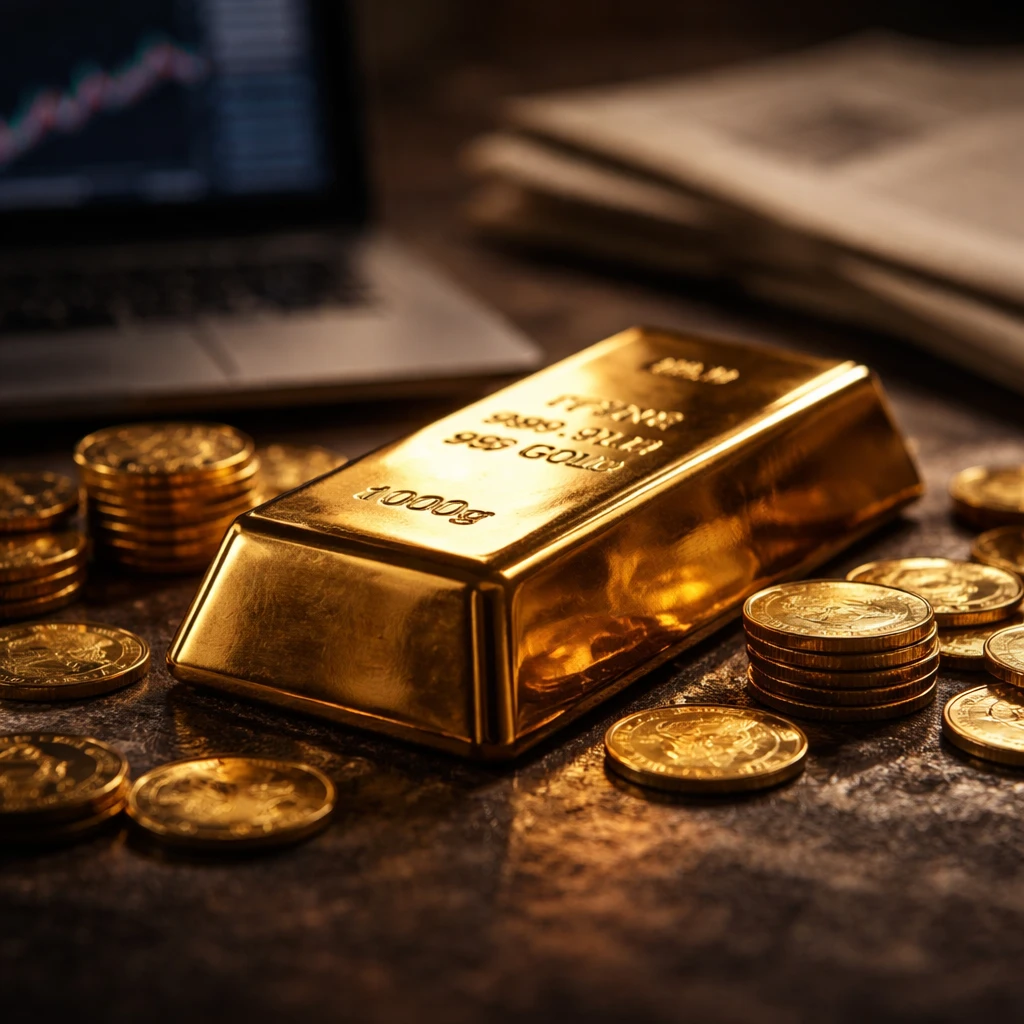
Gold has softened from the extreme readings seen in early March, prompting renewed investor debate about whether the metal still merits its long-held status as a safe-haven asset. UBS, however, set out a clear rebuttal in a note published on Tuesday, arguing that the central thesis supporting gold remains intact.
After peaking at just above $5,400 in early March, the yellow metal has drifted down to a level slightly above $5,000, having briefly slipped below that threshold during Monday's trading session. UBS strategist Joni Teves said the short answer to whether gold remains a refuge for investors is yes, and emphasized that gold's role as a portfolio diversifier has not been erased by recent moves.
Teves told clients that the conditions underpinning gold's recent rally continue to exist. The bank expects that rising allocations by investors could still push the metal to fresh record highs before the end of the year. At the same time, UBS acknowledged that the near-term outlook is clouded by a number of headwinds.
Foremost among those, according to Teves, are higher real interest rates and a stronger U.S. dollar, factors that have weighed on gold prices. Market attention has also centered on the inflationary implications of higher oil prices and what those implications might mean for Federal Reserve policy, she noted.
That said, Teves flagged that the inflation narrative is only one part of the broader picture. Should growth slow to the point that fiscal or monetary authorities enact stimulus measures, UBS sees that scenario as a potential upside risk for gold. In other words, policies aimed at countering a downturn could bolster demand for the metal.
Geopolitical uncertainty remains another structural pillar supporting demand, the note said. Persistent global tensions, Teves wrote, help sustain strategic buying as investors seek more diversified portfolios to weather uncertainty. UBS reiterated its view that periods of weakness should be viewed as opportunities to accumulate positions rather than signs that gold's investment case has collapsed.
The bank also commented on the broader precious-metals complex. Silver, platinum and palladium have, in UBS's assessment, held up reasonably well despite concerns that reduced industrial demand could present risks to those markets.
Analysis: While short-term volatility has raised questions among market participants, UBS argues that the combination of strategic demand, potential stimulus-driven upside and ongoing geopolitical risks preserves gold's safe-haven characteristics. Near-term price action remains sensitive to real rates, dollar moves and the inflation outlook tied to energy prices.