
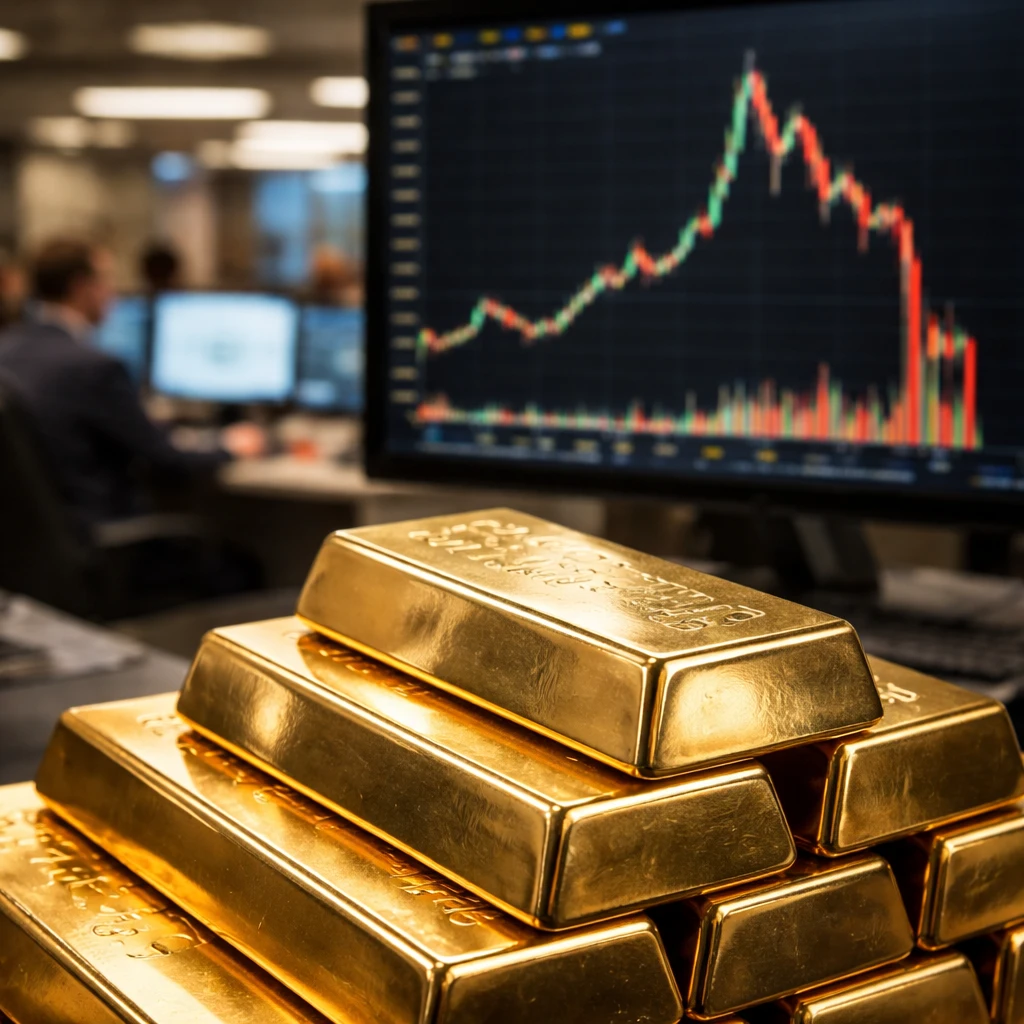
Gold experienced wild price movements at the start of the year that have prompted fresh questions about its near-term trajectory. UBS analysts, however, contend that the forces that lifted the metal earlier in 2026 are still in place.
On 29 January the yellow metal reached an intraday record of $5,594 per ounce. The following day it fell 9 percent and moved toward intraday lows near $4,400 - a swing that UBS strategist Vincent Heaney said "unsettled investors." Since that dramatic reversal, spot prices have steadied below $5,000, navigating a balance between dip-buying activity and changing expectations about the Federal Reserve's rate path.
UBS frames the episode not as a structural shift but as a recalibration. The bank notes that spot prices are still about 15 percent higher in 2026 and characterises the recent turbulence as a "reset rather than regime change." It identifies the $4,500–$4,800 range as an area where "fundamentals reassert their influence," pointing to an outlook that includes two additional U.S. rate cuts this year alongside "continued firm demand from central banks and ETFs."
Evidence of robust demand appears in the bank's data points. Central banks purchased 863 metric tons of gold in 2025, and UBS now projects central bank purchases will reach 950 tons in 2026. Meanwhile, the bank expects ETF inflows to increase to 825 tons. UBS suggests that such demand dynamics help explain why volatility may mirror earlier mid-cycle pullbacks - instances the bank cites include 1974 and 2020 - where prices fell but later resumed an upward path.
Looking ahead, UBS expresses confidence that the gold market can continue its advance through 2026. Its baseline projection calls for prices to reach as high as $6,200 per ounce by mid-year, followed by a consolidation to $5,900 per ounce by December. For investors seeking protection against inflation and geopolitical risks, the bank recommends a "mid-single-digit-percentage allocation."
Contextual implications:
- Monetary policy expectations - particularly the timing and size of U.S. rate cuts - are central to price direction.
- Demand from central banks and ETFs is presented as a key structural support for bullion prices.
- Financial markets, portfolio hedging strategies, and sectors sensitive to inflation and geopolitical risk may be affected by gold's trajectory.