
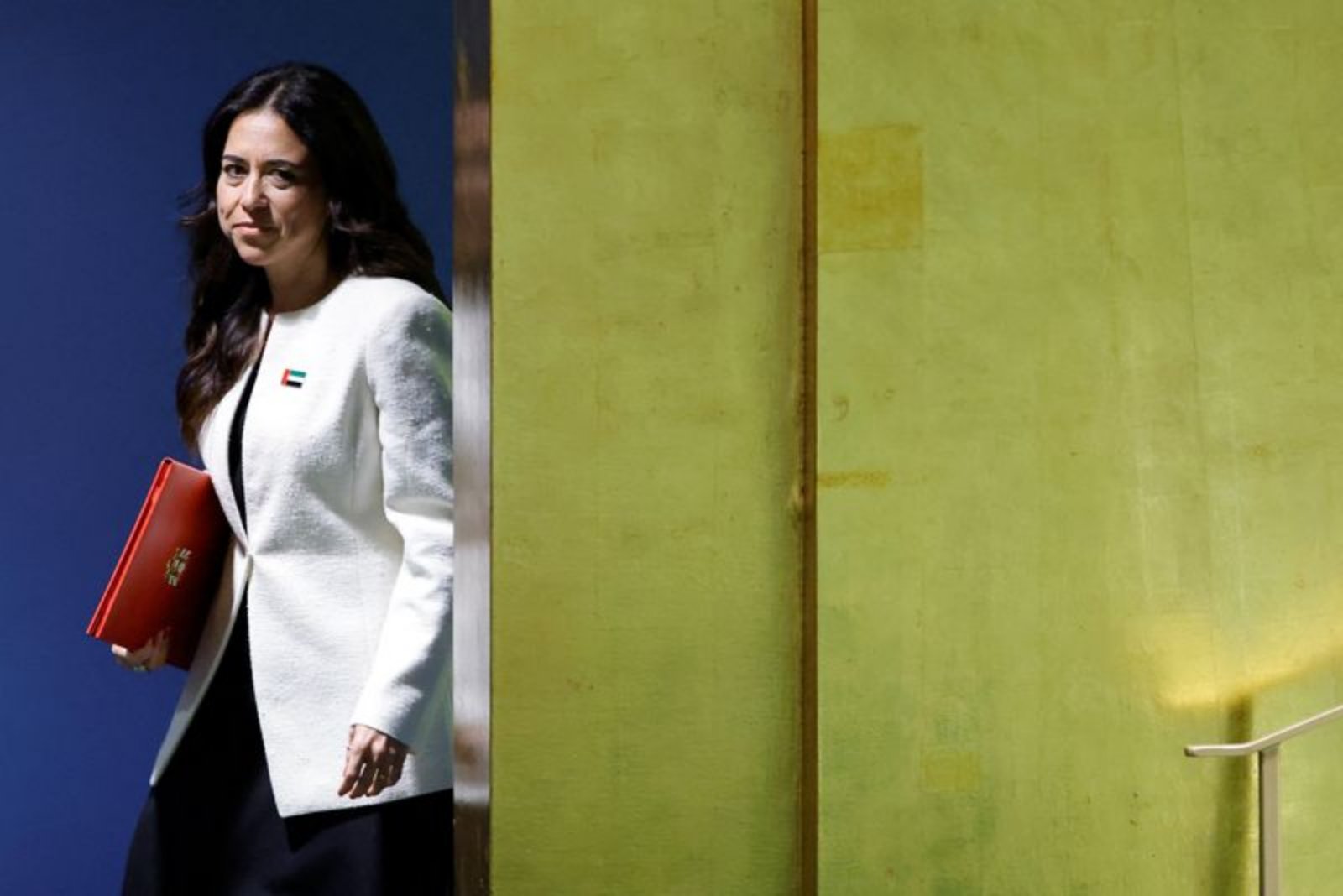
Lana Nusseibeh, a former ambassador to the United Nations who now holds the rank of minister of state in the United Arab Emirates foreign ministry, said diplomacy will ultimately resolve the conflict with Iran but only after Tehran stops attacking neighbouring countries.
In an interview, Nusseibeh said she was confident the war would conclude through negotiation and that U.S. President Donald Trump would bring about a diplomatic resolution "in his time." She added that a decisive change in behaviour by Iran is a precondition for mediation to begin.
"Ultimately, it will be a diplomatic solution, but there needs to be that tipping point moment, and I think that president Trump will lead us all to that moment in his time," Nusseibeh said. When asked about the UAE’s potential role in mediating the crisis, she was blunt: "It is difficult to talk about mediation when under attack... Mediation can only happen when the guns go silent."
Her remarks reflected shock at what she described as unexpected assaults by Iran on neighbouring states. Nusseibeh said that during talks in Tehran two weeks before the conflict erupted, Iranian officials had given her no indication that the UAE would be targeted. That absence of warning, she said, made the subsequent strikes on the UAE "so shocking and so egregious."
The attacks have included drones or missiles fired at civilian infrastructure in the UAE, with targets named as Dubai airport, landmark hotels and the country's financial hub. Iran has characterised its strikes as directed at the U.S. military presence in the region. The UAE and other Gulf countries, as well as Iraq, Jordan and Turkey, host U.S. military facilities.
On the diplomatic front, Nusseibeh said the UAE remains in close contact with the Trump administration and described the United States as a strong strategic partner. She did not criticise the U.S. or Israel for their retaliatory strike on Iran, and urged readers to differentiate that military campaign from what she called Iran’s "egregious illegal and unlawful attacks on the Gulf countries and Jordan."
Looking ahead, Nusseibeh said it will be difficult to return to the pre-war relationship with Iran given the destruction and disorder she attributed to Iranian actions across the region. "As you look around at the destruction and the chaos that Iran has caused in the region," she said, "it would be hard to restore relations with Iran to the pre-war status quo."
Addressing economic concerns, the UAE minister said Iran appeared to be attempting to undermine the Emirates’ economic model, one that has attracted around 700,000 Iranian nationals to live in the country. Despite the assaults, she argued the strikes have revealed the strength of the UAE economy.
"People are back at work, our airports are open, flights are taking off. It’s the Iranian economy that was already strangled by sanctions and economic pressure that is going into freefall. It’s their currency that’s going into freefall," she said, contrasting the UAE's resilience with what she described as worsening conditions in Iran.
Her comments highlighted the UAE’s position: open lines of communication with a principal ally, a reluctance to conflate allied military action with Iran’s strikes on civilian targets, and a call for cessation of hostilities as a necessary precursor to any credible mediation effort.
About the interview: The remarks reported here come from a one-on-one interview with the UAE minister of state. She recounted recent diplomatic engagement, described the timing of her visit to Tehran, and commented on the immediate effects of the assaults on the UAE and the broader region.