
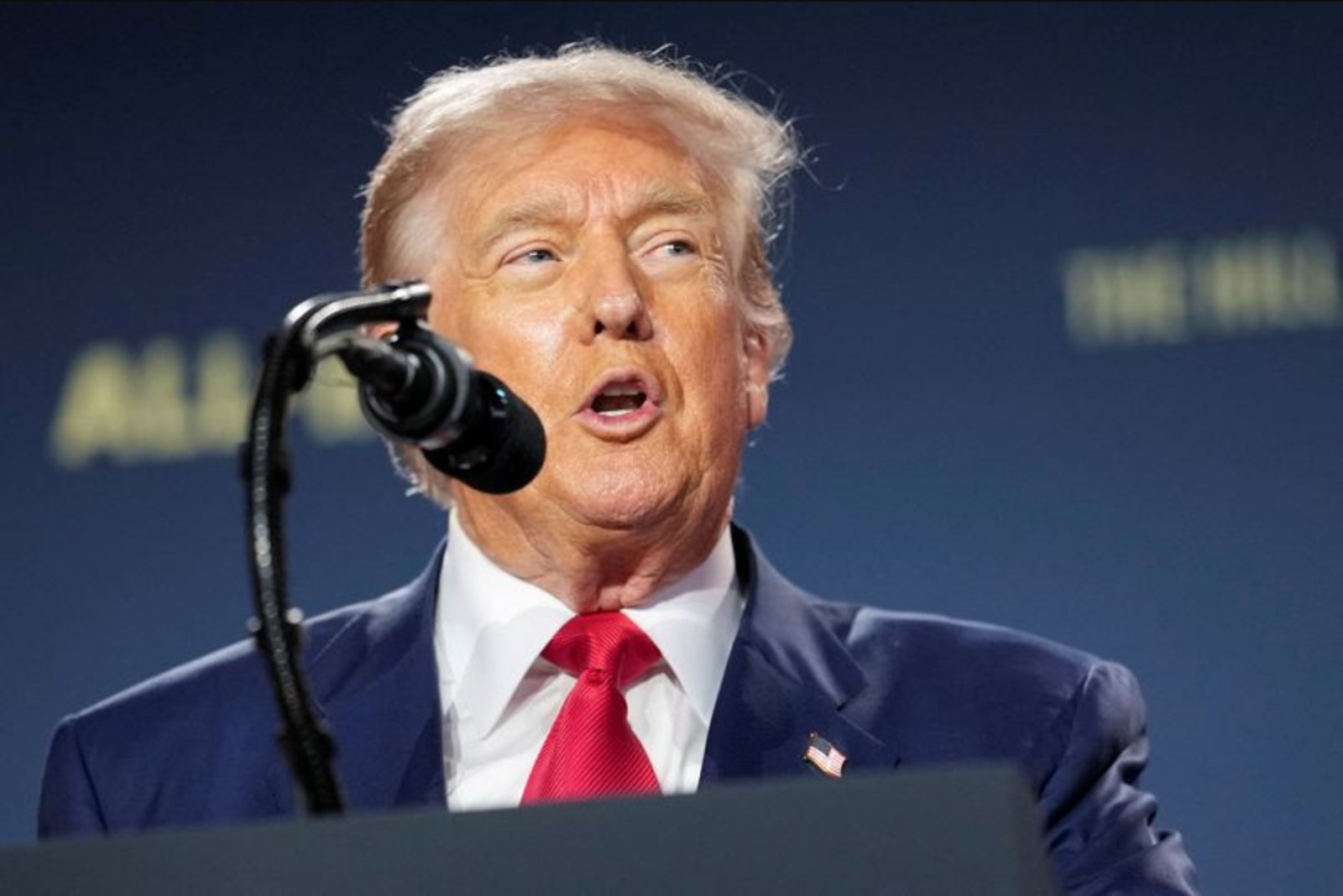
In a public statement on Monday, Donald Trump proposed that several countries should be required to sign the Abraham Accords at the same time as part of efforts to secure a deal with Iran. He named Qatar, Pakistan, Egypt, Jordan and Turkey as candidates to join "en masse," and said he had discussed the idea with their leaders over the weekend.
Trump said he spoke on Saturday with the heads of state of those nations, and that the conversations also included leaders from Saudi Arabia and Bahrain, two Gulf states that have already formalized relations with Israel under the Abraham Accords. The Accords are referenced in his post as the set of agreements aimed at normalizing relations between Israel and a number of Arab states.
"I stated that, after all the work done by the United States to try and pull this very complex puzzle together, it should be mandatory that all of these Countries, at a minimum, simultaneously, sign onto the Abraham Accords," Trump wrote in a Truth Social post on Monday.
He added that those countries would be "honored" to include Iran in the Accords once a deal to end the war is reached. Trump characterized negotiations with Iran as "proceeding nicely," but he did not provide any indication that a final agreement was imminent.
Summary
Donald Trump called for a coordinated enlargement of the Abraham Accords, suggesting that multiple countries join at the same time to help secure a broader agreement with Iran. He reported having spoken with leaders of the named countries and noted that Saudi Arabia and Bahrain have already signed the Accords. While he described talks with Iran as progressing well, he gave no timeline for an outcome.
Contextual note
The post reiterates an administrative view that a simultaneous signing by a group of regional states could be part of a negotiated settlement with Iran. It flags an approach that links diplomatic normalization between Israel and additional states to progress in talks with Tehran.
Key points
- Trump urged that Qatar, Pakistan, Egypt, Jordan and Turkey join the Abraham Accords en masse as part of an effort to reach a deal with Iran - sectors potentially affected include diplomacy, geopolitics and regional trade.
- He said he spoke on Saturday with leaders of those countries as well as with Saudi Arabia and Bahrain, both of which have already signed the Accords - this touches on state-level diplomatic relations and government policy planning.
- Trump stated negotiations with Iran are "proceeding nicely," but he provided no indication a deal was imminent - this uncertainty is relevant to markets sensitive to geopolitical developments, including energy and defense.
Risks and uncertainties
- It is unclear whether the named countries will agree to join the Abraham Accords or do so simultaneously, creating uncertainty for diplomatic timelines and regional agreements - this affects diplomatic and policy planning.
- Although negotiations with Iran were described as "proceeding nicely," no timetable or firm signal of a near-term deal was given, leaving the outcome uncertain and potentially affecting market expectations tied to geopolitical stability.
- The description of the situation as a "very complex puzzle" highlights potential diplomatic complications that could delay or alter any proposed coordinated signings - this raises risks for stakeholders tracking political risk in the Middle East.
What should investors consider? The original article included an investment-oriented note about the role of data-driven research in identifying potential opportunities. It suggested that institutional-grade data and analytical tools can help investors examine options, while noting that such tools do not guarantee success.