
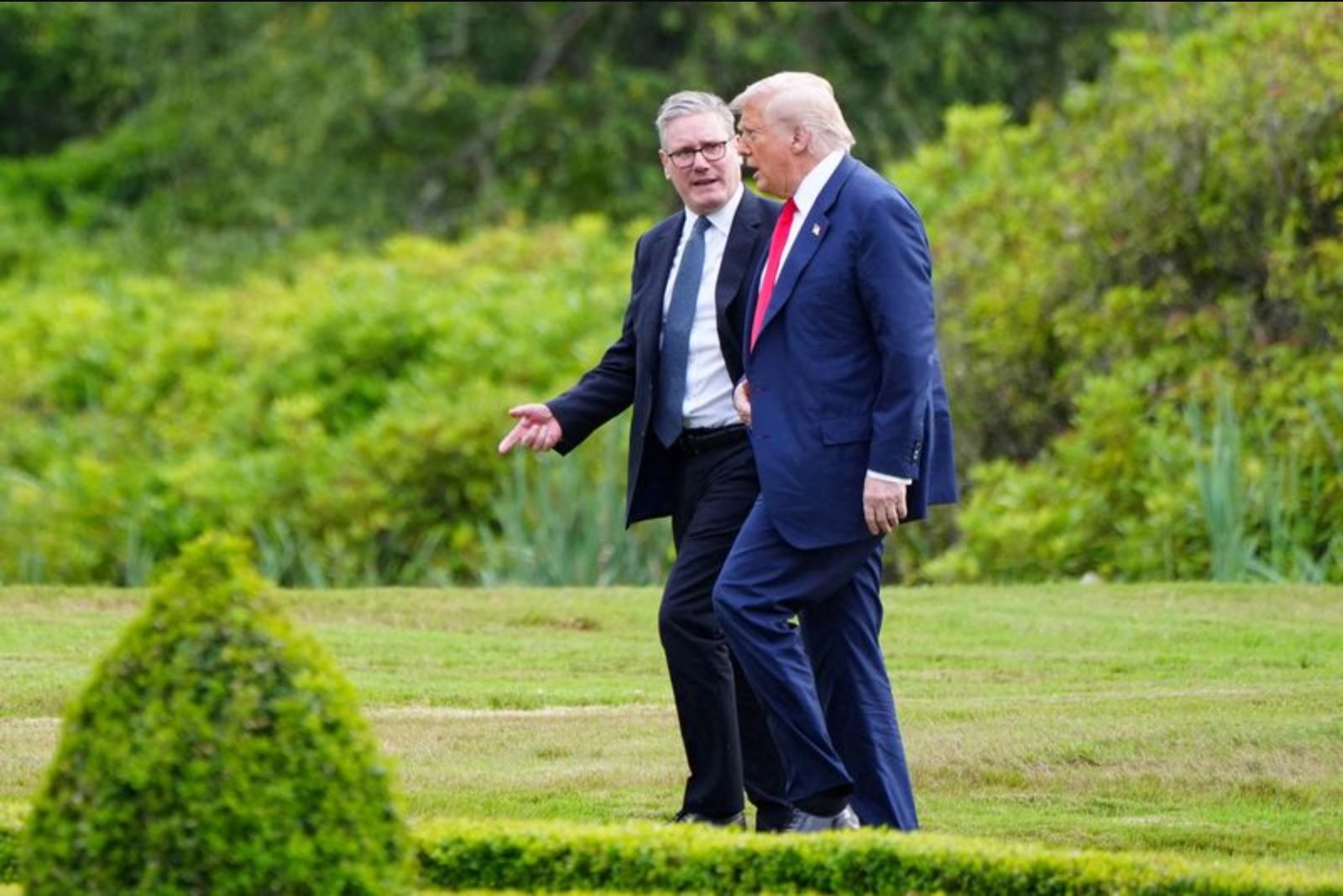
U.S. President Donald Trump said he was "sad to see" that the relationship between Washington and London "is obviously not what it was" following an episode in which Prime Minister Keir Starmer initially declined to provide military backing for strikes against Iran.
Speaking to the Sun newspaper, Mr. Trump criticised the British leader and contrasted Britain's stance with that of other European partners. "I mean, France has been great. They’ve all been great. The UK has been much different from others," he said, adding he had not expected the once "most solid of all" relationships to shift in this way.
Mr. Trump framed his comments as a personal disappointment rather than a strategic limitation, saying the United States did not require Britain to conduct operations in the Middle East. At the same time, he argued that Britain "should have helped… he should have." He also noted: "It’s not going to matter, but (Starmer) should have helped… he should have."
The remarks came after Mr. Starmer initially held back from supporting the strikes. Late on Sunday the prime minister authorised the United States to use British military bases for defensive strikes, a decision that followed the initial absence of British facilities in the first wave of action against Iran.
In London, senior minister Darren Jones responded to Mr. Trump's criticism on Times Radio by emphasising the continuing importance of the U.S.-UK relationship while underlining lessons Britain says it has drawn from previous military interventions. "One of the lessons of Iraq was that it’s better to be involved in these situations when you are aligned with international partners, and as I say, with a clear legal basis in the plan," he said.
Mr. Starmer addressed the matter in parliament on Monday, repeating his rationale for the initial decision and defending it as an exercise in national judgment. "President Trump has expressed his disagreement with our decision not to get involved in the initial strikes, but it is my duty to judge what is in Britain’s national interest. That is what I have done, and I stand by it," Mr. Starmer said.
The exchange of comments between the U.S. president and British officials highlights a moment of friction in a relationship that both sides continue to describe as important. British permission for the use of military bases for defensive measures came after the initial action, and government officials have sought to balance alliance obligations with lessons learned from past military engagements.
Contextual notes: The public statements cited above reflect the positions expressed by the individuals named regarding the strikes against Iran and the timing of Britain's decision to allow use of its bases for defensive purposes. Officials in both countries emphasised the broader significance of the bilateral relationship while expressing differing views on the appropriate degree and timing of military support.