
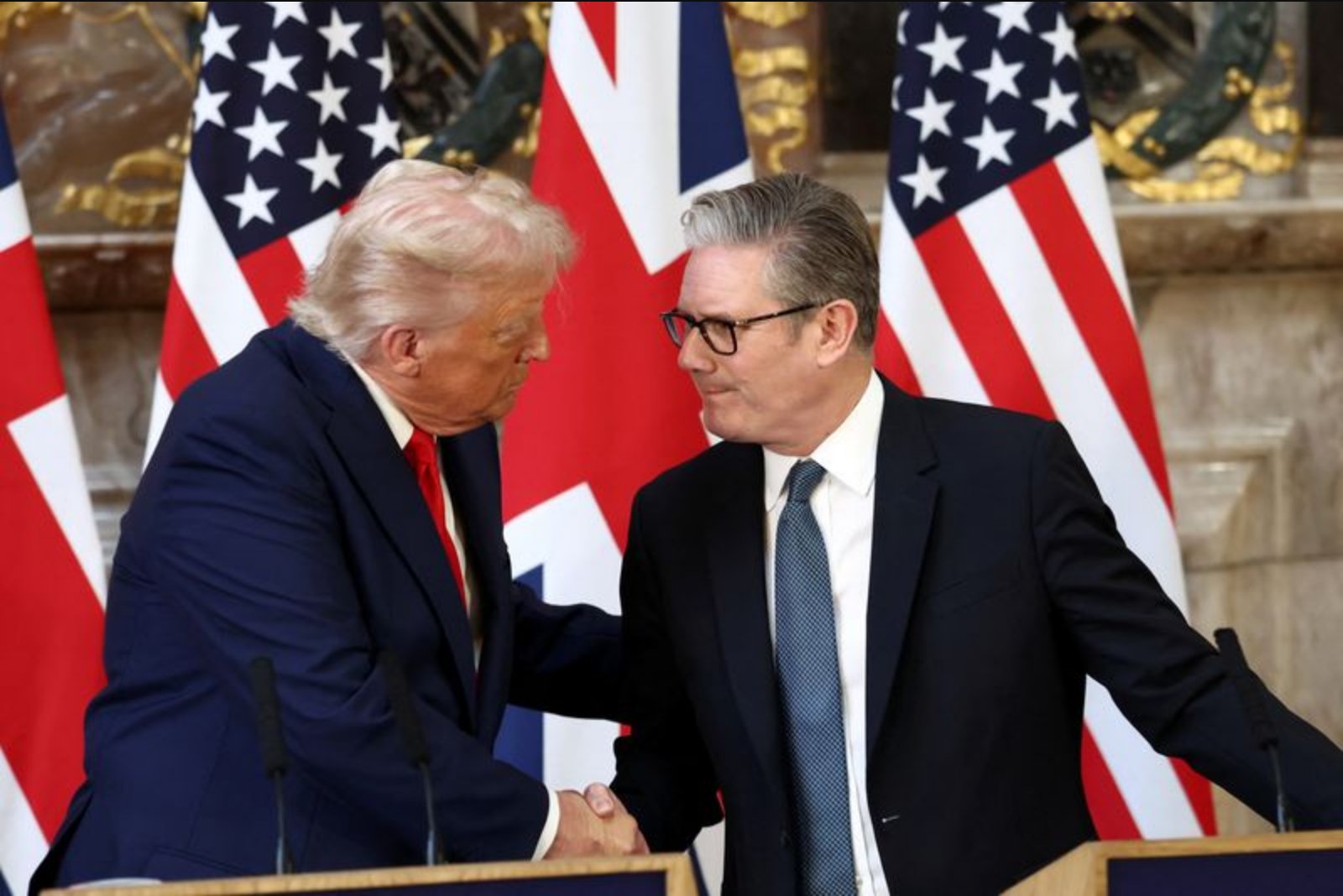
Donald Trump said he was "very disappointed" with British Prime Minister Keir Starmer for initially refusing permission to use the Diego Garcia air base to carry out strikes on Iran, according to comments he made in an interview.
Britain had first declined a U.S. request to operate from its bases, but on Sunday evening Starmer reversed that stance and agreed to allow their use in any "defensive strikes" the U.S. wished to undertake against Iranian targets. The U.K. decision to change course was announced after the initial denial.
In remarks made on Monday, Trump told the newspaper that the delay in granting permission was excessive, saying it took "too long" for Starmer to alter the government's position. He added: "That’s probably never happened between our countries before," and said, "It sounds like he was worried about the legality." These direct quotations reflect the U.S. president's assessment of the timing and motivations behind the British government's handling of the request.
The sequence of events described - an initial refusal followed by a later acceptance for use in defensive operations - frames the bilateral interaction that Trump criticized. The precise legal considerations that reportedly concerned the British prime minister were not expanded upon in the interview remarks quoted by the U.S. president.
This account is limited to the statements and timeline as presented by the U.S. president: the initial U.K. denial of permission; the subsequent acceptance late on Sunday for use of the bases in specified defensive strikes against Iranian targets; and Trump's reaction to the speed and apparent legal caution behind that reversal.
Contextual notes
The facts set out above derive from the interview comments attributed to the U.S. president and the reported sequence of decisions by the British government regarding the use of its bases. The available information identifies the Diego Garcia air base as the facility at issue and records the language used to describe permissible operations as "defensive strikes."
Beyond the quotations and the timeline summarized here, the statements do not elaborate further on operational details, legal assessments, or any additional rationale provided by the British government for its initial refusal or its later approval.