
Commodities March 12, 2026

Trump Says He Believes Iran’s Newly Appointed Supreme Leader Survived, but Is 'Damaged'

Khamenei has not appeared publicly since his selection; Tehran and its adversaries continue reciprocal strikes as the conflict nears two weeks

By Caleb Monroe
Trump Says He Believes Iran’s Newly Appointed Supreme Leader Survived, but Is 'Damaged'

President Donald Trump expressed the view that Iran’s newly named supreme leader, Mojtaba Khamenei, is likely alive but impaired after reports of injuries. Khamenei has not been seen in public since his appointment by a clerical assembly, and Iranian state media has described him as war-wounded. The conflict between the U.S., Israel and Iran, which began at the end of February, has produced reciprocal strikes, thousands of fatalities and volatility in financial markets.

Key Points

  • President Trump said he believes Mojtaba Khamenei is likely alive but "damaged," speaking in an interview broadcast by Fox News.
  • Khamenei has not appeared publicly since being chosen by a clerical assembly; his first comments were read by a television presenter.
  • The U.S. and Israel launched attacks on Iran on February 28; Iran has retaliated with strikes on Israel and Gulf countries hosting U.S. bases, contributing to thousands of deaths and volatility in financial markets - impacting energy, defense and financial sectors.

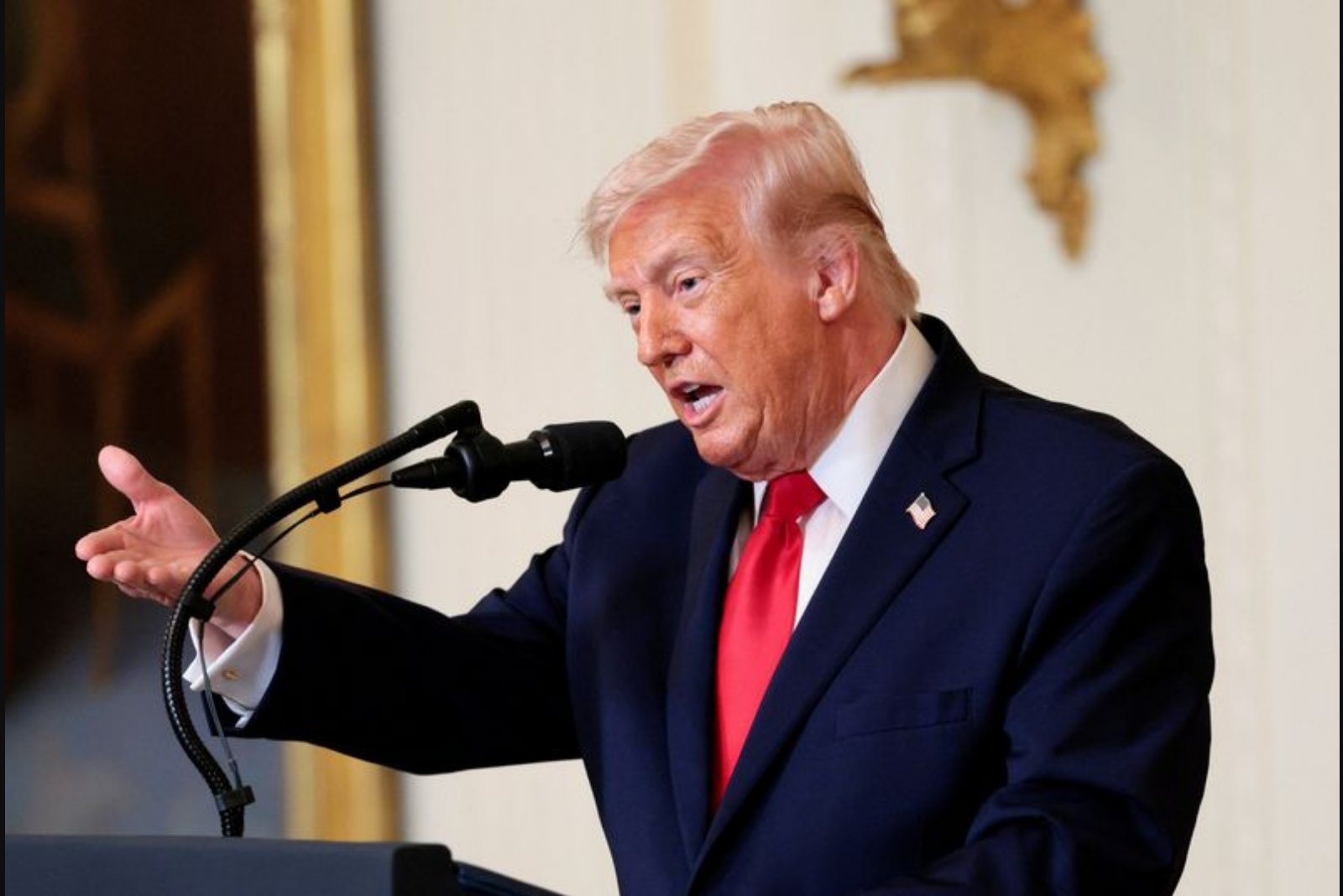
President Donald Trump said he believes Mojtaba Khamenei, Iran’s recently appointed supreme leader, is probably still alive but "damaged." The comment came in an interview on Fox News' "The Brian Kilmeade Show," and was published by Fox News late on Thursday.

In the interview, Trump said: "I think he probably is (alive). I think he is damaged, but I think he’s probably alive in some form, you know."

Khamenei has not been seen by Iranians since a clerical assembly selected him on Sunday. His initial remarks following that selection were read aloud by a television presenter on Thursday, rather than delivered in person.

An Iranian official told Reuters on Wednesday that the newly appointed supreme leader had suffered light injuries but was continuing to operate, after state television described him as war-wounded. The official attribution and state descriptions have left Khamenei’s precise condition and public absence unclear to outside observers.

In his first publicly conveyed comments, Mojtaba Khamenei pledged to keep the Strait of Hormuz closed and urged neighboring countries to shut U.S. military bases on their soil or face the risk of Iran targeting them. Those statements underscore the heightened regional tensions tied to the ongoing conflict.

The United States and Israel began attacks on Iran on February 28. Iran has carried out its own strikes in response, targeting Israel as well as Gulf countries that host U.S. military bases. As the confrontation approached the two-week mark, the conflict had already resulted in thousands of deaths and disrupted financial markets.

Leaders of the principal parties - Iran, Israel and the United States - have all issued defiant statements and signaled intentions to continue fighting. The combination of reported leadership injuries, reciprocal military actions and open threats against regional infrastructure has sustained uncertainty for markets and governments alike.


Context and implications

The public confusion over the supreme leader's physical condition - in part because his first comments were relayed rather than delivered directly - comes amid active hostilities between Iran and forces from the United States and Israel. The competing reports from state media and government sources, and the absence of public appearances, contribute to uncertainty about Iran's leadership posture as the conflict continues.

All parties involved continue to publicly assert they will press on, while the human toll and market disruption mount.

Risks

  • Uncertainty about Iran's leadership continuity and the physical condition of the new supreme leader could increase regional instability - affecting defense spending and geopolitical risk premiums.
  • Ongoing reciprocal strikes and threats to strategic chokepoints like the Strait of Hormuz may disrupt energy markets and global supply chains, adding stress to financial markets already shaken by the conflict.
  • Escalation of hostilities involving countries that host U.S. bases could broaden the conflict's economic impact and heighten market volatility, particularly in sectors sensitive to geopolitical risk.

More from Commodities

Inside the White House: Competing Aides Shape Trump's Public Stance as Iran Campaign Expands Mar 13, 2026 Oil Retreats After U.S. Grants 30-Day Licences to Move Russian Crude Stranded at Sea Mar 12, 2026 Oil retreats as U.S. temporarily permits purchases of Russian crude already at sea Mar 12, 2026 U.S. Grants 30-Day Permission for Purchases of Russian Crude Already at Sea as Iran Conflict Disrupts Flows Mar 12, 2026 U.S. Grants 30-Day License to Clear Russian Oil Stranded at Sea Amid Middle East Tensions Mar 12, 2026