
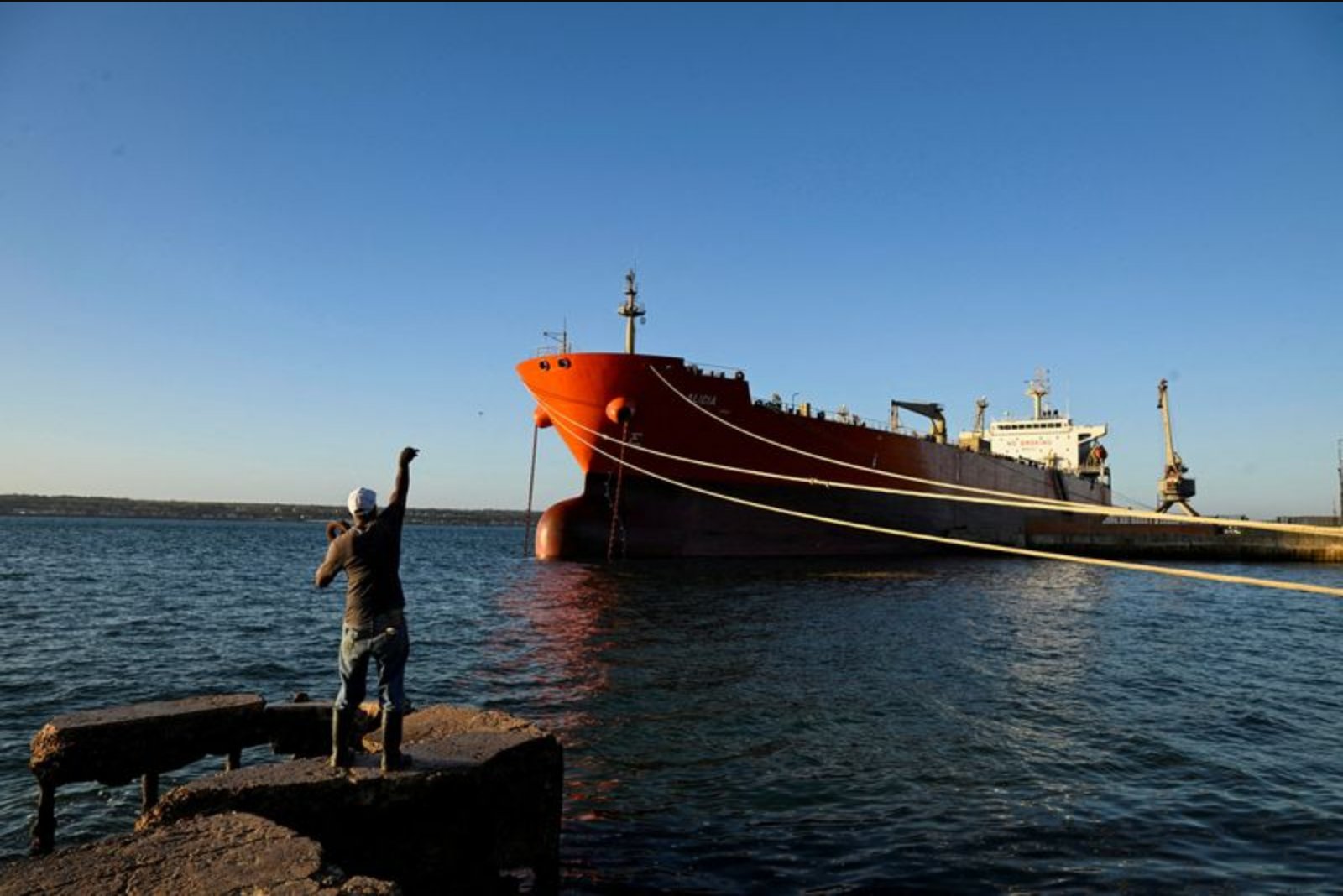
A tanker that earlier loaded a diesel cargo by ship-to-ship transfer in the Mediterranean and was reported to be carrying Russian-origin fuel originally destined for Cuba has altered its route toward Trinidad and Tobago, LSEG ship-tracking data shows.
The vessel, identified as the Hong Kong-flagged Sea Horse, had been recorded as suspending its course in the middle of the Atlantic Ocean since late February, according to maritime tracking information. Multiple maritime intelligence firms had indicated the cargo was bound for Cuba, but LSEG data now shows the tanker has changed direction and is heading south toward Trinidad, with an estimated arrival on Monday.
The diversion arrives against the backdrop of an acute fuel shortage on the island nation that has contributed to frequent power blackouts. LSEG port call data shows Cuba has received only two tankers so far this year bringing oil. The country relies on imported fuel oil and diesel to run power generation and limit outages; gasoline sales remain strictly rationed and are being resold on the black market at roughly $8 per liter, about six times the official price.
Policy developments have also shifted the framework for shipments of Russian-origin crude and refined products. The U.S. Treasury Department recently revised the terms of a waiver it had issued for sales of Russian-origin crude and petroleum products already loaded on tankers, explicitly excluding transactions involving North Korea, Cuba and Crimea. That waiver formed part of an administration effort focused on addressing high crude and gas prices amid the Middle East conflict.
Meanwhile, Russia’s state-run TASS news agency reported this week that the Russian government is engaged in talks with Cuba about possible aid options, without providing additional details.
Context and operational notes
- The Sea Horse is registered under a Hong Kong flag and transported diesel via a ship-to-ship transfer earlier this year in the Mediterranean.
- Maritime intelligence firms had indicated the cargo’s intended destination was Cuba; ship-tracking data later showed a prolonged course suspension before the change in heading toward Trinidad.
- The U.S. Treasury’s adjustment to the waiver specifically excludes Cuba, North Korea and Crimea from eligible transactions for Russian-origin petroleum already loaded on tankers.
The available data points describe a sequence of logistical and regulatory developments: an initially planned cargo movement toward Cuba, an extended suspension of the vessel in the Atlantic, a subsequent rerouting to Trinidad, contemporaneous U.S. policy changes narrowing waiver coverage, and public reports of discussions between Russia and Cuba about aid.