
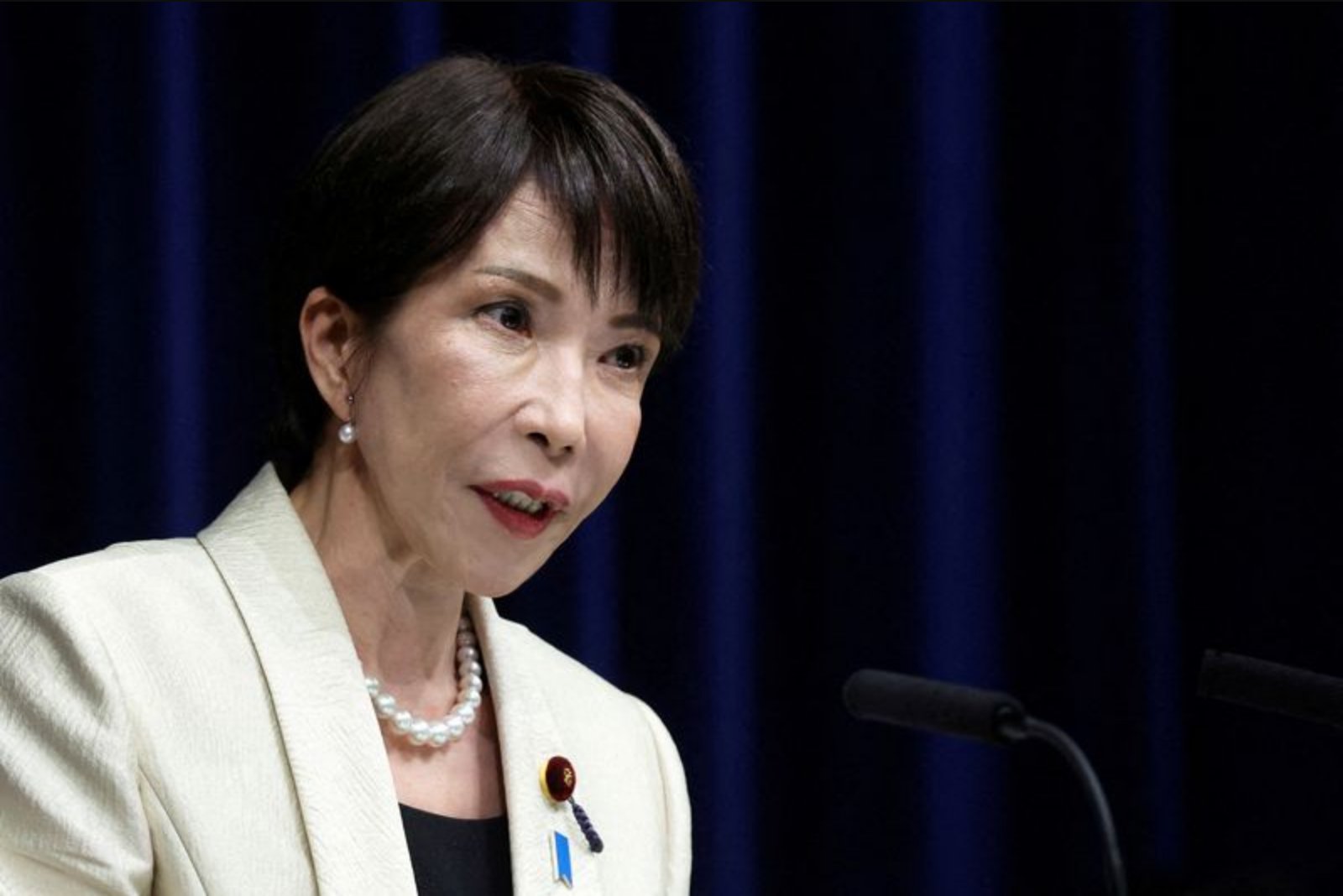
Japanese Prime Minister Sanae Takaichi is due to meet U.S. President Donald Trump at the White House on Thursday, confronting a diplomatic test that could reshape aspects of Tokyo’s security posture and its long-standing alliance with Washington. The summit opens a narrow window for the U.S. president to press a close security partner to back his approach toward Iran, in particular a request that Japan send ships to help escort tankers through the Strait of Hormuz.
That waterway, which carries roughly a fifth of global energy shipments, has become a focal point in a broader confrontation with Iran. The U.S. has called on a coalition of nations to provide convoy and protection duties as Tehran has sharply restricted transit. Japan, heavily reliant on the route for energy - about 90% of its oil shipments pass through the Strait - now faces the challenge of responding to a high-profile and potentially binary ask from its most important security ally.
Diplomatic tightrope
Analysts and officials say Takaichi will need to balance Washington’s expectations with legal, political and public constraints at home. "Takaichi is in a tight spot," said David Boling of the Asia Group consultancy in Tokyo, noting that the greatest risk would be public pressure from Trump for security commitments that Japan cannot legally or politically deliver on.
Japanese officials involved in preparations for the visit say Takaichi had initially hoped to direct the conversations toward the strategic challenge posed by an increasingly assertive China, a topic she intended to raise during a trip that was planned for late March but has since been delayed. Instead, the immediate focus is likely to be Iran and the U.S. demand for Japanese naval participation.
Political and legal constraints
Tokyo has provided logistical support and intelligence in past U.S. military operations in the Middle East, but dispatching Japanese warships into an active conflict zone presents thorny legal questions under Japan’s pacifist constitution and faces deep public resistance. A recent poll published by the Asahi newspaper found that fewer than 10% of Japanese support the attacks by the United States and Israel on Iran, a datapoint that highlights the domestic headwinds any participation would face.
European partners have also demurred. Germany, Italy and Spain have ruled out joining a Gulf escort mission, and the European Union’s foreign policy chief Kaja Kallas said, "Nobody is ready to put their people in harm’s way." With allies elsewhere declining, U.S. officials may intensify diplomatic pressure on countries that depend on American defense arrangements - including Japan.
Leverage and alliance dynamics
Observers point to the leverage Washington holds over Tokyo. Japan depends on U.S. forces - roughly 50,000 troops stationed on its soil, together with a carrier strike group and fighter squadrons - for deterrence against regional threats such as China and North Korea. Past U.S. actions on trade and tariffs have also been used as leverage in negotiating investments and addressing sizeable trade imbalances with Tokyo.
"It has turned into a discussion that shakes the very foundations of the Japan - U.S. security alliance," said Kazuhiro Maeshima, a politics professor at Sophia University in Tokyo. "If he can bring Japan into the coalition of the willing, it will increase pressure on other countries," Maeshima added. "Conversely, if Japan refuses, he can make an example of it - showing what happens when a country says no."
Domestic politics and economic pressures
Public backing for Takaichi has slipped slightly since her decisive election victory last month, polls show, as her administration wrestles with rising costs at home that have been partly fuelled by the energy shock stemming from tensions in the Middle East. The political calculus of consenting to a risky naval mission is complicated by these economic pressures and fragile popular support.
Within the limited menu of options available to Tokyo, Japanese officials are reported to be exploring ways to assist the U.S. without committing ships to a potential combat zone. Possibilities under consideration include enhanced intelligence sharing, logistical facilitation, or diplomatic engagement aimed at de-escalation. One potential role would be acting as an intermediary in communications with Tehran; it is a role Japan has attempted in the past, most notably when a previous prime minister sought to carry a message to Iran's leadership in 2019. Sources familiar with the preparations cautioned, however, that neither side appears ready for direct talks now.
Limits of diplomacy
Observers warn that engagement with Tehran on its own may not satisfy U.S. expectations. Kurt Campbell, who served as a deputy secretary of state, said, "I don’t think it’s going to be enough to talk to the Iranians," and suggested Trump may be preparing a sharply framed request that requires a clear "yes" or "no" response. "This is a moment of enormous political peril," he added.
As Takaichi prepares for hours of bilateral engagement - including formal talks, a working lunch and a state dinner - Tokyo is seeking a package of agreements with Washington that would advance its own strategic aims. Officials say Japan wants to diversify critical mineral supplies away from China and to participate in new missile defence initiatives aimed at addressing hypersonic threats. Whether those discussions will gain traction in a meeting overshadowed by the immediate Iran issue remains uncertain.
What is at stake
The decisions taken in Washington over the coming hours risk altering the tone of Japan - U.S. cooperation and could influence other nations weighing support for U.S.-led efforts in the Gulf. Tokyo must weigh alliance solidarity against constitutional limits and public sentiment, while also managing broader concerns about regional security and economic stability tied to energy flows through the Strait of Hormuz.
For now, Japanese officials say no formal request from the United States has been delivered, and Tokyo is assessing the scope of action it can take within the constraints of its constitution. The final outcome of the talks will reveal how far Tokyo is willing to go to accommodate Washington’s demands and how the alliance manages the resulting political and strategic fallout.