
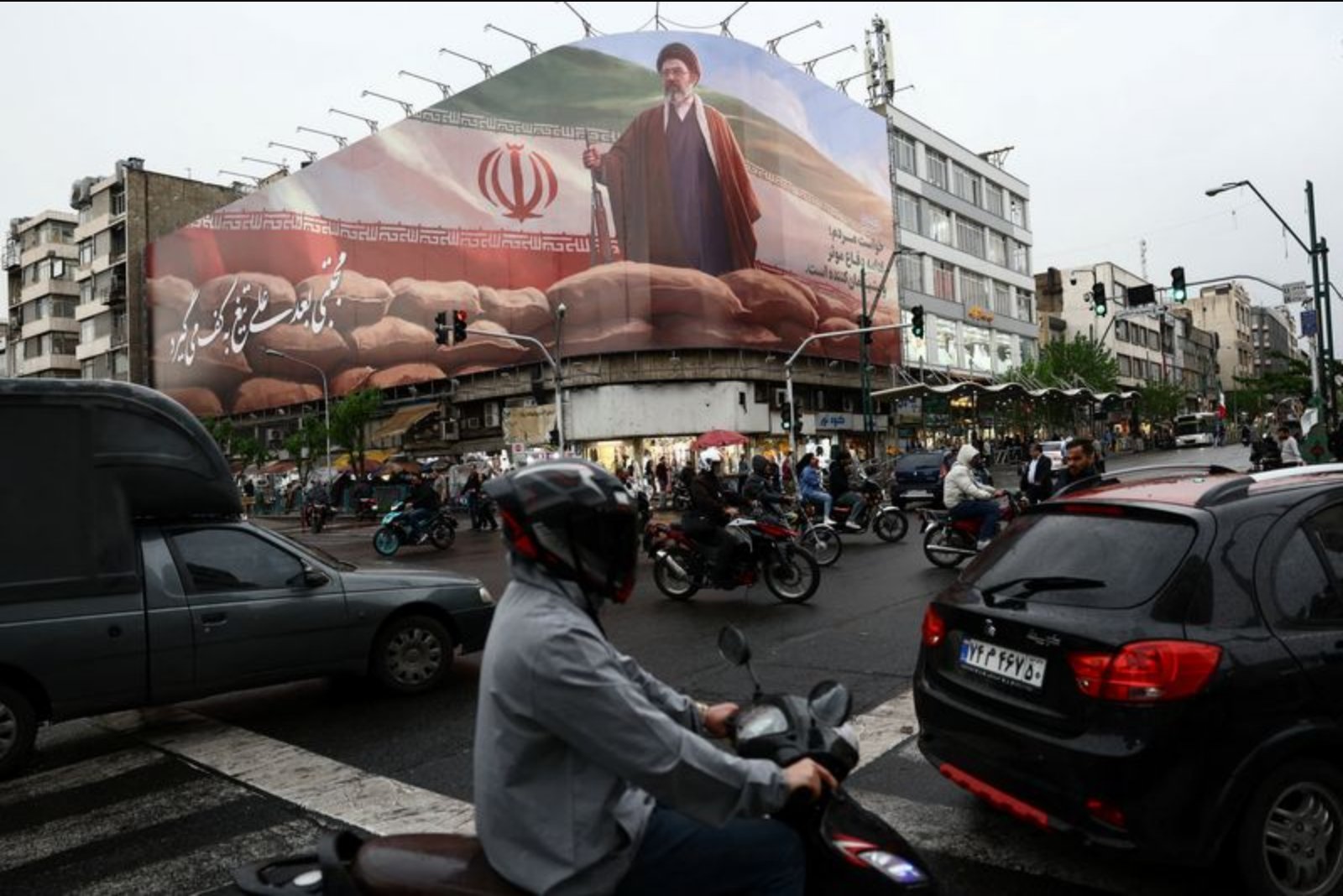
Two senior Iranian sources have told officials that Iran’s top authority has issued a clear order: enriched uranium at near-weapons-grade levels should not be transferred out of the country. The instruction, attributed to Ayatollah Mojtaba Khamenei by the sources who spoke on condition of anonymity because of the sensitivity of the issue, firmed Tehran’s stance on a central point of contention in ongoing peace discussions.
The directive addresses one of the United States’ primary demands in negotiations aimed at ending the U.S.-Israeli conflict with Iran - namely, that Iran’s stockpile of highly enriched uranium, the fissile material that could be used in an atomic weapon, be removed from Iranian territory. Israeli leaders have made similar demands: officials have said removal of enriched uranium is a condition for treating the conflict as concluded, alongside an end to Tehran’s support for proxy militias and the dismantling of its ballistic missile capabilities.
Why the order matters
The sources described the Supreme Leader’s directive as reflecting a broader consensus across Iran’s establishment. One of the sources said that the prevailing view among top officials is that transferring the enriched material abroad would increase Iran’s vulnerability to future strikes by the United States and Israel. The sources underscored that Khamenei retains ultimate authority on the most consequential state matters.
Neither the White House nor Iran’s foreign ministry responded to requests for comment on the reported order.
Context of the pause in fighting
A fragile ceasefire has held since the outbreak of the conflict, which began after U.S. and Israeli strikes on Iran on February 28. In the weeks that followed, Iran struck at Gulf states hosting U.S. forces and clashes erupted between Israel and Hezbollah in Lebanon, a group backed by Iran. Despite a reduction in active exchanges, there has been no major diplomatic breakthrough in efforts to reach a permanent settlement.
Negotiations have been complicated by measures on both sides, including a U.S. blockade of Iranian ports and Tehran’s control of the Strait of Hormuz, which the sources noted is a strategically vital global oil transit route. Talks have been mediated by Pakistan, but those efforts have yet to resolve the central issues at the heart of the dispute.
Suspicion within Iran
The two senior Iranian sources said deep suspicion exists among the country’s top officials that the current pause in hostilities could be tactical - a temporary lull engineered by Washington to create a false sense of security before resuming airstrikes. Iran’s lead peace negotiator, Mohammad Baqer Qalibaf, was quoted by the sources as saying that both overt and covert actions by adversaries suggested the United States was preparing for further attacks.
U.S. President Donald Trump, according to the sources, said publicly that Washington was prepared to launch further strikes on Tehran if Iran did not accept a peace deal, while also indicating that military action could be delayed for a few days to secure the ‘‘right answers.’’ The sources acknowledged that some gaps between the parties have narrowed in negotiations, but that significant disagreements remain, particularly over Iran’s nuclear program and the future of its enriched uranium stockpiles.
Stakes around enriched uranium
Iranian officials, as reported by the sources, have repeatedly said their priority is to secure a durable end to the war and obtain reliable guarantees that the United States and Israel will not resume attacks. Only once such assurances are in place, they indicate, will Tehran consider detailed negotiations over the nuclear program and the accepted conditions of any settlement.
Iran has long denied intentions to build a nuclear weapon. The country does assert some requirements for highly enriched uranium for medical applications and for a research reactor in Tehran that uses small amounts of uranium enriched to about 20%.
Before the conflict erupted, Iran had signaled a willingness to ship out half of its stock of uranium enriched to 60% - a concentration far above what is needed for civilian nuclear uses. The sources said that position shifted after repeated U.S. threats of strikes, with the leadership concluding that exporting the material would expose Iran to greater risk.
Possible technical solutions
Despite the firm stance, one of the Iranian sources indicated that there are possible approaches to resolving the dispute over the enriched stockpile. The source mentioned options such as diluting the material under the supervision of the International Atomic Energy Agency, an agency that has been monitoring Iran’s nuclear materials.
The IAEA had previously estimated that Iran held 440.9 kg of uranium enriched to 60% at the time Israeli and U.S. strikes targeted Iranian nuclear facilities in June 2025. What portion of that amount survived the strikes is not fully clear. The IAEA director general, Rafael Grossi, reported in March that the bulk of the remaining stock was stored in a tunnel complex at the Isfahan nuclear site, and that his agency believed slightly more than 200 kg of the 60% enriched material was there. The agency also assesses some of the material is located at the Natanz nuclear complex, where Iran operates enrichment plants.
Impasse and next steps
The reported order from Iran’s Supreme Leader complicates a core element of U.S. and Israeli negotiating positions and could intensify mistrust between the parties. Iranian officials, according to the sources, maintain that any technical discussions about the stockpile must be conditioned on secure, verifiable guarantees that would prevent further attacks on Iran.
For now, the issue of how to handle the enriched uranium - whether by export, dilution, or continued in-country retention under international supervision - remains a central unresolved item in the broader effort to translate a fragile ceasefire into a lasting peace.