
Houston - The U.S. Supreme Court's recent decision to invalidate tariffs introduced last year by former President Donald Trump is poised to lower certain costs for U.S. oil producers, service companies and contractors that rely on imported equipment and parts. Industry leaders and analysts who spoke with Reuters emphasized, however, that the ruling is unlikely to immediately alter broad energy trade patterns, including liquefied natural gas (LNG) flows.
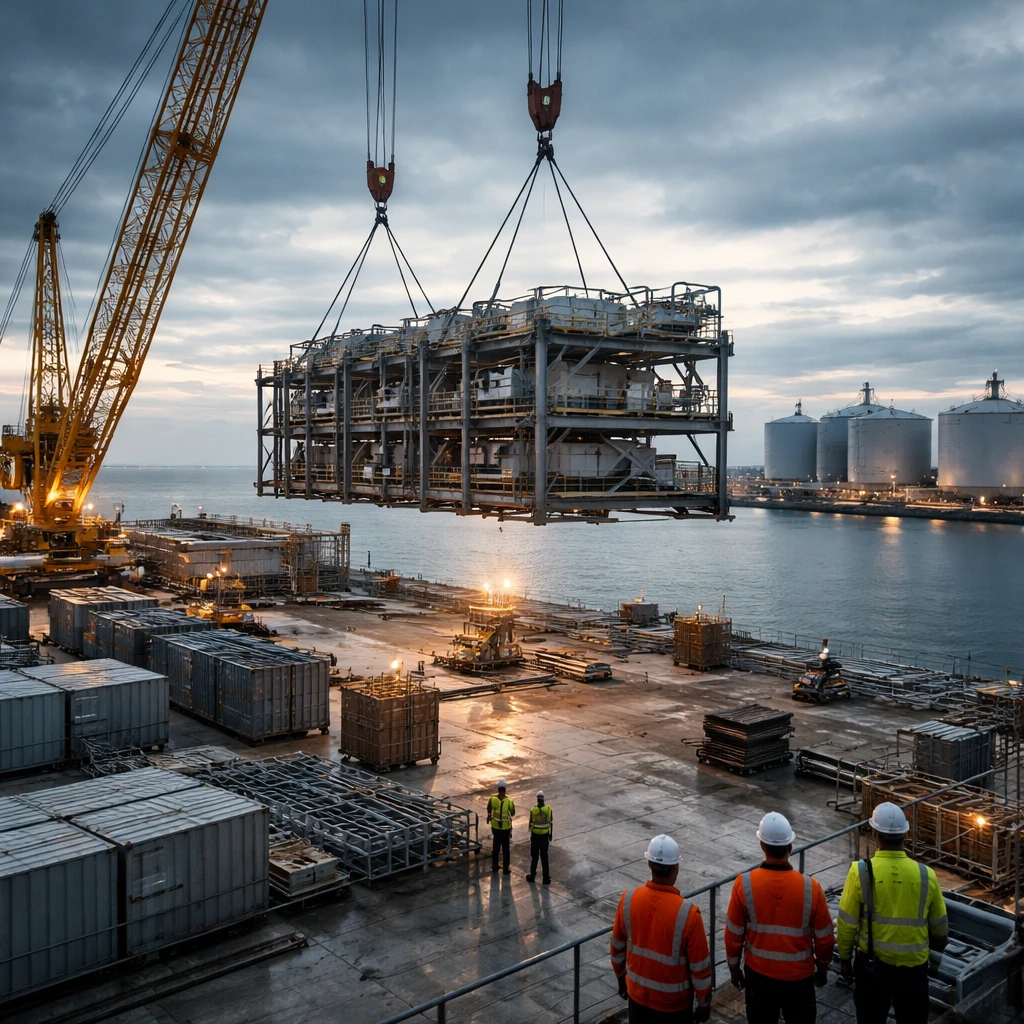
The court action should reduce the price tag for constructing LNG export facilities and other sizable energy infrastructure projects that depend on modules and components built overseas. Some projects, such as those by Venture Global, use a modular construction model - assembling key plant components in places like Italy and shipping them to the U.S. for final construction and integration. Tariffs had previously raised costs for such imported modules.
Executives across the oil and gas equipment and services chain said many companies had absorbed the additional tariff-related expenses, while others sought to shift some of the burden to customers. Cam Hewell, president and CEO of Premium Oilfield Technologies, which supplies spare parts and equipment to oilfield operations, provided a concrete example of the impact on his business.
"We were forecasting that we would have to pay around $5 to $6 million in tariff taxes in 2026, so that number will come down, hopefully," Hewell said. "We had to eat about 90% of the tax increase, so it won’t have a big impact on what we charge customers. But it will free up more cash flow for research and development, employee raises, and cash back to investors."
For drillers and producers, reduced import duties could improve the ability to forecast capital and operating expenses. Kirk Edwards, president of Texas-based producer Latigo Petroleum, said the ruling should allow companies to budget with greater precision and gain clearer visibility on drilling costs.
Not all tariffs were affected by the court's decision. The 50% tariffs on steel and aluminum put in place last year remain in force. Some industry leaders cautioned that the current administration might find alternate mechanisms to preserve similar cost burdens.
"I have some fear that the administration will quickly bypass Congress and cook up another tariff scheme that mimics the current one…and never change the amounts we have to pay," Hewell said.
Former President Trump himself signaled potential policy alternatives, suggesting the possibility of a 10% global tariff for 150 days and adding that "We have alternatives, great alternatives."
Impact on LNG trade
Although the tariff rollback would, in theory, lower the cost of bringing LNG plants online, analysts said it does not create an economic case for China to accept more U.S. LNG shipments. Ira Joseph, a senior research associate at Columbia University's Center on Global Energy Policy, noted that market economics favor other trade patterns.
"It makes more sense for China to continue to trade on U.S. LNG to Europe to make an arbitrage on the shipments or import cheaper oil-indexed LNG from the Middle East," Joseph said.
Alex Munton, director of global gas and LNG research at Rapidan Energy, added that Beijing appears to be treating its LNG market as strategic leverage vis-a-vis the United States. He said that no LNG purchase commitments were included in the deal reached late last year, and that Chinese authorities are unlikely to offer new purchases or concessions even if import-related tariffs are eased.
Samantha Santa Maria-Hartke, head of market analysis at Vortexa, echoed the view that the current administration's policy resourcefulness could produce alternative approaches to preserve tariff-like costs. She also pointed out that China stopped taking deliveries of U.S. crude and LNG after imposing retaliatory tariffs, making a reversal in Chinese buying behavior unlikely.
Market and corporate budgeting implications
For companies that manufacture or assemble imported energy equipment, the decision should improve cash flow visibility. Hewell described the potential benefits for internal allocation of funds, noting that reduced tariff outflows could be redirected to product development, employee compensation and returns to investors.
Venture Global, the firm that assembles LNG plants in stages overseas before importing them for final construction in the U.S., was cited as a business model that could see direct cost relief. Venture Global did not immediately respond to a request for comment.
Promotional note referenced in reporting
Separately, an investment-related algorithmic service named ProPicks AI was mentioned in the original coverage as evaluating companies like Venture Global across financial metrics and generating stock ideas; the reference included past performance figures for certain stocks previously highlighted by the system. The inclusion of that material does not change the factual reporting on tariffs and industry responses described above.
Conclusion
The Supreme Court's rollback of specific Trump-era tariffs should lower some import costs for U.S. energy builders and suppliers and improve budgetary clarity for affected companies. Still, analysts and industry executives say the change is unlikely to prompt immediate shifts in global LNG trade dynamics, as broader market incentives and China's policy choices are expected to keep flows largely unchanged for the time being.