
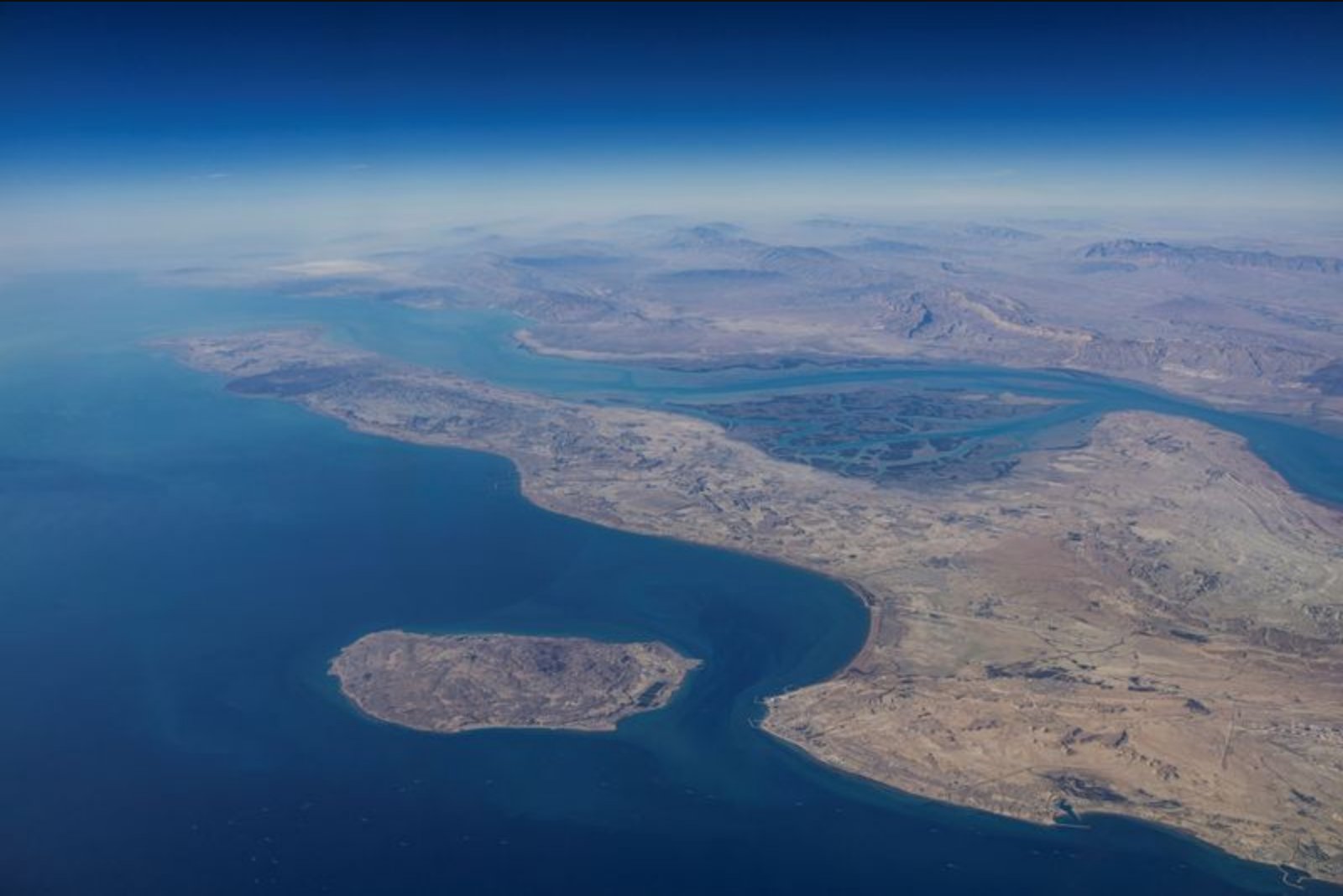
Global oil markets are expected to stay on edge in the coming days as investors and traders closely monitor how escalating conflict in the Middle East affects shipments through the Strait of Hormuz - a channel responsible for moving more than 20% of the world’s oil supplies.
Several major institutions have published short-term price projections and scenario analyses that point to elevated crude prices while the waterway remains in focus. Citi said in a note that it expects Brent crude to trade between $80 and $90 a barrel over at least the coming week. The bank added that prices would be likely to retreat toward $70 a barrel if tensions de-escalate.
Goldman Sachs placed a real-time risk premium on crude of $18 per barrel in its recent note. The bank estimated that this premium could fall to about $4 per barrel in a situation where half of flows through the Strait are halted for a month.
Goldman also modelled implications for gas benchmarks, saying that if flows through the Strait were to stop for one month, European and Asian benchmark gas prices - represented by TTF and JKM - could climb roughly 130% to near 74 euros per megawatt hour, which is about $25 per million British thermal units.
Energy consultancy Wood Mackenzie warned that oil prices could top $100 a barrel if tanker traffic through the Strait is not restored quickly. Wood Mackenzie analysts said the disruption produces a dual supply shock - current exports via the Strait are halted and the additional volumes normally available from OPEC+ and much of OPEC’s spare capacity remain inaccessible while the waterway is closed.
On supply responses, OPEC+ has already agreed to raise output by 206,000 barrels per day for April. Still, JPMorgan has reported a sharp drop in crude exports through the Strait of Hormuz, estimating flows have fallen to about 4 million barrels per day from a typical 16 million barrels per day, with the remaining flows largely limited to Iranian barrels as other tanker traffic dries up.
JPMorgan further estimated that Gulf producers have sufficient storage and tanker capacity on hand to cover roughly 25 days of stranded supply. The bank cautioned that a 3-to-4 week restriction through the Strait could force output shut-ins among Gulf Cooperation Council producers and push Brent crude above $100 a barrel.
Views on the likely price path vary. Societe Generale analysts suggested the most probable outcome is a short-lived spike followed by a partial retracement, assuming markets judge supply continuity to be credible. In contrast, Bernstein raised its 2026 Brent assumption from $65 to $80 a barrel but said it could reach $120 to $150 in an extreme case of prolonged conflict.
Vikas Dwivedi, global energy strategist at Macquarie Group, said the world could cope with the Strait of Hormuz being closed for one or two weeks, but he warned that the effect on the oil price would escalate rapidly after a third week and become definite after a fourth.
Implications for markets and sectors
- Oil markets - immediate upward pressure on crude prices due to supply risk and measured risk premia in broker and bank analyses.
- Gas markets - potential for large increases in benchmark gas prices (TTF and JKM) under a prolonged stoppage scenario.
- Maritime and storage sectors - importance of tanker and storage capacity highlighted by estimates of days of stranded supply.
Current uncertainties
- The duration of any disruption through the Strait of Hormuz remains a central unknown driving a wide range of price scenarios.
- Whether OPEC+ additional volumes and spare capacity can be deployed while the waterway remains closed is limited, constraining typical market-balancing tools.
- Market judgement on supply continuity will determine whether an initial price spike becomes sustained or partially retraces.