
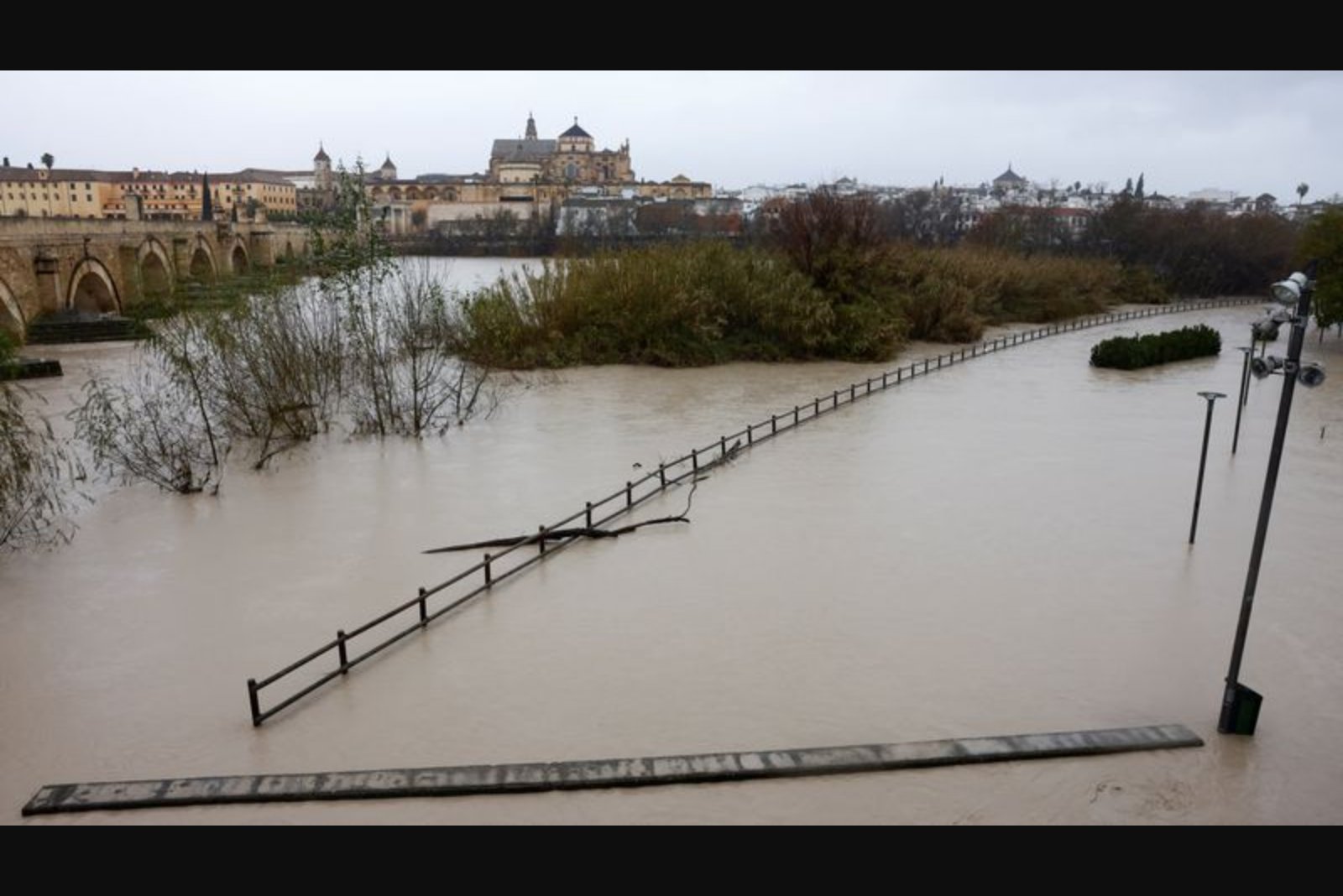
Storm Marta moved into the Iberian Peninsula on Saturday after a sequence of violent weather systems in recent weeks, leaving low-lying fields submerged, infrastructure under strain and communities on high alert.
Farmers across southern Spain reported what they called catastrophic damage to vegetable and other field crops, with standing water covering thousands of hectares. Miguel Angel Perez, of the farmers organisation COAG in Andalusia's Cadiz province, described the scene on Spanish television TVE:
"It is raining without stopping. Crops like broccoli, carrots and cauliflowers are under water. Thousands of hectares inundated. We have a real natural catastrophe."Perez said the storm had inflicted millions of euros of damage on this year's crop and that farmers would seek government assistance to recover.
The current storm followed a run of severe weather that brought heavy rain, thunder, snow and strong gales to parts of Spain and Portugal before Marta's arrival on Saturday. Fatalities and injuries have been reported amid the deterioration.
Emergency services reported that a snowplow driver died after his vehicle plunged 20 meters (65 ft) down a slope in the El Pico mountain pass in Avila, where heavy snow had fallen. Earlier the same day in Portugal, emergency services said a 46-year-old man drowned in a river at Campo Maior, in the central Portalegre area. Officials also noted that five people have died since Storm Leonardo arrived last week.
Large-scale displacements and transport disruptions have followed. More than 11,000 people were forced to leave their homes in Andalusia in southern Spain, authorities said, while nearly 170 roads across Spain were reported closed. Rail services in Portugal experienced interruptions as well.
Portugal's agriculture ministry provided an early estimate on Friday that preliminary losses in the agricultural and forestry sectors could total around 750 million euros, a figure equivalent to $890 million using the published conversion. Officials cautioned that the storms are expected to intensify in the coming days.
Spanish state weather agency AEMET issued an orange warning for Storm Marta on Saturday, the second-highest alert level after red, citing forecasts for more rain, snow at higher elevations and hazardous coastal conditions. Local authorities adjusted public events and services accordingly; La Liga announced that the top-flight soccer match between Sevilla and Girona was postponed at the request of the Andalusian club due to the weather.
Beyond crop damage and transport impacts, the prolonged wet conditions raised concerns about ground stability. Residents in parts of the Serranía de Ronda mountain range in Málaga, which had already been hit by Storm Leonardo this week, said the ground had trembled for days. The council of Cortes de la Frontera posted on social media that there was "no danger" from the tremors that had also been felt in nearby towns including Benaoján, Gaucín and Jimera de Líbar. Specialists from the Spanish National Research Council (CSIC) were deployed to the area to monitor the situation.
Significant rises in river levels prompted precautionary evacuations. Several residential areas near the Guadalquivir River in Córdoba province were evacuated after a dramatic surge in water levels. Spain's Deputy Prime Minister María Jesús Montero warned that the river was expected to reach its peak on Saturday or Sunday.
In Portugal, the heavy rains affected electoral logistics: three towns postponed Sunday’s presidential vote until next week. To cope with the storms’ consequences, Portuguese authorities deployed more than 26,500 rescue workers.
Authorities across the region continued to monitor weather forecasts closely and kept emergency resources mobilised as the storms progressed. The official euro-dollar conversion cited in preliminary estimates was ($1 = 0.8463 euros).
Summary:
Intense rainfall and high winds associated with Storm Marta have compounded earlier storms across Spain and Portugal. The weather has inundated crops, disrupted transport and services, caused multiple fatalities, prompted large evacuations and produced early agricultural and forestry loss estimates of roughly 750 million euros. Officials warned of further severe conditions, monitoring river levels, ground tremors and coastal hazards.