
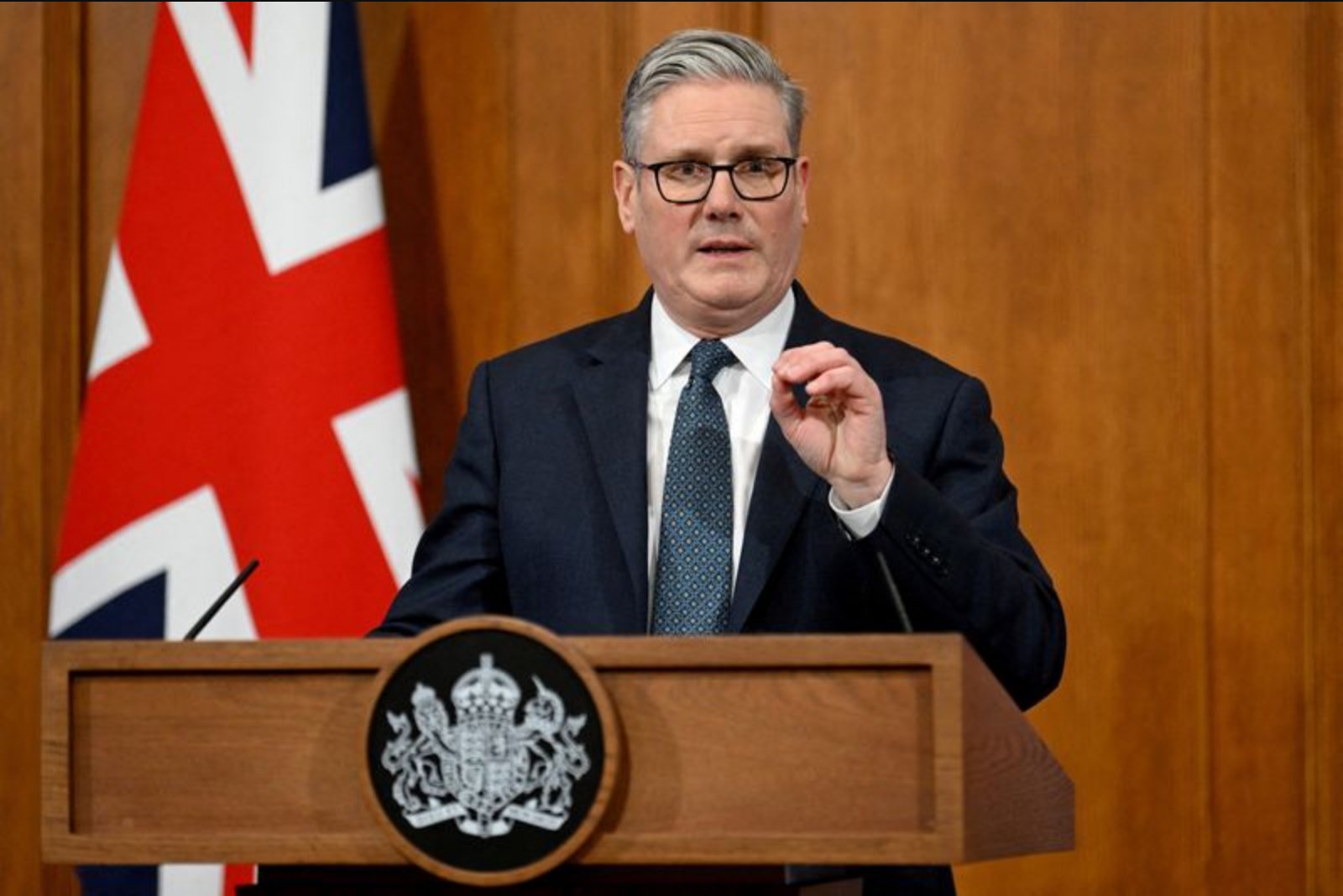
Prime Minister Keir Starmer insisted that the United Kingdom's long-standing security partnership with the United States remains active, despite public rebukes from the U.S. president over his handling of requests to use British military facilities.
At a press conference, Starmer said the relationship was "in operation right now," describing ongoing cooperation that includes shared intelligence around the clock and joint operations from locations where U.S. and British forces are colocated. He defended both his initial decision to decline immediate U.S. use of British bases for a U.S.-Israeli campaign and his subsequent participation in defensive measures after Iran responded by attacking neighbouring states.
The U.S. president had criticized Starmer personally, saying the British leader was "not Winston Churchill" and publicly chastising him for what the president viewed as hesitation. That censure was paired with other regional and domestic criticism of Starmer's cautious approach.
Regionally, the prime minister has faced scrutiny after an Iranian-made drone struck one of Britain’s military bases on Cyprus. Domestically, political opponents including the leader of Reform UK, a supporter of the U.S. president, accused Starmer of dithering and warned that alienating the American administration risked undermining a relationship that they said was essential to British defence.
In response to Iran’s strikes, the government said it would deploy a warship and helicopters equipped with counter-drone capabilities to the region. On Thursday, Starmer announced an additional dispatch of four Typhoon fighter jets to Qatar to bolster protection for forces and facilities in the area.
Separately, Britain is working to repatriate citizens who have been stranded in the Middle East after the conflict disrupted traffic through some of the world’s busiest airports. Starmer reported that more than 4,000 people had returned to the United Kingdom on commercial flights from the UAE, and that 140,000 British nationals had registered their presence in the region.
The prime minister framed his decisions as calibrated responses to evolving security conditions - initially restricting access to bases, then joining defensive operations once Tehran had launched attacks on neighbouring countries. He emphasised continuous intelligence sharing with the United States and cooperation to protect personnel at joint facilities.
While the prime minister has reiterated the resilience of the UK-US relationship, the public exchange of criticism from the U.S. president and remarks from regional and domestic figures underline political sensitivities around the government's approach. At the same time, the government has moved to strengthen on-the-ground protective measures and to facilitate the return of British citizens who sought to leave the region as the situation disrupted commercial travel.