
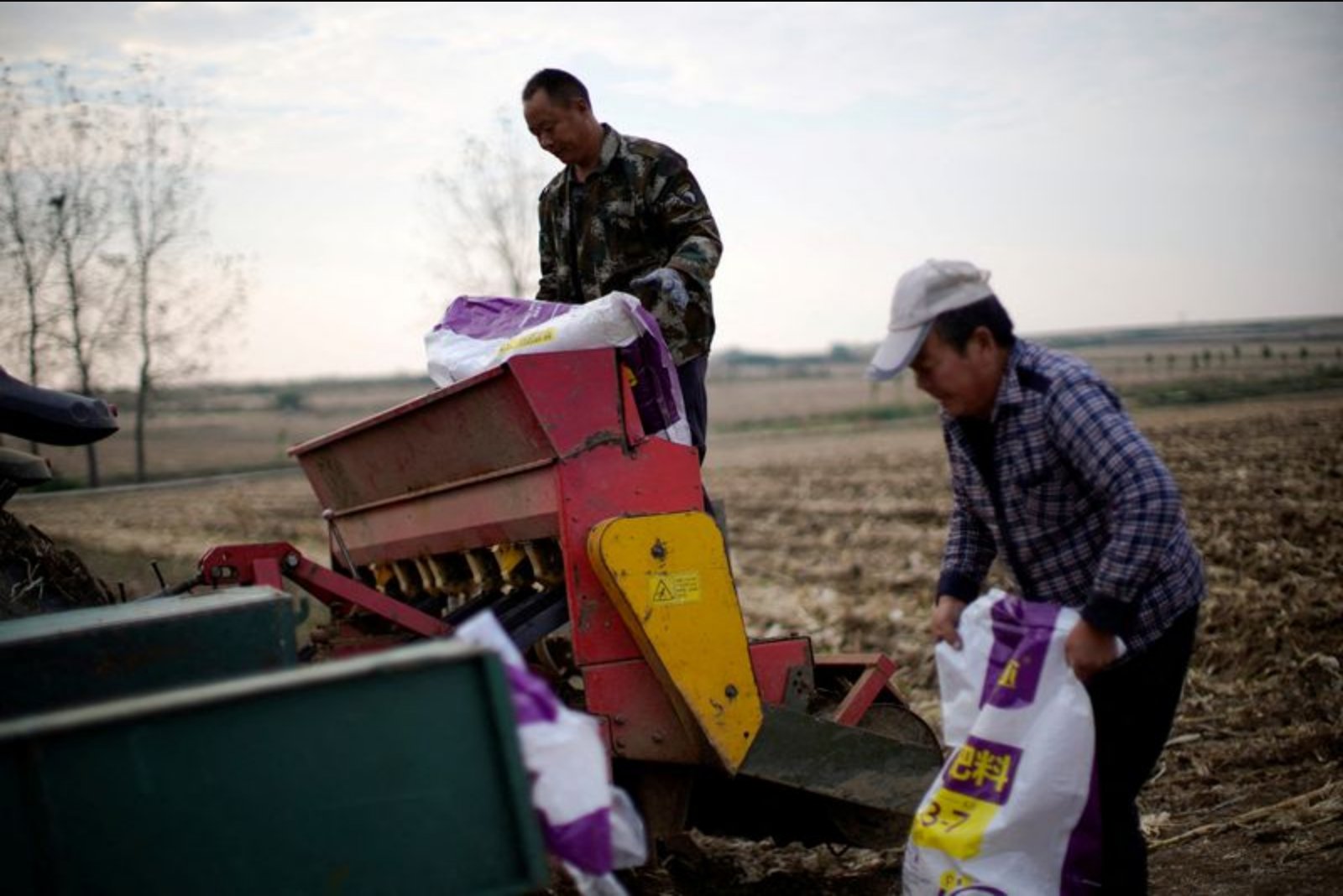
Escalating hostilities in the Middle East have tightened global fertiliser and fuel markets, leaving many growers facing sharply higher input costs and potential supply shortfalls as spring planting approaches in the Northern Hemisphere.
Farmers across a wide geographic span - from Srinagar in Kashmir to Saskatchewan in Canada - rely on fertiliser and diesel that transit the Strait of Hormuz. That waterway has been effectively closed as the conflict intensifies, and the stoppage has both interrupted maritime shipments and prompted shutdowns at fertiliser facilities in the region, creating a synchronised shock to supply just before the planting season.
"It’s a mess because it’s spring," said Cedric Benoist, who farms wheat, barley and other crops south of Paris, referring to steeper fertiliser costs. Farmers in several regions were already operating with the expectation of losing money on this year’s crop because of a global grains glut; the sudden rise in input prices deepens that pressure for those who still need to buy spring fertiliser supplies.
Growers described the immediate impact. Jeff Harrison of Quinte West, Ontario, said the situation had left producers in a precarious position: "We’re in a real bad situation now." In the United States, which relies substantially on imported fertiliser despite domestic production capacity, prices rose sharply after the outbreak of war. At the import hub of New Orleans, prices moved from $516 per metric ton on Friday to as high as $683 on Thursday.
Market analysts warn prices could climb further if closure of the Persian Gulf persists and shipments fail to arrive in time for spring planting. "Literally, this could not happen at a worse time of the year," said StoneX analyst Josh Linville.
Beyond the shipping stoppage, production declines are exacerbating the shortage. Qatar Energy halted output at the world’s largest single-site urea plant after losing the natural gas feedstock that supplies the facility - a consequence of cuts in gas output following attacks on liquefied natural gas facilities. Sulphur output has also been curtailed in parts of the Middle East, removing a key input for phosphate fertiliser production.
"We have lost a significant chunk of the global supply because of this situation," Linville said, pointing to both transport and production disruptions.
India, which buys more than 40% of its urea and phosphatic fertilisers from the Middle East, is already feeling the effects. A New Delhi-based senior industry official said three Indian plants have been forced to reduce urea output due to a sharp drop in LNG supplies from Qatar. The official added that supply is expected to be tight in the short term for urea and diammonium phosphate.
The market had been tight even before the outbreak of war. Analysts note that China instituted export restrictions this year to preserve domestic availability, and European producers have cut output following the loss of inexpensive Russian gas. Urea prices had already risen by roughly $80 per ton from levels near $470 per ton quoted before the Iran war began.
China sources more than 50% of its sulphur imports from the Middle East, while Indonesia relies on the region for nearly 70% of its sulphur needs, traders said. Sulphur is a principal ingredient in phosphate fertilisers such as diammonium phosphate and monoammonium phosphate. One Chinese sulphur trader told market contacts that spot cargoes are essentially unavailable: "It is really hard to find readily available spot cargoes now. There are no spot cargoes anywhere."
Countries that depend on imports for most of their fertiliser needs, including Australia, face additional vulnerability given the disruptions.
Agricultural stakeholders underscored the potential impact of rising input costs on farm economics. Corne Louw, an agricultural economist with GrainSA, said fertiliser can account for up to half of production costs for South African farmers. "Any increases in the current situation where farmers are already struggling with record low grain prices will just be another nail in the coffin," he said.
Policy and crop decisions on farms may change in response to the price spike. Seth Meyer, a former chief economist at the U.S. Department of Agriculture who now works at the Food and Agricultural Policy Institute, said higher fertiliser costs could prompt farmers to adjust crop mixes and reduce application rates. Corn, which requires comparatively high rates of nitrogen fertiliser, could face cutbacks in planted area or in-furrow application levels, he said, though farmers need fertilisers across most crops to achieve good yields and specific nutrient demands vary by crop and soil.
Market forecasters warn that current pricing may still understate the impact of a prolonged disruption. Morningstar analyst Seth Goldstein estimated that nitrogen prices could roughly double and phosphate prices could climb about 50% from current levels if the supply shock endures. "If the supply shock lasts more than a few weeks, I wouldn’t be surprised to see prices go back to the highs of 2022, when the Russia-Ukraine conflict began," Goldstein said, noting the risk of significant price escalation should the conflict be protracted.
The combined effect of halted transit through the Strait of Hormuz, regional production curtailments, and pre-existing market tightness has created a volatile environment for both farmers and the wider commodities complex. The situation remains fluid, and the availability and pricing of fertiliser and related inputs will depend on how long disruptions last and how quickly production and shipping can be restored.
Summary
Escalation of conflict in the Middle East has effectively closed the Strait of Hormuz and forced production cuts at regional fertiliser facilities, triggering sharp increases in fertiliser and fuel prices. The timing is critical for Northern Hemisphere farmers preparing for spring planting, and analysts warn of further price rises and supply tightness if disruptions persist.
Key points
- Disruption to shipping through the Strait of Hormuz and outages at regional plants have removed a significant portion of global fertiliser supply, pushing prices higher and creating short-term tightness.
- Higher input costs affect farm economics and may prompt changes in crop choices and fertiliser application rates - sectors impacted include agriculture, fertiliser markets, and energy and shipping.
- Countries dependent on imports, including India and Australia, face immediate supply risks, while domestic production reductions in India have already occurred due to LNG shortages.
Risks and uncertainties
- Duration of the Persian Gulf closure - if prolonged, shipments could miss the spring planting window and push prices even higher, affecting farm cash flows and crop decisions.
- Production cuts in the Middle East and secondary effects on sulphur supplies - these could tighten availability of phosphate fertilisers and further elevate prices.
- Pre-existing market tightness due to export controls and reduced European output - these structural limits mean markets may be less able to absorb additional shocks.