
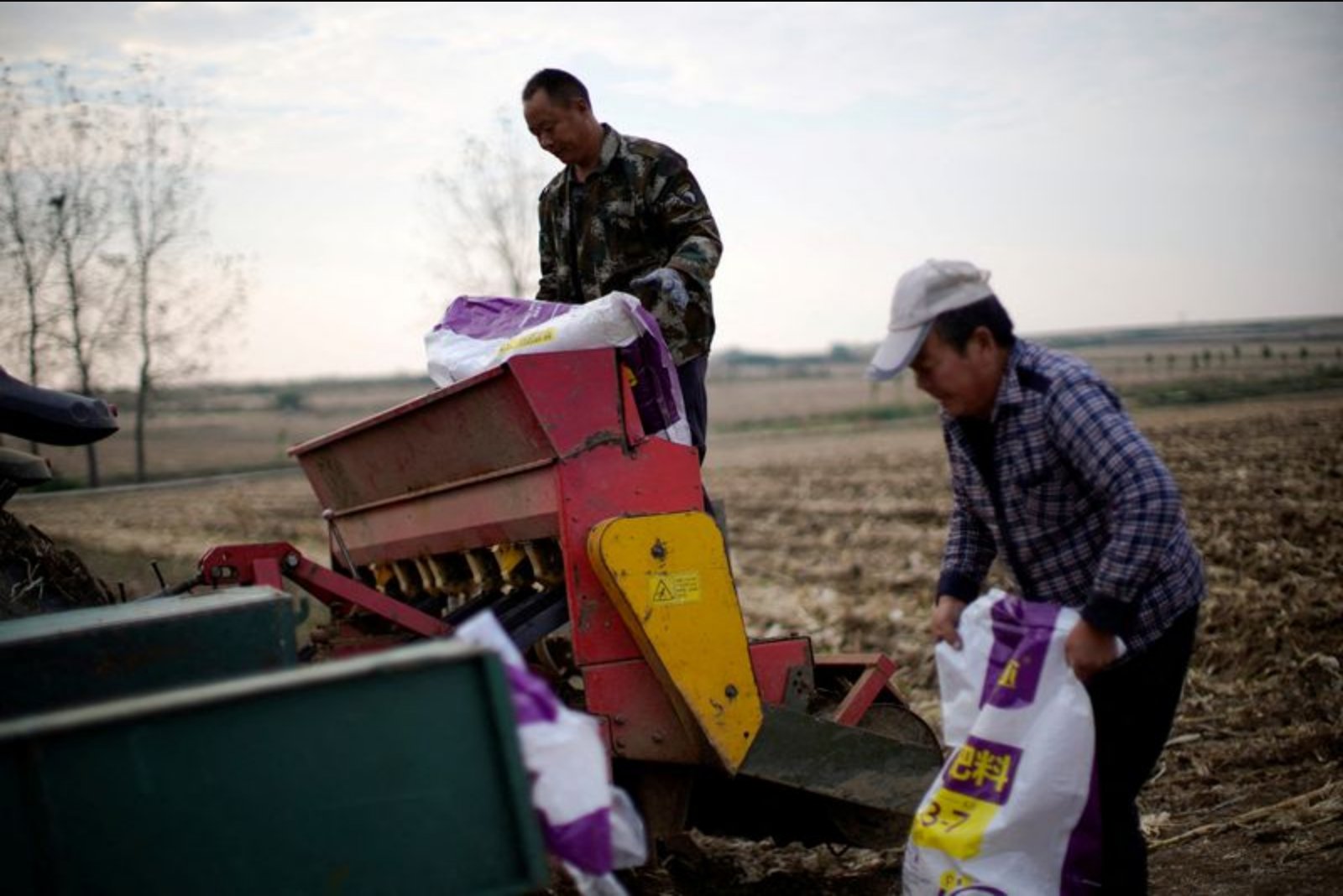
Rising fertiliser and fuel costs are creating acute stress for farmers worldwide as conflict in the Middle East disrupts shipping lanes and forces production cuts just as spring planting approaches in the Northern Hemisphere.
Transit through the Strait of Hormuz - a critical maritime route for energy and agricultural inputs - has been effectively halted. The closure has both constrained shipments and led to shutdowns at regional fertiliser plants, shrinking available supplies to major importers and pushing prices sharply upward.
"It’s a mess because it’s spring," said Cedric Benoist, who farms wheat, barley and other crops south of Paris, referring to a jump in global fertiliser prices measured in euros per metric ton. "This situation can’t continue." The timing is key: many growers are on tight schedules to purchase and apply fertiliser ahead of planting.
Farmers across varied geographies rely on supplies that transit the strait. The waterway accounts for about one-third of global trade in fertiliser and roughly 20% of the world's export fuels. For operations in regions from Srinagar in Kashmir to Saskatchewan in Canada, disruptions to seaborne deliveries and fuel flows could have immediate operational consequences.
Some farmers had already anticipated losses this season because of a global grains surplus. The new squeeze on input availability and elevated prices makes the outlook especially bleak for producers who still need to secure spring fertiliser. "We’re in a real bad situation now," said Jeff Harrison of Quinte West in Ontario.
Markets reacted quickly. In the United States - a country that imports a substantial portion of its fertiliser despite a sizeable domestic industry - prices rose when the conflict escalated. At the New Orleans import hub, quoted prices for fertiliser increased from $516 per metric ton on Friday to as much as $683 on Thursday. Analysts warn that prices could climb further if the Persian Gulf closure endures and shipments fail to arrive in time for spring planting.
"Literally, this could not happen at a worse time of the year," commented StoneX analyst Josh Linville, underscoring the seasonal sensitivity of fertiliser demand.
Seth Meyer, formerly the chief economist at the U.S. Department of Agriculture and now at the Food and Agricultural Policy Research Institute, said the price surge may prompt farmers to change crop mixes or reduce fertiliser application rates. Fertilisers are essential for achieving good yields across most crops, but requirements vary by crop type and soil conditions. Meyer noted that some farmers may cut back on corn - a crop with high nitrogen demands - or otherwise sharply reduce fertiliser use.
Supply losses stem from both halted transit and direct production curtailments. Qatar Energy has suspended operations at the world’s largest single-site urea plant after losing its natural gas feedstock; the company halted gas output following attacks on its liquefied natural gas facilities. Concurrently, sulphur production has been reduced in other parts of the region, undermining inputs necessary for phosphate fertiliser manufacture.
"We have lost a significant chunk of the global supply because of this situation," Linville said, describing the combined impact of transport disruption and production stoppages.
Several countries and supply chains face acute exposure to Middle East output. India purchases more than 40% of its urea and phosphatic fertilisers from the region. The drop in LNG supplies from Qatar has already forced three plants in India to curtail urea production, according to a senior industry official based in New Delhi. That same person said that short-term supplies of urea and diammonium phosphate are expected to be tight.
The fertiliser market entered the conflict period in a constrained state. China implemented export restrictions earlier in the year to protect domestic availability, while some European producers lowered output because they lost access to cheap Russian gas. Analysts report that urea prices had already increased by roughly $80 per ton from about $470 per ton quoted before the onset of the Iran war.
Market participants expect further tightening. Two agricultural analysts suggested China could broaden controls on fertiliser exports in response to the conflict, potentially communicating restrictions to major producers and customs without a public formal announcement. Sulphur supply channels are notably strained: China sources more than 50% of its sulphur imports from the Middle East, while Indonesia relies on the region for nearly 70% of its sulphur. Sulphur is a key feedstock for phosphate fertilisers, including diammonium phosphate and monoammonium phosphate.
One Chinese sulphur trader described the spot market as effectively empty: "It is really hard to find readily available spot cargoes now. There are no spot cargoes anywhere."
Several national markets are particularly dependent on imports to meet agricultural demand. Industry analysts highlight that Australia depends on imported fertiliser for most of its needs. In South Africa, the farming representative group GrainSA points to fertiliser as a substantial component of production costs; agricultural economist Corne Louw said fertiliser can account for as much as 50% of those costs. "Any increases in the current situation where farmers are already struggling with record low grain prices will just be another nail in the coffin," he said.
Market forecasts vary but point to significant upside risk if the supply shock persists. Morningstar analyst Seth Goldstein estimated that nitrogen prices could roughly double and phosphate prices could climb about 50% from current levels. He added that, should the disruption last beyond a few weeks, prices might revisit the highs seen in 2022 at the start of the Russia-Ukraine conflict.
What this means for planting and markets
Farmers facing higher fertiliser and fuel costs may be forced into difficult decisions: accept lower application rates and potentially reduced yields, or shift plantings toward crops that require less nutrient input. In either case, the immediate consequence is heightened cost pressure on growers already coping with depressed grain prices. Supply chain disruptions originating from a concentrated region of production and transit have magnified pre-existing vulnerabilities in the global fertiliser market.
Until shipping through the Strait of Hormuz is restored and production losses are reversed, import-dependent markets and commodity-sensitive farming sectors will remain exposed to price swings and potential shortages.