
Commodities June 3, 2026 04:36 AM

Seoul and Washington Hold First Nuclear Cooperation Talks Under Joint Security Framework

Discussions cover expanded civilian enrichment and reprocessing rights and separate track for nuclear-powered submarines

By Caleb Monroe

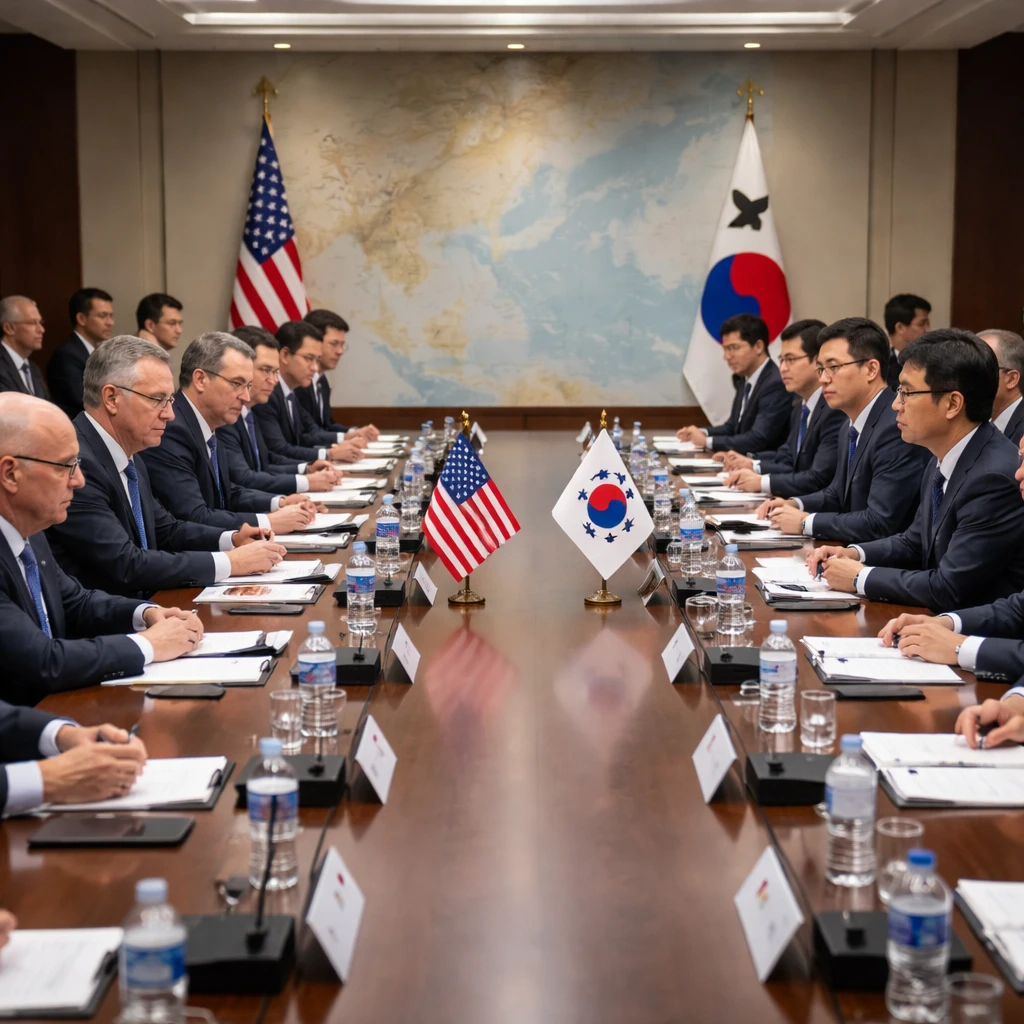
South Korea and the United States convened inaugural talks this week under a joint fact sheet signed last year to discuss nuclear cooperation. Delegations from both countries met to address Seoul's push for broader uranium enrichment and spent-fuel reprocessing rights for civilian purposes, and to agree on a separate process for nuclear-powered submarines, which would involve military use of nuclear material and require distinct U.S. legal authorizations.

Seoul and Washington Hold First Nuclear Cooperation Talks Under Joint Security Framework

Key Points

  • Seoul and Washington held inaugural nuclear cooperation talks under a joint fact sheet agreed last year, addressing both civilian nuclear fuel issues and nuclear-powered submarines.
  • Discussions on enrichment and reprocessing are being treated as revisions to the existing civil nuclear agreement, with officials emphasizing civilian and commercial purposes.
  • Nuclear-powered submarines are being handled separately because they involve military use of nuclear material; related arrangements will need to comply with U.S. energy law and include fuel sourcing considerations.
  • Sectors likely affected include nuclear energy, defense procurement and shipbuilding, and related fuel supply chains.

South Korea and the United States conducted their first formal meetings this week to advance nuclear cooperation outlined in a joint fact sheet agreed last year by U.S. President Donald Trump and South Korean leader Lee Jae Myung, Seoul said on Wednesday.

The talks, which took place on Tuesday and Wednesday, were set to examine Seoul's request for expanded rights to enrich uranium and to reprocess spent nuclear fuel as it moves forward with plans for nuclear-powered submarines, the Foreign Ministry in Seoul said previously.

Seoul's delegation was led by First Vice Foreign Minister Park Yoon-joo. The U.S. team was headed by Allison Hooker, the State Department's under secretary for political affairs, the ministry said.

Ministry spokesperson Park Il detailed the meeting agenda at a briefing on Tuesday, noting it included both "the issue of expanding enrichment and reprocessing rights" and "the issue of nuclear-powered submarines."

On the matter of enrichment and reprocessing, Park said the discussions were connected to revising the existing nuclear agreement between the two countries and stressed these elements were "purely for civilian and commercial purposes."

By contrast, Park pointed out that nuclear-powered submarines touch on the military use of nuclear energy and therefore would need a separate approach. "Because nuclear-powered submarines are related to the military use of nuclear energy, a separate agreement will be needed under U.S. energy law," he said.

Seoul's Foreign Ministry added on Wednesday that the two governments agreed to pursue substantive results as soon as possible, to set up a framework to review progress over the course of the year, and to speed up further consultations.

The joint fact sheet issued in November stated that Washington backed a process that could result in South Korea gaining civil uranium enrichment and spent-fuel reprocessing capabilities for peaceful uses. It also noted U.S. approval for South Korea to build nuclear-powered attack submarines and indicated the United States would cooperate with Seoul on requirements, including fuel sourcing.

Defence Minister Ahn Gyu-back said last month that South Korea aims to launch its first nuclear-powered submarine by the mid-2030s, planning to use low-enriched uranium fuel and to construct the vessel domestically.

Under the present nuclear agreement between the two countries, South Korea is not permitted to reprocess spent nuclear fuel nor to enrich uranium for military purposes, despite operating nuclear reactors for power generation.

Risks

  • Legal and regulatory constraints under U.S. energy law could delay or complicate arrangements for nuclear-powered submarines - impacting defense and naval procurement timelines.
  • Revisions to the nuclear agreement to allow civil enrichment and reprocessing carry regulatory and commercial uncertainties for the nuclear energy sector until formal terms are agreed.
  • Existing restrictions barring South Korea from reprocessing spent fuel and enriching uranium for military purposes remain in force until an updated agreement is formalized, creating uncertainty for submarine fuel planning and domestic nuclear industry investments.

More from Commodities

Northwest European gasoline margins slip as ARA stocks fall and trade flows pick up Jun 4, 2026 Iranian Oil Shipments Plunge to Six-Year Low After U.S. Naval Blockade Jun 4, 2026 Russia-U.S. Economic and Energy Dialogue Persists Despite Pause in Peace Talks Jun 4, 2026 Texas screwworm detection puts ranchers on high alert and lifts cattle futures Jun 4, 2026 Administration to Direct Nearly $700 Million in Emergency Aid to Coal Sector Jun 4, 2026