
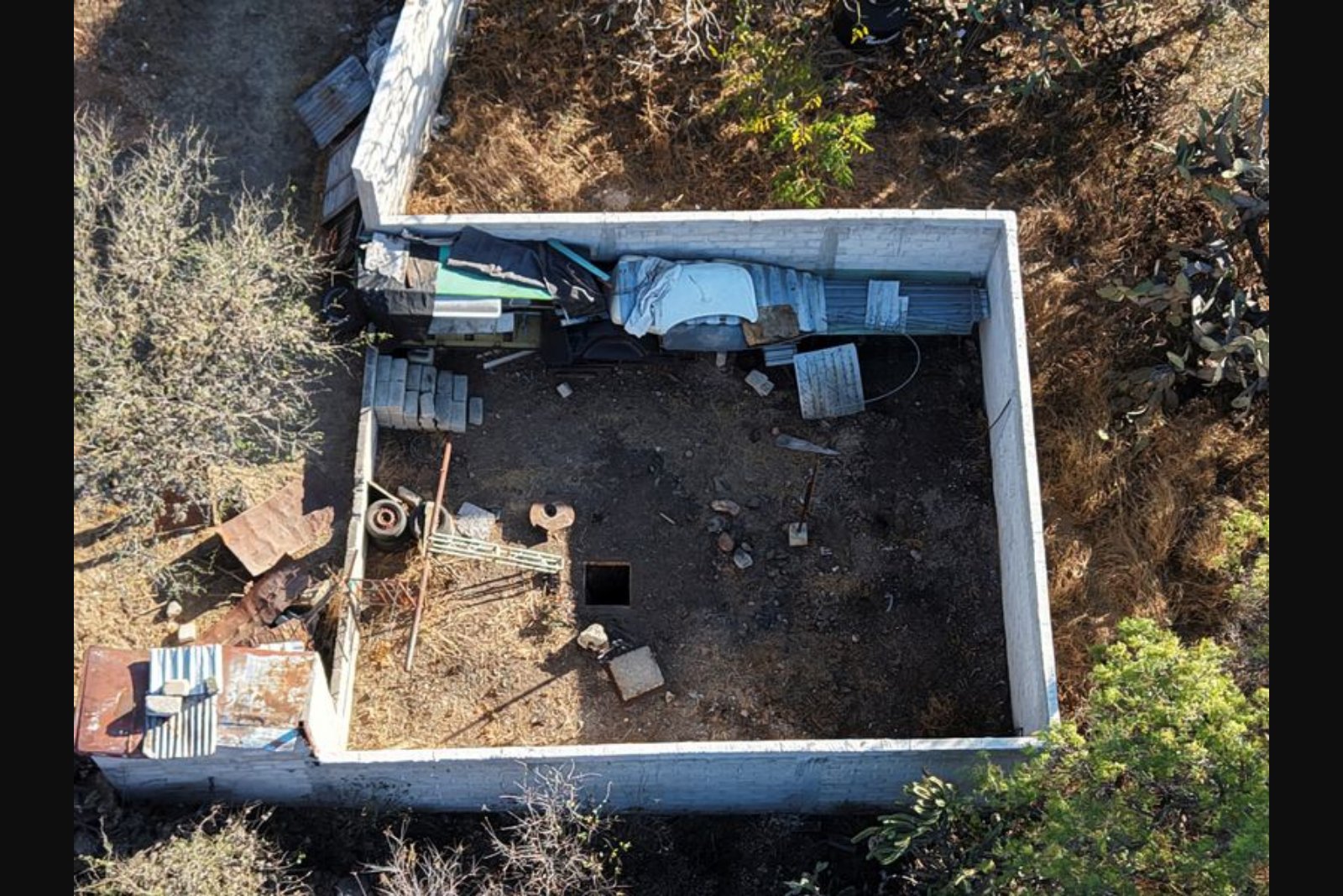
Federal and state security forces this week uncovered a 22-meter (72-foot) underground tunnel used to siphon fuel from a buried pipeline outside a residence in rural Hidalgo state near the town of Tepetitlan. The Hidalgo state attorney's office said in a statement on Tuesday that the tunnel led to two taps on an underground pipeline and that security personnel also seized drugs at the location. The attorney's office declined to provide further details.
Authorities and a person familiar with the operation who spoke on condition of anonymity said there have been no arrests so far in connection with the tunnel. Site coordinates were matched to an energy ministry map of hydrocarbon infrastructure, identifying the conduit as the pipeline owned by state energy company Pemex that links the Tula refinery in Hidalgo with the Salamanca refinery in Guanajuato state.
When journalists visited the area on Wednesday near the small settlement of Sayula, Army and National Guard personnel were posted at the scene and a banner reading "property seized" had been placed on the site. The discovery provides material evidence in an ongoing enforcement effort against a persistent illicit market for fuel in Mexico.
Known locally as huachicol, the theft and resale of fuel began with local gangs but has evolved into a violent, multi-billion-dollar enterprise now dominated by powerful organized crime groups. The illicit trade can involve a range of products, from gasoline and diesel to other refined products and crude oil. Stolen product is frequently sold in local informal markets—packaged in glass bottles or plastic canisters—often at a deep discount compared with prices at formal petrol stations.
Pemex did not respond to a request for comment. The company reported the discovery of 11,774 illegal taps on its pipelines in 2024. In a U.S. regulatory filing last year, Pemex said that efforts to combat the black-market trade "have not produced sustained improvement in recent years."
Fuel thieves commonly dig long tunnels from private land to reach buried pipelines. Such tunnels often include elaborate engineering measures designed to siphon product while avoiding a pressure drop that would trigger alerts from pipeline monitoring systems. The fuels involved are highly flammable, and accidents are a known hazard: an explosion caused by suspected fuel thieves killed at least 137 people in 2019.
The recent seizure illustrates several dimensions of the challenge confronting enforcement and the energy sector: physical vulnerability of buried infrastructure, the technical sophistication of illicit operators, and the human and safety risks associated with informal fuel distribution. Authorities' on-site actions and the identification of the affected conduit provide concrete detail about one instance in a broader pattern that Pemex itself acknowledges has not seen sustained improvement.