
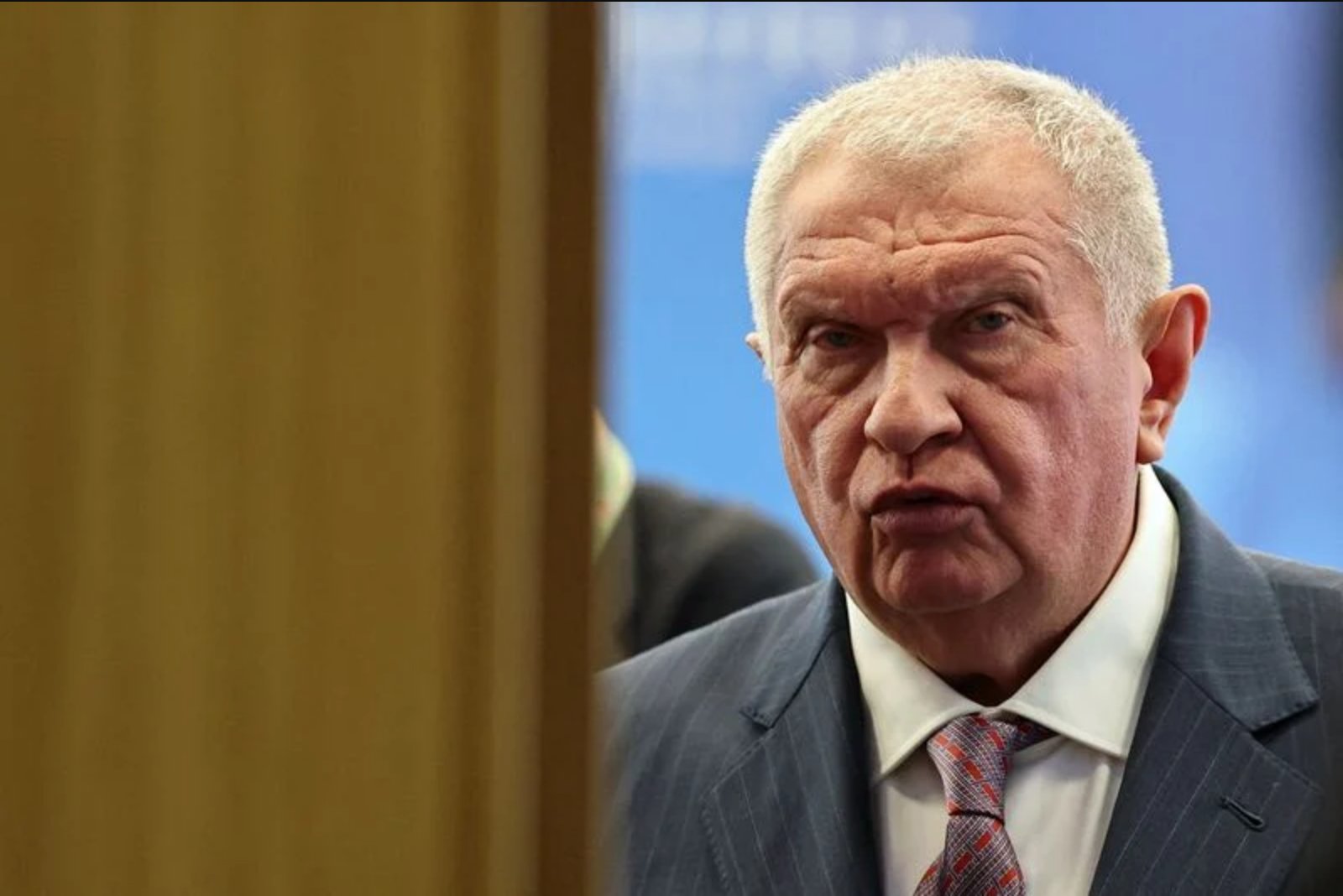
Rosneft Chief Executive Igor Sechin said at the St. Petersburg International Economic Forum that U.S. energy companies have emerged as the principal beneficiaries from the closure of the Strait of Hormuz, and that moves surrounding the blockade have been used to alter the fundamental shape of global energy markets to align with U.S. interests.
Sechin linked the blockade to a sequence of recent hostilities, noting that Iran blockaded the Strait - the conduit for roughly one fifth of the world\'s oil shipments and other essential goods such as fertilisers - after the United States and Israel attacked Iran and killed Supreme Leader Ayatollah Ali Khamenei in February. He added that the United States has imposed a blockade on Iranian ports.
According to Sechin, the closure has had immediate and wide-ranging consequences for energy markets and the broader economy. He said the stoppage has shaken global markets, pushed oil prices to multi-year highs, contributed to global inflationary pressures and hampered economic growth worldwide.
"The closure of the Strait of Hormuz is an attempt to reshape global energy market regulations to benefit the United States. The measures taken to block the strait were aimed at Iran, but backfired on the entire world. The strategic risks were underestimated," Sechin said.
He further asserted that "the main beneficiaries, of course, were American companies, who gained non-competitive advantages and the ability to secure high-cost supplies." Sechin warned that the disruption to the Hormuz route raises the prospect that other critical maritime passages - including Malacca, Bad El Mandeb and Gibraltar straits - could also face the risk of disruption.
Sechin used his platform at the forum to reassess the condition of the OPEC+ alliance. Known for his scepticism towards Russia\'s cooperation with the Organization of the Petroleum Exporting Countries, he argued that the group has lost some of its influence following the departure of several members.
He specifically cited the United Arab Emirates\' exit from the alliance, along with earlier withdrawals by Qatar and other countries, as evidence of diminished cohesion. "As a result, the alliance\'s production has fallen from 58 to 37 million barrels per day over the past ten years," he said.
Sechin also noted that most major OPEC+ members have increased production since the agreement was signed in 2016. By contrast, he said oil output in Russia has declined by 1.5 million barrels per day - a reduction he quantified as a 15% drop. To counter that decline, he said, investments totalling at least ten trillion rubles will be needed.
"This is a 15% decline that will need to be offset by necessary investments of at least ten trillion rubles. We expect that investment cooperation between the alliance\'s member countries and our country will also expand," Sechin said.
His remarks underscore the intersection of geopolitics and energy markets at a forum where government and industry figures gather to discuss policy and investment. Sechin framed the recent strategic choices around the Strait of Hormuz as not only targeting Iran but also reverberating across global markets and supply chains.
Context and implications
Sechin\'s comments tie together three observable developments cited at the forum: the Iranian blockade of a major oil transit route following an attack that killed Iran\'s supreme leader, U.S. blockade measures against Iranian ports, and shifts in the OPEC+ membership that have reduced the alliance\'s production capacity. He presented these developments as mutually reinforcing in their effect on oil markets and investment needs.