
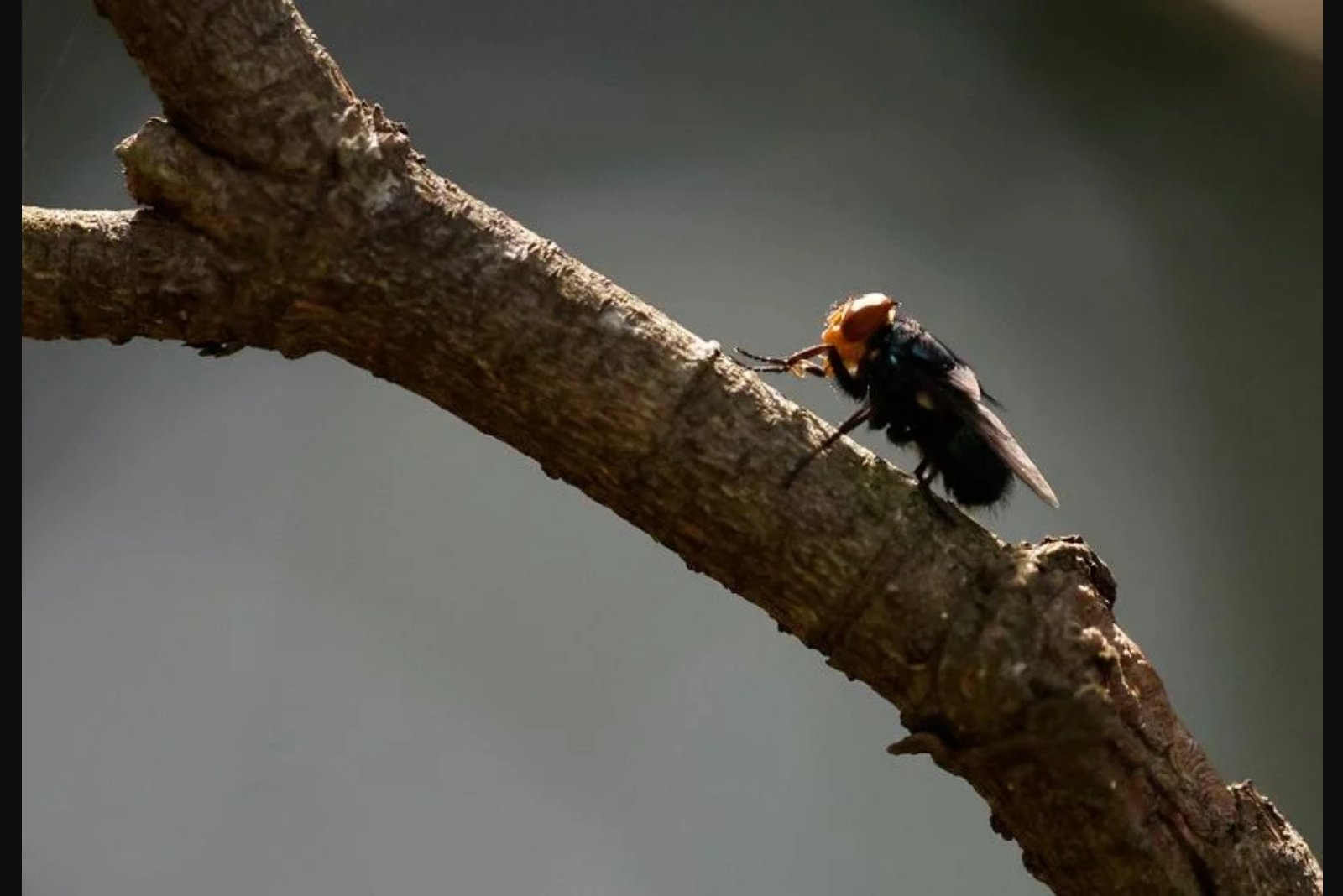
A parasitic fly known as the New World screwworm was identified in a calf in Texas on Wednesday after the pest advanced north from Central America through Mexico, breaching biological barriers that had kept it out of the United States for decades.
Federal authorities have suspended cattle imports from Mexico for the past year because of the insect's wider spread in Mexico. That restriction, combined with a U.S. herd reduced to multi-decade lows, has already removed a flow of animals that normally helps supply the domestic beef chain and contributed to record-high retail beef prices. The first confirmed U.S. case during the current outbreak presents a direct operational and financial challenge for ranchers and could further push beef prices higher.
What the screwworm is
New World screwworms are parasitic flies whose females deposit eggs in wounds on warm-blooded animals. Livestock and wild animals are common hosts. When the eggs hatch, the larvae use their sharp mouthparts to burrow into living tissue, feeding and enlarging wounds. Left untreated, heavy infestations can kill the host animal.
Even small injuries can become serious threats: a minor scrape, a recent branding site or a healing ear-tag wound on a cow can quickly turn into a large, maggot-filled lesion that endangers the individual and creates an infestation risk for the remainder of the herd.
Screwworms were eradicated from the United States in the 1960s through a program that mass-released sterilized male screwworm flies. Those sterile males mated with wild females and produced infertile eggs, collapsing wild populations.
Consumer and supply-chain implications
The United States generally imports more than a million cattle from Mexico each year. The current import suspension has tightened the available supply of beef cattle, adding to pressure created by drought-driven herd reductions in recent seasons. Mexican-born cattle are typically brought into U.S. farms to be fed and fattened for five to six months before slaughter, meaning a drop in throughput at slaughter facilities can feed through to higher consumer beef prices.
An extensive domestic outbreak would narrow the cattle supply further while posing risks to other livestock and companion animals. Screwworms will even feed on humans whenever conditions allow, according to Dr. Timothy Goldsmith, a professor of veterinary medicine at the University of Minnesota. He noted that people who sleep outdoors and have limited access to hygiene and medical care—homeless populations, for example—would be particularly vulnerable.
Containment efforts and capacity constraints
A production facility in Panama is currently releasing 100 million sterile screwworm flies every week. Experts say, however, that more production capacity would have been required rapidly to halt the northward advance. A U.S. production site intended to breed and sterilize screwworms in Texas is not expected to begin operations until late 2027. The U.S. Department of Agriculture did complete a dispersal facility for sterile flies in the state in February.
Screwworms are limited in their own flight capability—they cannot fly more than 12 miles on their own—but they can be transported long distances when present inside infected animals, said Sonja Swiger, an entomologist at Texas A&M University. The flies have already moved through the narrowest land corridors in Panama and Mexico, which increases the scale of sterile-fly releases needed farther north to control spread.
Last year the USDA announced a $21 million investment to convert a fruit-fly factory in Mexico to produce sterile screwworms, a step intended to expand regional production capacity.
Economic and on-farm impacts
The USDA has estimated that a screwworm outbreak would cost the Texas economy roughly $1.8 billion, accounting for livestock deaths, additional labor and medication costs. Because eradication decades ago left most U.S. cattle producers without recent experience diagnosing or treating screwworm, operational response on farms is constrained.
Infestations can be cured, but treatment is resource intensive: removing hundreds of larvae from wounds and thoroughly disinfecting those wounds requires significant time, labor and expense. David Anderson, a livestock economist at Texas A&M University, described the pest bluntly: "This is a pest we don't want back. This is a bad thing. I can't imagine having to deal with that. It's gross."
Outlook and uncertainties
The confirmed case in Texas underscores both the biological challenges of halting a parasitic fly that can move inside hosts over great distances and the logistical limits of current sterile-fly production. With imports from Mexico curtailed and domestic herds already reduced, the agricultural sector faces a risk of tighter supplies that can exert further upward pressure on beef prices while imposing direct costs and operational burdens on producers.
How quickly additional sterile-fly production can be scaled and how containment measures perform in the field will be key determinants of the outbreak's ultimate economic impact.