
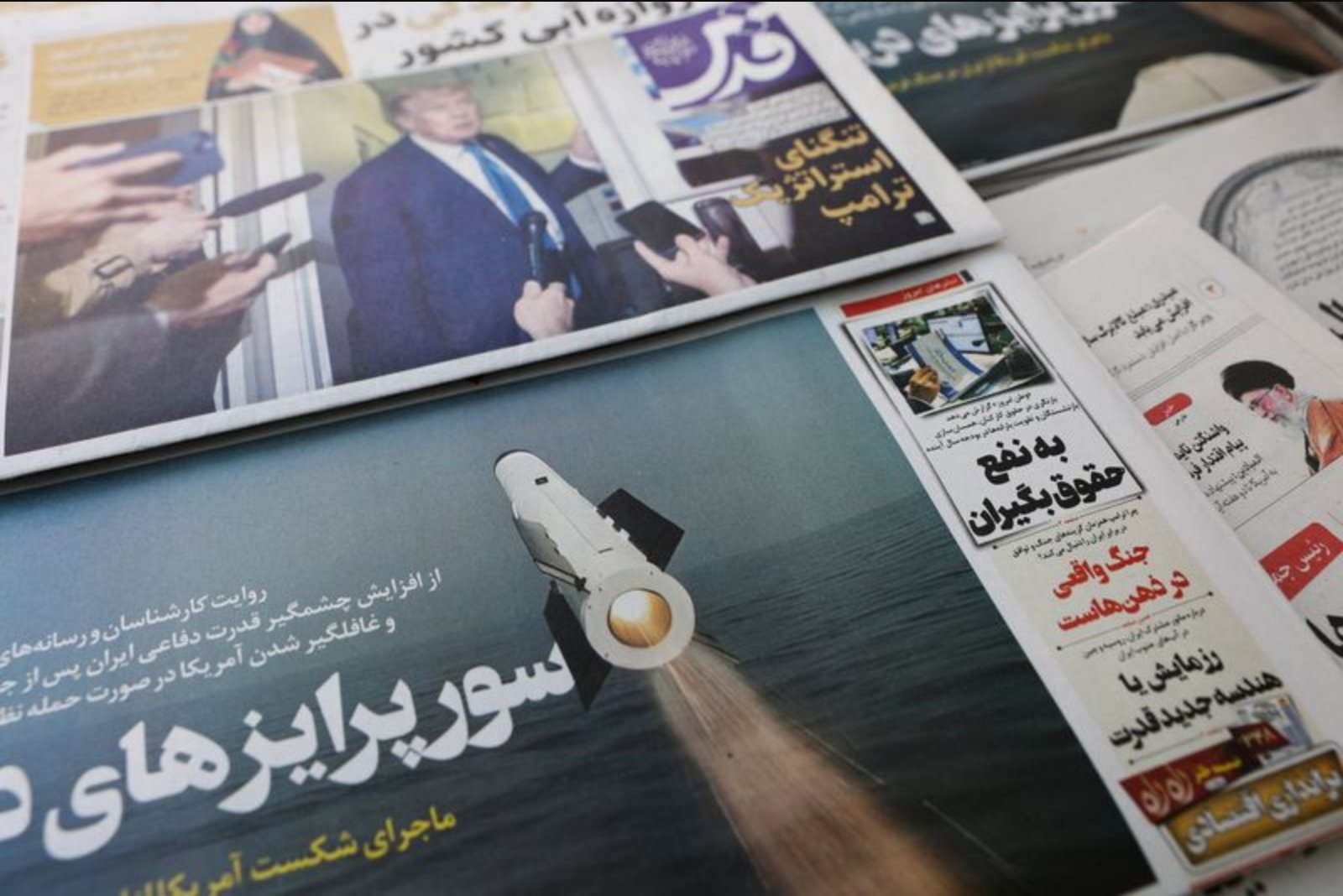
Russia on Thursday warned of an "unprecedented escalation of tension" surrounding Iran and urged restraint as the United States pursues a military build-up in the region. A senior American official said that buildup should be complete by mid-March.
The increased brinkmanship and public threats of military action have already had market effects, with oil prices moving higher amid concerns about disruption to energy flows. A Russian corvette joined planned Iranian naval drills in the Gulf of Oman on Thursday - a strategically important waterway for global energy shipments - as Tehran conducted extended exercises that state television showed involving special forces deployed from helicopters and ships.
Diplomatic efforts are proceeding alongside the military posturing. Iranian and U.S. negotiators met on Tuesday; Iran's foreign minister, Abbas Araqchi, said the talks had produced agreement on "guiding principles." Nevertheless, White House press secretary Karoline Leavitt said on Wednesday that the two sides remained apart on some issues. A senior U.S. official said Iran was expected to submit a written proposal outlining how it would address U.S. concerns.
Tensions have been amplified by repeated public threats from U.S. President Donald Trump to bomb Iran if a deal is not reached. The administration has dispatched aircraft carriers, warships and jets to the wider Middle East, moves officials say increase the prospect of further military action. The United States and Israel carried out strikes on Iran's nuclear facilities and some military sites last June.
Senior U.S. officials also signaled continued coordination with Israel, with U.S. Secretary of State Marco Rubio scheduled to meet Israeli Prime Minister Benjamin Netanyahu on February 28 to discuss Iran, a senior American official said.
Washington's stated objectives include ensuring Iran does not obtain a nuclear weapon. U.S. demands, as presented by officials, include an end to uranium enrichment - a process used to produce fuel for atomic power plants that can also yield material for a warhead - as well as abandonment of long-range ballistic missiles, cessation of support for armed groups across the Middle East, and an end to the use of force against internal protests.
Iran denies seeking a nuclear weapon, maintains its atomic programme is peaceful, and has declined to discuss matters beyond the nuclear file. Tehran has characterized efforts to curb its missile capability as a red line.
Satellite imagery has reportedly tracked Iranian activity to repair and fortify sites since last summer, showing work at nuclear and missile locations. The same imagery has shown preparations at U.S. bases across the Middle East in the past month.
The naval exercises involving Russia and Iran come amid an extended period of Iranian drills in the Gulf of Oman. State-controlled television footage displayed special forces aboard helicopters and ships taking part in those exercises.
European concern has been evident. Poland on Thursday advised its citizens to leave Iran, with Prime Minister Donald Tusk warning that Poles in the country could have only hours to evacuate.
The renewed threat of U.S. strikes began in January, after Iranian authorities violently suppressed widespread protests that, according to reporting presented by some sources, resulted in thousands of deaths across the country. That domestic crackdown preceded the latest cycle of threats and deployments.
Context note: This article presents the developments, official statements, and reported imagery as described by the involved parties and officials. Where parties disagree - for example on Iran's nuclear intentions - those differing positions are reported as stated.