
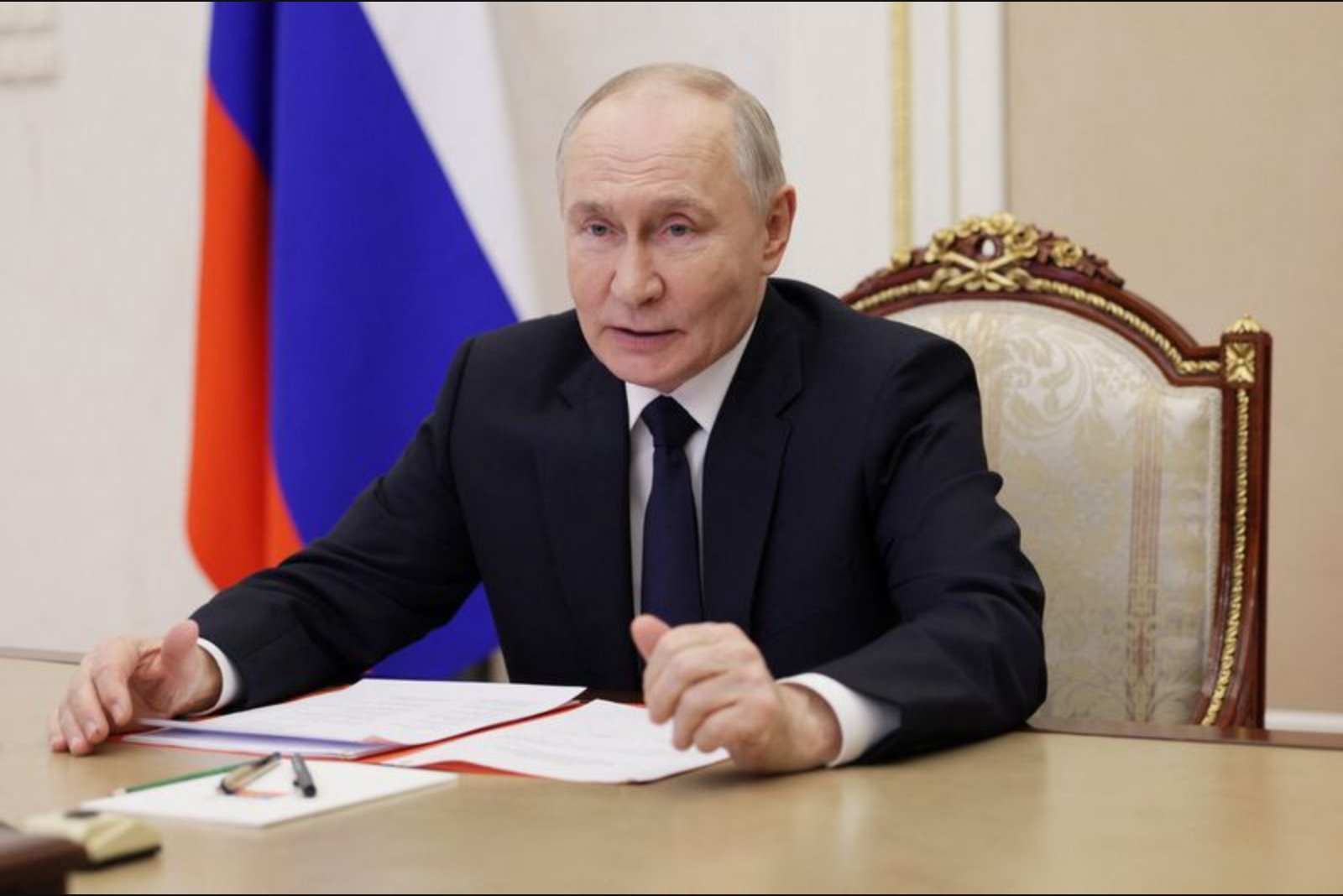
Russian President Vladimir Putin said on Monday that recent hostilities involving the U.S., Israel and Iran have triggered a global energy crisis and cautioned that oil production dependent on shipments through the Strait of Hormuz could halt soon.
Speaking at a televised meeting with government ministers and the heads of Russia’s leading oil and gas producers, Putin said Moscow had warned repeatedly that instability in the Middle East could produce an energy shock with serious consequences for the global economy. He said that warning had now been realised.
Oil prices climbed above $100 per barrel on Monday, reaching levels not seen since 2022, as the Strait of Hormuz - which is responsible for around one fifth of global oil and liquefied natural gas flows - has effectively been closed amid the Iran conflict.
"Oil production dependent on the Strait of Hormuz risks halting completely within the next month. It has already begun to decline, and storage facilities in the region are filling with oil that cannot be transported, is extremely difficult to transport, or is extremely expensive to transport," Putin said.
Putin urged Russian companies to capitalise on the current situation in the Middle East, while noting that the recent surge in prices was probably temporary. He pointed to the importance of hydrocarbon revenues for state finances, noting that oil and gas receipts account for about a quarter of total federal budget proceeds.
At the same time he reiterated Moscow's openness to renewed cooperation with European customers. "We’re ready to work with Europeans too. But we need some signals from them that they’re ready and willing to work with us and will ensure this sustainability and stability," he said.
Those remarks come against the backdrop of a marked reduction in Western reliance on Russian energy over the past four years, prompted by Moscow's war in Ukraine and related sanctions by the EU and G7 countries. The loss of the European market has cost Russia access to its most profitable buyers and obliged it to sell oil and gas to Asian buyers at significant discounts.
Last week, Putin directed the government to assess measures to reroute remaining Russian oil and gas flows away from Europe prior to the European Union enforcing its decision to fully ban Russian fossil fuels.
Before the conflict in Ukraine, Europe sourced more than 40% of its gas from Russia. By 2025, however, combined sales of Russian pipeline gas and liquefied natural gas accounted for only 13% of total EU imports.
G7 nations said on Monday they stood ready to adopt "necessary measures" in response to the spike in global oil prices, but stopped short of committing to releases from strategic reserves.
This account reflects statements made by the Russian president and data points presented at the televised meeting. Information about price levels, shipping flows through the Strait of Hormuz, and the share of hydrocarbon revenues in the federal budget was reported during that session.