
Russian authorities have publicly condemned the killing of Iran's Supreme Leader, Ayatollah Ali Khamenei, describing the strike as a "cynical" breach of moral and legal norms, but Moscow's response to its ally so far has been limited to formal expressions of sympathy.
President Vladimir Putin conveyed his condolences in a written note to Iran's President Masoud Pezeshkian, addressing Khamenei's family, the Iranian government and the Iranian people. In that communication Putin said: "Please accept my deep condolences in connection with the murder of the Supreme Leader of the Islamic Republic of Iran, Seyed Ali Khamenei, and members of his family, committed in cynical violation of all norms of human morality and international law."
Iranian state media reported that Khamenei, aged 86, was killed on Saturday in air strikes by Israel and the United States. The attacks over the weekend have prompted Russian officials to warn that the region has been pushed "into the abyss," while at least some Iranian sources quoted by officials say Iran has received little tangible help from Moscow in what has been described as the greatest crisis facing Iran since the 1979 revolution that toppled the U.S.-backed Shah.
The death of Khamenei marks the third high-profile removal of a Russian-aligned leader in about 15 months, following the ousters of Moscow-backed figures in Syria and Venezuela. That sequence poses a palpable strategic challenge for the Kremlin, even as its public posture remains cautious and constrained.
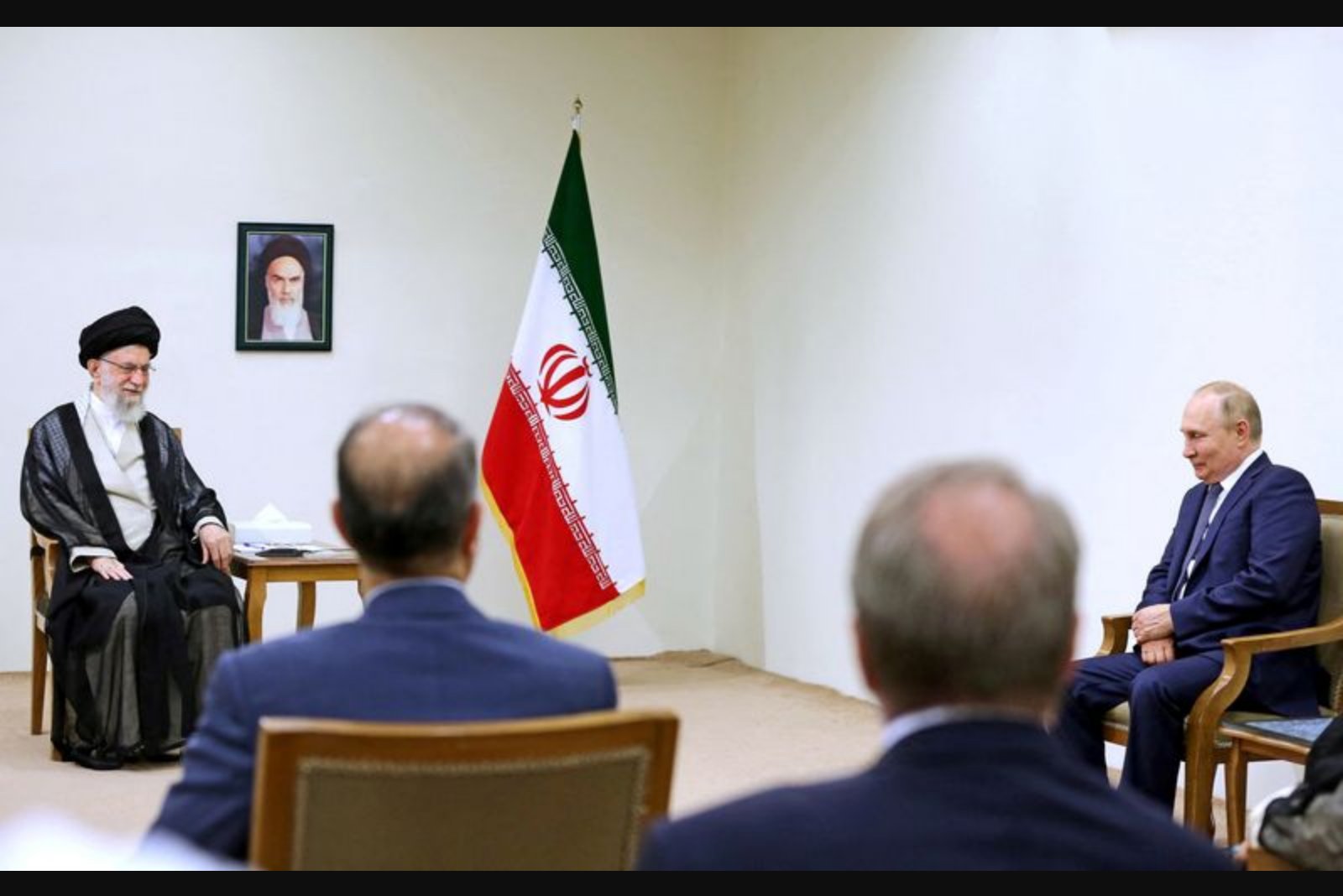
Putin and Khamenei maintained contact over the years. The Russian president's first trip outside the territories of the former Soviet Union since the start of Russia's 2022 campaign in Ukraine was to Tehran, where he met the Iranian leader. Because of a mutual wariness of U.S. intelligence interception, the two leaders sometimes exchanged written messages or communicated by envoy rather than relying solely on direct conversations.
The recent attacks also play into a wider political narrative. After Israeli Prime Minister Benjamin Netanyahu last year publicly suggested Israel could prompt regime change in Tehran, Putin warned publicly that such moves risked driving Iranian society to consolidate around its political leadership rather than fragment it.
Commentators in Moscow have drawn stark historical parallels. Fyodor Lukyanov, editor-in-chief of Russia in Global Politics magazine, likened the killing of Khamenei to previous violent removals of regional leaders, citing the 2011 killing of Libya's Muammar Gaddafi and the 2006 execution by hanging of Iraq's Saddam Hussein. Lukyanov summed up one lesson he sees in the events unfolding in Iran: "Negotiating with the Americans makes almost no sense."
Moscow's relationship with Tehran has both practical and long-standing dimensions. Russia has purchased weapons from Iran that are being used in Russia's conflict in Ukraine and agreed a 20-year strategic partnership with Tehran earlier last year. Yet the formal partnership does not include a mutual defence clause, and Russian officials have repeatedly stated that they do not want Iran to develop a nuclear weapon, fearing such a development would spur a regional arms race.
The historical record of Russo-Iranian ties stretches back centuries and has at times been fraught. Moscow has balanced cooperation with caution, and the nature of the partnership has left Kremlin strategists with limited guarantees for intervention or support in moments of acute crisis.
In a separate comment reflecting on Khamenei's role in bilateral ties, Putin said: "In our country, Ayatollah Khamenei will be remembered as an outstanding statesman who made a huge personal contribution to the development of friendly Russian-Iranian relations and bringing them to the level of a comprehensive strategic partnership."
Uncertainty about Iran's political succession persists. The Kremlin has not outlined any concrete plans for deeper involvement, and it remains unclear who will ultimately lead Iran following Khamenei's death. Analysts and officials note a direct economic implication from any disruption: if oil supplies from the Gulf were to face sustained interruptions, Russian oil revenues would rise, with potential implications for Moscow's war economy.
For now, Moscow's response combines terse diplomatic condemnation, expressions of personal respect, and limited operational commitments. The killing of a long-time interlocutor in Tehran is a strategic and symbolic moment for Russia, but the public record shows Russian leaders are measuring their options rather than escalating their involvement.