
Commodities February 6, 2026

Protests in Milan Over U.S. ICE Presence and Event Disruptions Ahead of Winter Games

Students and activists demonstrate as authorities close central schools and restrict access to secure the opening ceremony

By Ajmal Hussain
Protests in Milan Over U.S. ICE Presence and Event Disruptions Ahead of Winter Games

Hundreds of demonstrators, primarily students, gathered in Milan to oppose the deployment of U.S. Immigration and Customs Enforcement (ICE) agents and the temporary closure of schools and city areas ahead of the Milano Cortina Winter Games opening ceremony. The U.S. State Department had said federal agencies including ICE would assist in protecting visiting Americans, prompting local protests. Environmental and anti-Olympics groups also staged actions in the city.

Key Points

  • Hundreds of protesters, mainly students, gathered in Milan to oppose ICE presence and the closure of schools and city areas ahead of the Milano Cortina Winter Games opening ceremony - impacts sectors: education, public safety, transport.
  • The U.S. State Department said several federal agencies including ICE would help protect visiting Americans, a decision that triggered immediate local protests - impacts sectors: international security cooperation, event operations.
  • Environmental and anti-Olympics groups staged separate demonstrations, including Greenpeace at the cathedral and a planned torchlit march by the Committee Against the Olympics - impacts sectors: energy sector sponsorship perceptions and public events management.

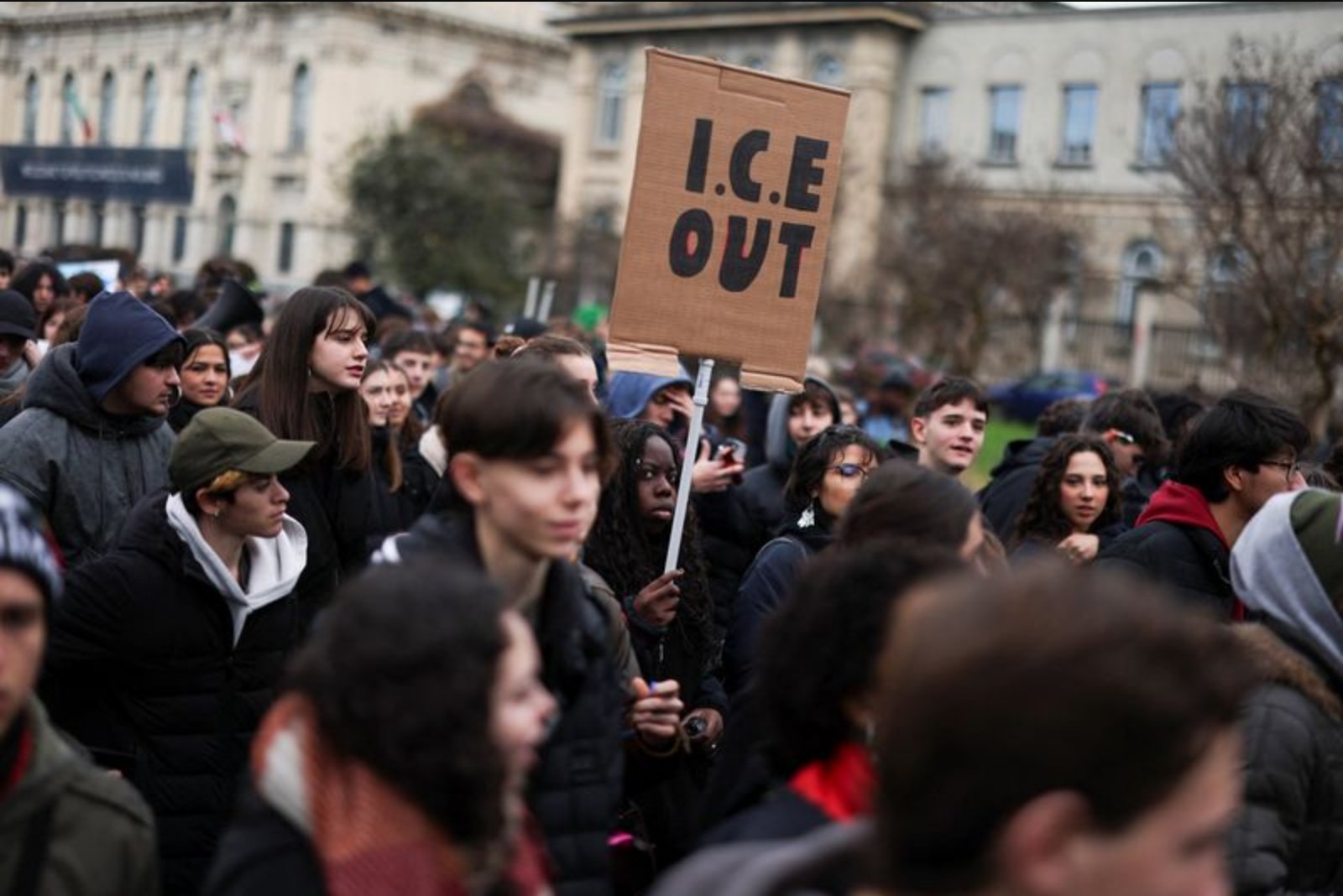
MILAN, Feb 6 - Hundreds of people assembled in Milan on Friday to voice opposition to the presence of U.S. Immigration and Customs Enforcement (ICE) agents and to protest the temporary closure of schools and restricted access to parts of the city ahead of the opening ceremony of the Milano Cortina Winter Games.

The U.S. State Department said last week that several federal agencies, among them ICE, would take part in protecting Americans visiting Italy for the Games. That announcement immediately prompted demonstrations in Milan.

Italian authorities ordered schools in central Milan to remain closed on Friday and limited access to some urban areas. Officials said these measures were intended to bolster security around the ceremony and to ease traffic disruptions in the city as delegations and visitors arrive.

Most of the protesters were students carrying placards that read "ICE out." They gathered in Piazzale Leonardo da Vinci, in front of a Politecnico University building in the eastern part of Milan. Marchers carried a banner that criticised the presence of ICE and also named U.S. Vice President JD Vance and Secretary of State Marco Rubio.

Demonstrators expressed broader opposition to measures related to the Games, including the partial shutdown of city areas for what they described as an unsustainable Olympics. The protesters linked their objections to local housing and urban concerns, saying that housing prices are unaffordable and that social spaces are increasingly scarce.

Separate actions also took place on Thursday and Friday. On Thursday morning, environmental group Greenpeace staged a protest in front of Milan's cathedral, targeting the role of Italian oil major Eni as a sponsor of the Games. On Friday evening, a torchlit march organised by the Committee Against the Olympics was expected near the site of the opening ceremony.

The demonstrations combined student-led opposition to ICE's presence, environmental objections to corporate sponsorship, and broader criticism of the disruptions and urban impacts tied to staging the Games. Local school closures and restricted access to central areas were implemented by authorities as part of preparations and security arrangements.

Risks

  • Ongoing protests and demonstrations could disrupt transport and event logistics in central Milan where schools are closed and access is limited - affecting transport and hospitality sectors.
  • Heightened security measures, including the deployment of foreign federal agencies, may fuel additional local unrest or further demonstrations - affecting public safety and event staffing.
  • Public opposition focused on sponsorship and urban disruption highlights reputational and operational risks for corporate sponsors and organisers managing large-scale events - affecting corporate relations and event revenues.

More from Commodities

Cuba Turns to Solar as Fuel Supplies and Power Grid Strain Under U.S. Measures Feb 20, 2026 Citigroup Maps Out Oil Price Paths as U.S.-Iran Tensions Mount Feb 20, 2026 Oil Rises, Tech and Credit Nervous as Geopolitics and AI Spending Reshape Markets Feb 20, 2026 EPA to Roll Back Mercury and Air Toxics Limits on Coal Plants, Citing Grid Reliability Feb 20, 2026 Raymond James: U.S. Military Action in Iran 'Likely at This Stage' as Tensions Rise Feb 20, 2026