
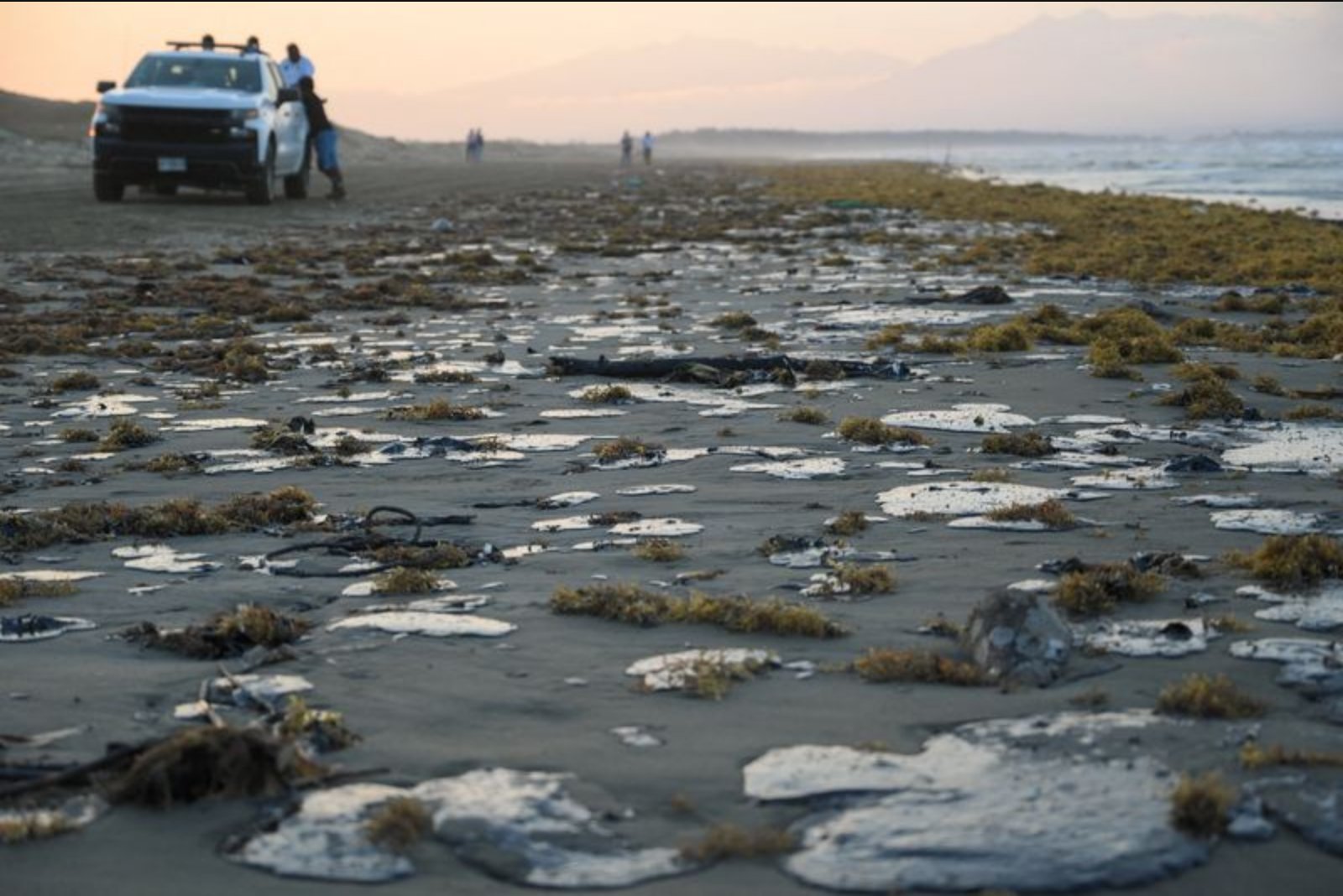
Coastal communities in Veracruz are confronting a damaging appearance of oil along local beaches that residents say is interfering with fishing and local tourism, and could threaten a nearby lagoon where fish and shrimp are farmed.
People in the fishing village of Jicacal, on the Gulf of Mexico, have mobilized to scrape and remove hardened tar and other residues from the shoreline as the viscous spill continued to move along the coast. Neighbors reported finding oil in nets and on the water, rendering some fishing equipment unusable.
Authorities have not provided local residents with an explanation for the spill. The state is a center of oil activity on both land and sea, and the state oil company, Pemex, stated this week that there was no leak or spill from its facilities. Pemex also did not immediately reply to further requests for comment on whether its surveillance work in the area had produced new information.
Residents described direct impacts to their work.
"As usual, we went out fishing and cast our nets, and we realized that the net was full of oil,"
said Aurora Apolonia Martinez, recounting how the contamination affected a routine fishing trip.
Environmental monitor Cemda reported that, since March 1, investigators have identified more than a dozen sites where oil has surfaced along beaches in Veracruz and the neighboring state of Tabasco on the Gulf of Mexico coast. While Pemex has denied responsibility for the contamination, the company has been linked to several similar incidents in recent years. The most recent referenced incident occurred in October in Veracruz, when 2.7 million liters were recovered from the Pantepec River after a leak in an oil pipeline.
Beyond fishing, tourism in small coastal towns has been affected. Both Jicacal and nearby Las Barrillas are fishing villages that also attract local visitors. Service providers say the presence of oil discourages beachgoers and could depress income tied to visitors.
"What we are interested in is cleaning up the entire beach,"
said Nicolás Vargas, a tourism service provider in Las Barrillas, adding that without thorough cleanup tourists will avoid the area.
Local efforts to remove hardened tar have been grassroots and manual, with residents attempting to limit damage to fisheries and the shore. The potential contamination of the lagoon used for fish and shrimp farming remains a primary concern among locals, though authorities have not offered definitive details about the spill's origin or an official contamination assessment for the lagoon.
The situation in Veracruz highlights immediate economic strains for households and small businesses that rely on coastal resources and visitors. Clean-up work continues while uncertainty about the source of the oil persists.
Reporting limitations: Available information does not include a confirmed source for the oil, nor a complete official assessment of environmental or economic damages beyond observations and the statements noted above.