
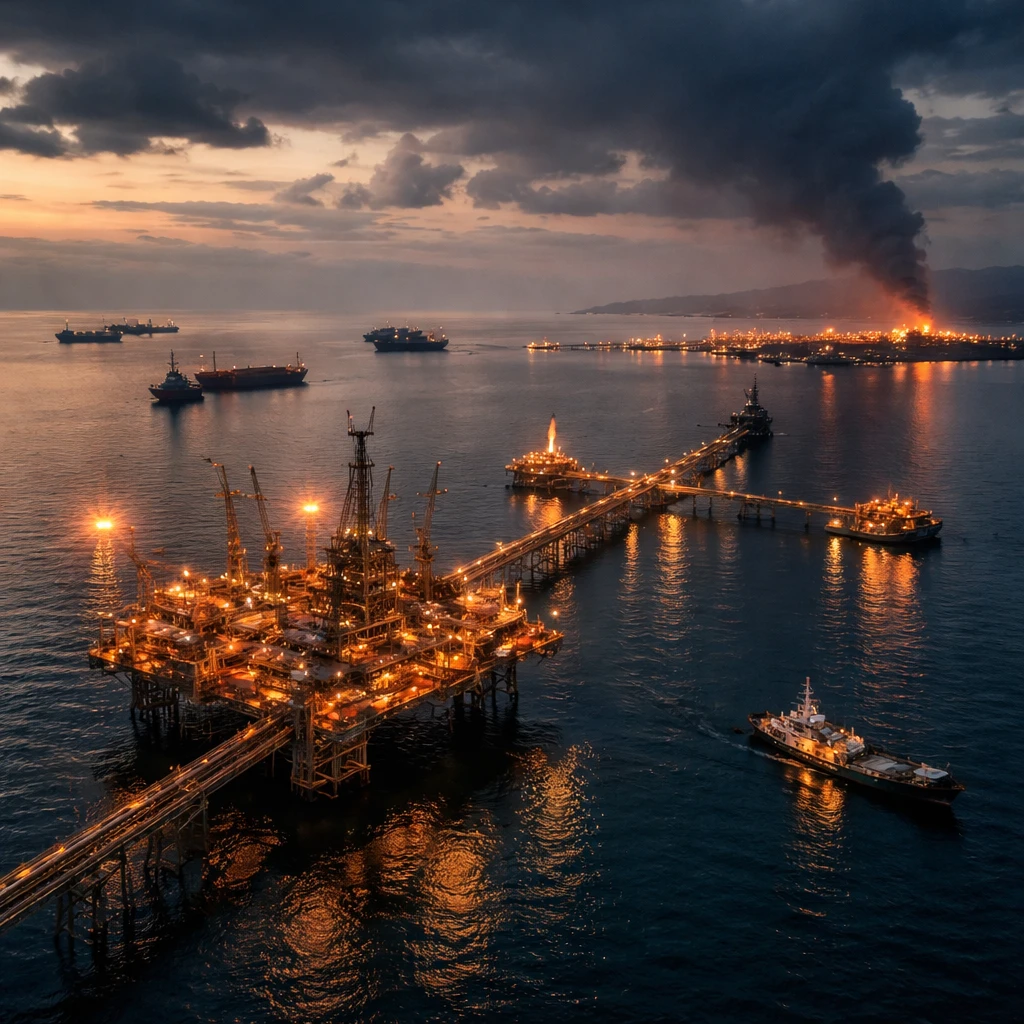
Oil prices surged on Thursday, propelled by reports of attacks on key energy infrastructure that were characterised as an escalation in the U.S.-Israel war on Iran. West Texas Intermediate futures jumped more than 3% in early Asian trade, trading at $99.29 a barrel by 19:12 ET (23:12 GMT). Brent futures had settled close to $110 a barrel on Wednesday.
Markets extended a sharp rally from the prior session after reports indicated Israeli strikes on facilities within Iran's South Pars field - noted in reports as the largest natural gas field in the world. That development triggered heightened concern about potential disruptions to energy supplies emanating from the region.
Iran responded by threatening further attacks on oil and gas infrastructure across the Gulf, after Tehran launched waves of missile and drone strikes on Israel and other Middle Eastern countries earlier in the week. Specifically, Iran threatened to target Saudi Arabia's SAMREF and Jubail complexes, the United Arab Emirates' Al Hisn gasfield, and Qatar's Ras Laffan refinery, according to the reports.
Compounding supply worries, Tehran has kept the Strait of Hormuz - a critical shipping channel for global oil flows - largely closed, increasing market sensitivity to any escalation that could further restrict shipments.
Price gains materialised despite a stronger U.S. dollar. Traders also factored in a more hawkish outlook for global interest rates as higher energy costs pushed inflation expectations higher. The U.S. Federal Reserve flagged uncertainty related to energy-driven inflation, and U.S. producer inflation readings came in stronger than expected, reinforcing concerns that central banks may need to tighten policy further in response to rising energy prices.
Oil continued to climb even after data showed an unexpected weekly build in U.S. oil inventories, indicating that the market response was dominated by geopolitical risk rather than the short-term U.S. stock changes.
The rally briefly ran into resistance following reports that Iraqi and Kurdish authorities had agreed to resume oil flows via Turkey's Ceyhan port, a development that could help ease some near-term supply disruption risk. In addition, major global economies were reported to be planning releases from strategic petroleum reserves to blunt the impact of conflicts on supply.
Summary: Reported strikes on Iran's South Pars field and Iranian threats to Gulf energy sites pushed WTI up to $99.29 a barrel in early Asian trade, with Brent near $110. Markets weighed heightened supply disruption risk against mitigating developments such as resumed Ceyhan flows and planned strategic reserve releases, while central banks signalled concern about energy-driven inflation.
- Price action - WTI rose over 3% to $99.29 a barrel by 19:12 ET (23:12 GMT); Brent settled close to $110 on Wednesday.
- Geopolitical trigger - Reports of Israeli strikes on Iran's South Pars field prompted market moves, followed by Iranian threats to additional Gulf energy facilities.
- Offsetting factors - Reports of resumed flows through Turkey's Ceyhan port and plans by major economies to tap emergency reserves were seen as potential supply cushions.