
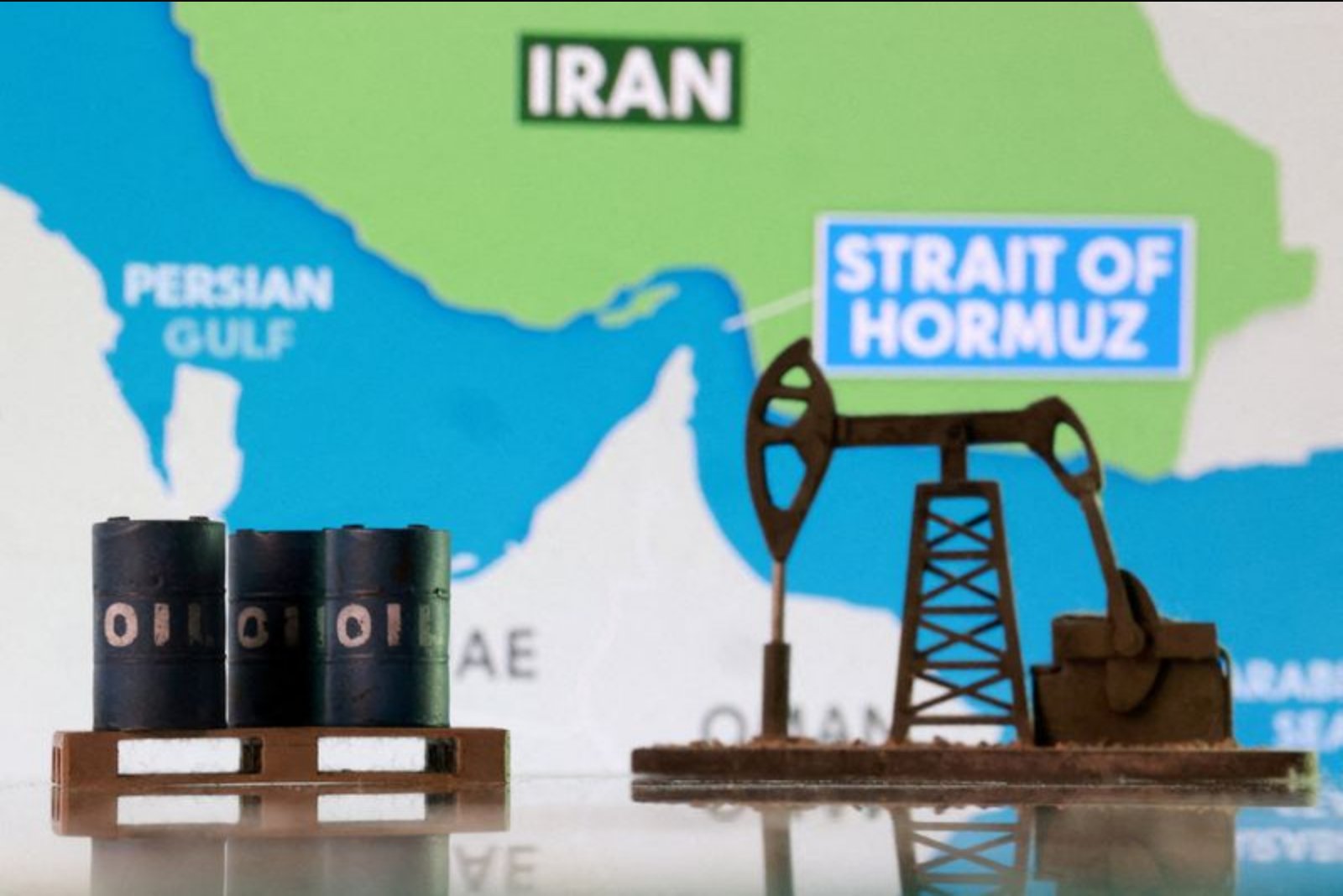
Oil futures advanced for a third consecutive day on Tuesday as expanding hostilities tied to the U.S.-Israeli campaign involving Iran intensified fears of supply interruptions from the Middle East, a region central to global crude and fuel flows.
Brent crude futures were trading at $78.83 a barrel, up $1.10 or 1.4% as of 0107 GMT. The contract had earlier surged to a session high of $82.37 on Monday - its strongest level since January 2025 - before trimming some gains to finish 6.7% higher for the day. U.S. West Texas Intermediate rose 74 cents, or 1%, to $71.97 a barrel on Tuesday. In the previous session, WTI initially climbed to its loftiest level since June 2025 but retreated somewhat to still post a 6.3% settlement increase.
Market observers point to the lack of any rapid de-escalation and growing direct threats to energy transit routes as drivers of the recent price moves. "With no quick de-escalation in sight, the Strait of Hormuz effectively closed and Iran showing a willingness to target energy infrastructure in the region, upside risks remain and they grow the longer the conflict drags on," Tony Sycamore, an IG market analyst, said in a note.
The conflict widened on Monday, with Israel launching attacks in Lebanon and Iran responding with strikes directed at energy infrastructure in Gulf states as well as attacks against tankers in the Strait of Hormuz. That narrow waterway is a critical channel for global fuel flows: on a typical day, tankers carrying crude equal to roughly one-fifth of worldwide demand transit the strait, alongside vessels transporting diesel, gasoline and other refined fuels to major Asian markets including China and India. The corridor is also the conduit for about 20% of global liquefied natural gas volumes.
Industry behaviour has shifted in response. Tankers and container ships are avoiding the Strait as insurers have cancelled coverage for vessels transiting the route, raising logistical and commercial complications for shipments that normally rely on the passage.
Concerns intensified after Iranian media cited a senior Islamic Revolutionary Guards official saying the Strait of Hormuz is closed and that Iran would fire on any ship attempting to pass. Earlier on Monday, the Revolutionary Guards reported a fuel tanker identified as the Honduran-flagged Athe Nova was ablaze in the Strait after being struck by two drones, according to Iranian news agencies.
Refined product futures moved higher alongside crude as the Middle East is a major source of fuels and its refining and export infrastructure faces elevated risk. Saudi Arabia took the step on Monday of shutting its largest domestic oil refinery following a drone strike, a development that underscores vulnerability in processing capacity.
In U.S. futures trading, ultra-low-sulfur diesel was up 3.1% at $2.991 per gallon after having reached a two-year high on Monday. RBOB gasoline futures rose 1.1% after climbing 3.7% in the prior session. In Europe, gasoil futures gained 2.7% to $909.50 a metric ton, following an 18% jump on Monday.
Analysts expect elevated oil prices to persist in the near term while markets digest the escalation and its implications for flows and refining. Bernstein on Monday adjusted its 2026 Brent oil price assumption upward from $65 to $80 a barrel, while noting that in an extreme scenario of prolonged conflict prices could reach $120-$150.
Beyond immediate market moves, the situation has implications for supply chains, refiners and fuel-dependent sectors in importing economies. Shipping, insurance and refining businesses are already responding to heightened operational and underwriting risk, and Asian buying patterns for fuels could be disrupted if the Strait remains effectively closed.
For investors weighing opportunities against this backdrop, some market commentary highlights the value of enhanced data and analytics to inform decisions. One industry product referenced in market discussion combines institutional-grade data with AI-driven analysis to help identify investment prospects, though such services do not guarantee successful outcomes.