
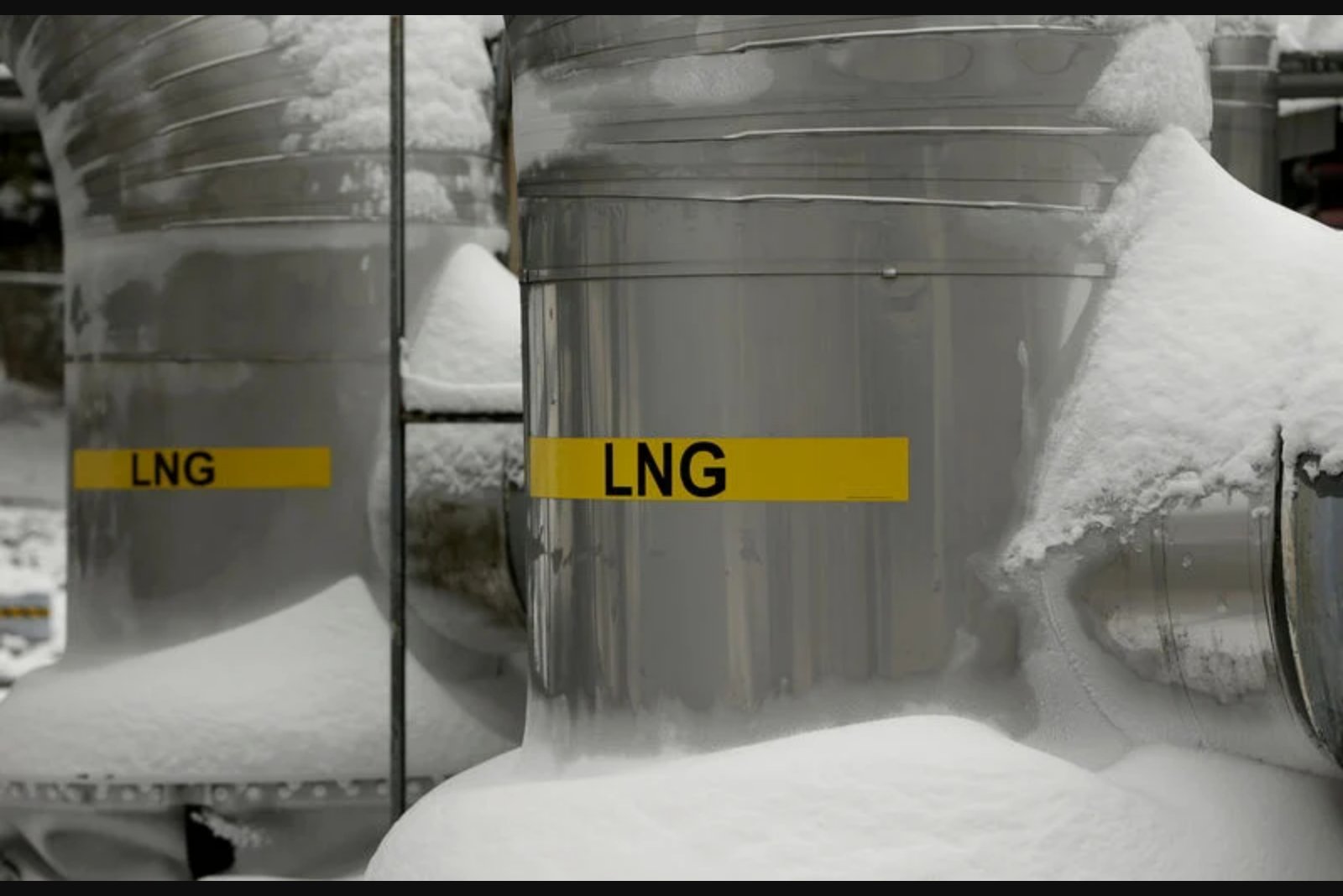
Morgan Stanley projects a continued rebound in U.S. natural gas prices into the third quarter, citing an end to seasonal maintenance at major LNG export facilities and stronger power-sector demand as key near-term supports. Still, the investment bank cautioned that the supply backdrop through 2027 could create downward pressure on prices.
The U.S. benchmark Henry Hub spent much of May trading below roughly $3 per million British thermal units, as mild weather and softer LNG demand kept inventories about 6% above normal. Prices have since climbed back above $3, and Morgan Stanley said it expects that upward momentum to persist.
In its outlook, the bank forecast Henry Hub averaging $3.50 in the third quarter and $3.75 in the fourth quarter. That leaves a full-year 2026 average near $3.40, a modest downgrade from its previous $3.55 forecast, but one that still implies roughly 6% upside relative to the current futures curve.
Near-term drivers include the completion of seasonal maintenance at LNG facilities such as Corpus Christi, Cameron and Golden Pass, alongside an anticipated year-on-year rise in power burn of about 1 billion cubic feet per day from July through September, assuming normal weather.
On supply, Morgan Stanley reported Lower 48 dry gas production averaged around 107.3 billion cubic feet per day in May, down 1.2 billion cubic feet per day from April amid pipeline maintenance in the Eagle Ford, Haynesville and Permian basins. Volumes had begun to recover in early June, the bank noted, and it forecast roughly 3 billion cubic feet per day of total supply growth for the full year.
Looking beyond 2026, the bank signaled greater uncertainty. "While our near-term outlook tilts slightly more constructive than consensus, we do see oversupply risks into 2027," strategist Devin McDermott wrote.
Morgan Stanley pointed to a rising Permian rig count and the associated gas that tends to accompany increased oil-directed drilling. The Permian rig count rose by 14 in May, the bank said, and it expects further rig additions in the months ahead. That anticipated drilling activity should drive stronger associated gas growth in late 2026 and into 2027, coinciding with more than 4 billion cubic feet per day of new Permian gas pipeline capacity scheduled to come online.
On storage, the bank slightly raised its estimate for end-October 2026 to 3.81 trillion cubic feet, about 1% above the five-year average. It expects end-October 2027 storage to be roughly 3.95 trillion cubic feet, or about 4% above normal.
Implications
- Near-term price upside is linked to resuming LNG flows and higher power burn.
- Rising Permian activity and new pipeline capacity are the main drivers of potential oversupply in 2027.
- Storage is projected to remain modestly above its five-year average through 2027, according to the bank.
The analysis provides a forward view centered on observable operational factors - maintenance cycles at export terminals, seasonal power demand, recent production data and planned midstream build-outs - while highlighting the timing risk that comes from expanding supply capacity into the 2027 period.