
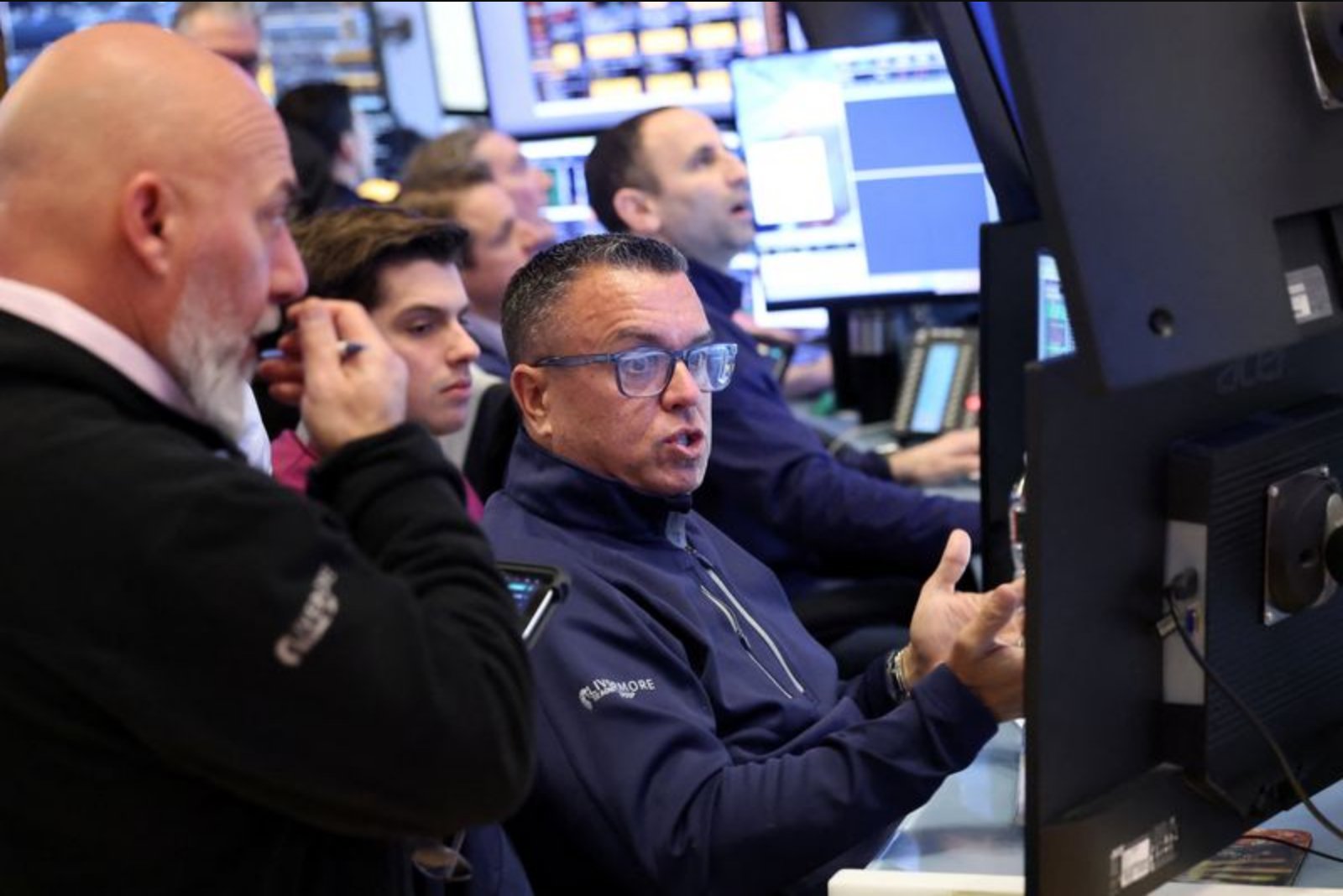
Markets entered the week with notable weakness in some long-standing stores of value, then ended with investors reassessing which businesses will remain valuable in an economy increasingly shaped by artificial intelligence. What market participants dubbed a 'software-mageddon' has, in aggregate, wiped roughly $1 trillion in market capitalization from the S&P 500 software and services index.
The immediate trigger cited by many was a new tool from Anthropic that investors believe could automate substantial amounts of legal work and, in time, other sales, marketing and data analysis tasks. But the breadth and scale of the selloff suggest the reaction runs deeper than the arrival of a single, largely unproven plug-in. Instead, the episode signals that the technological transformation is entering a phase where AI will not necessarily boost all companies simultaneously. Rather, the market appears to be shifting toward discriminating between potential beneficiaries and firms at risk of obsolescence.
In principle, a move toward higher dispersion should favor active managers. Yet the practical challenge is that a stock-picker’s market requires accurately identifying winners - a task complicated if historical correlations and momentum patterns no longer reliably predict future performance.
Compounding anxiety about widespread AI adoption is investor unease over the scale of capital spending by the largest technology companies as they race to secure AI leadership. Amazon shares plunged 11.5% in after-hours trading after the company projected a 50% jump in capital expenditures for 2026. Alphabet, which earlier signaled plans to target capital spending of $175 billion to $185 billion this year, also saw its shares slip despite analysts’ favorable reception of the disclosure. The twin reactions illustrate a market that is wary both of technology-driven disruption and of the hefty investment programs meant to capture the AI opportunity.
Risk-off sentiment extended into crypto markets, with bitcoin sliding to a 16-month low early on Friday as it tested the key $60,000 level before staging a modest rebound. The move in digital assets tracked broader risk appetite shifts but also served as a barometer of investor nervousness.
Turning to physical safe-havens, gold drifted roughly 10% below its recent peak and experienced stark volatility. Following a deep drop late last week and early in the week, the metal recorded its largest one-day bounce since 2008 on Tuesday. While bullion remains substantially higher than it was two years ago, this pattern of sharp falls and rebounds is likely disappointing to investors and institutions that increased allocations expecting steadier returns.
Silver fared worse in percentage terms. The white metal is trading under $75 per ounce, more than 35% below the high reached last week, and it suffered what has been described as its largest one-day drop on record last Friday. The magnitude of silver’s moves suggests speculative flows and technical selling may be driving much of the short-term price action rather than a wholesale reassessment of the metals' fundamental investment case.
Market participants have pointed to the announcement that President Donald Trump selected Kevin Warsh, a past inflation hawk, as his pick for Federal Reserve chair as a proximate catalyst for some of the metals' weakness. The perception that a more orthodox nominee could reduce expectations of continued 'dollar debasement' is one plausible piece of the explanation. Yet the size and speed of the moves, especially in silver, likely reflect a mix of speculative positioning and mechanical market dynamics in addition to any shift in monetary policy outlook.
Energy markets displayed similar volatility amid geopolitical and trade developments. Tensions between the United States and Iran moved through periods of escalation and de-escalation this week, contributing to swings in crude prices. As of the latest sessions, oil appeared set to post its first weekly decline in seven weeks. Observers note that the two key drivers for oil right now - a potential conflict in Iran and China's oil purchases - lie largely outside OPEC’s direct control.
On Tuesday a trade announcement between the United States and India drew attention for its potential implications for crude flows. President Trump said that India had agreed to stop buying Russian oil and would purchase 'much more' oil from the United States and potentially from Venezuela. Whether such changes in trade patterns will actually materialize remains unclear, and national or commercial economics may mean the proposed shifts are impractical.
Against the backdrop of market turbulence, several central banks announced decisions that, for the most part, maintained policy settings. Both the Bank of England and the European Central Bank left policy rates unchanged. The Bank of England’s decision was notable for a narrow 5-4 vote outcome. By contrast, the Reserve Bank of Australia broke from the global pattern of pausing or easing by delivering its first interest rate rise in more than two years - a move that could presage broader shifts in global credit conditions.
There are early indications that upward pressures on U.S. inflation may be building. That prospect, combined with the prospect of substantial AI-related capital expenditure by large firms, raises the chance that inflationary pressures could intensify as corporate investment ramps up.
For readers tracking commodities and markets, several items of further interest were highlighted. Coverage includes analysis of how a U.S. push for gas-fired power might accidentally accelerate a global move to cleaner energy, questions Europe should begin addressing, and commentary suggesting President Trump may soon find cause to complain about 'clueless Kevin Warsh' if rate-cut expectations are not met.
The editorial team also shared recommended reading, listening and viewing to help investors prepare for the coming week. These included reflections that touch on fiscal-monetary interactions, developments in tokenized gold markets where physical bullion meets digital trading, assessments of China’s steel and iron ore outlook that argue declining Chinese steel output is less alarming than it appears, and analysis of how large data centers are bypassing the grid to build on-site power capacity to meet surging electricity demand tied to computing workloads.
As markets absorb both the near-term shocks of rapid AI adoption and the longer-term implications of massive corporate capex plans, the path ahead looks characterized by elevated dispersion of returns, heightened price volatility across asset classes, and the practical challenge for investors of separating firms that will benefit from AI investment from those likely to be displaced.
Reading, listening and viewing recommendations highlighted by the editorial team:
- Market commentary on political and monetary dynamics and the potential for a Fed nominee to shape rate expectations.
- Investigative reporting on the growth of the gold token market and its intersection of physical and digital assets.
- Academic work on fiscal space and central bank pressures that explores a tipping point where additional rate increases could have severe macroeconomic and political consequences.
- Industry interviews on the outlook for China’s steel and iron ore sectors arguing that falling Chinese steel production may be less concerning than it seems.
- Analysis of why some U.S. data centers are building their own power plants to secure electricity supplies for rising demand.
The market environment remains fluid. Investors should expect continued re-evaluation of asset values as AI capabilities evolve, corporate spending plans unfold, and central bank policy responses adapt to changing inflation dynamics. Feedback and reader engagement are encouraged for those wishing to discuss these developments further.