
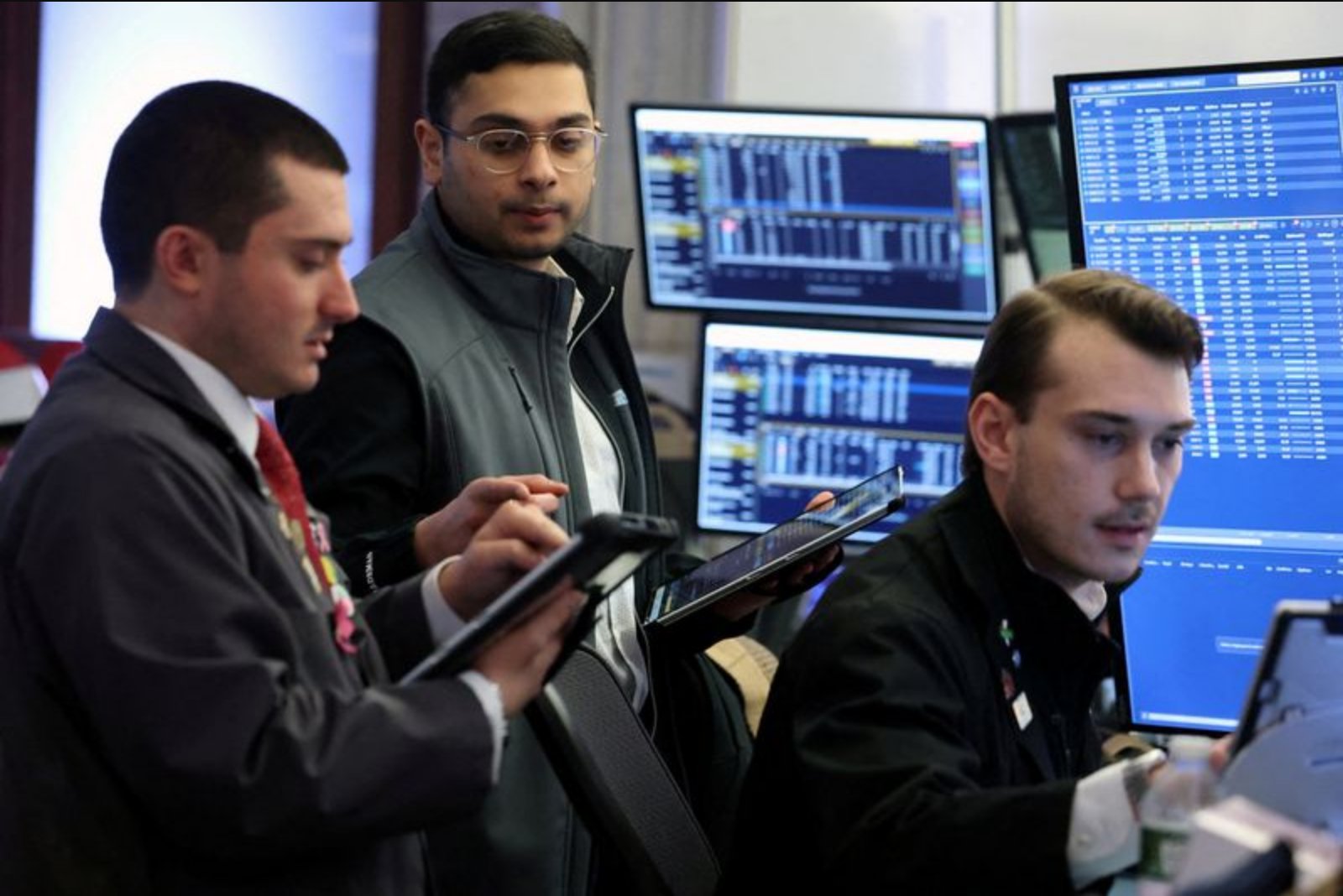
Equity sentiment swung again as investors digested a flurry of plug-ins rolled out by AI lab Anthropic. The market's reaction was uneven: a number of software stocks rallied on the perceived commercial opportunities presented by the new tools, while some firms with products directly identified as potential targets for those tools experienced steep selloffs.
One prominent example was Workday, an HR software company that tumbled 10% overnight after flagging a softer revenue outlook and being explicitly named as among the HR-focused targets of Anthropic's latest tool set. The contrast underscores a broader theme that surfaced in trading - that the immediate narrative of an AI-powered white-collar job wipeout is not the only frame investors are using. For some companies, the new AI capabilities appear as partnership or augmentation opportunities that could enable survival and eventual growth, prompting a partial reassessment of earlier sector-wide selloffs.
The market's alternating moods arrived ahead of a major corporate milestone: a leading chip manufacturer is scheduled to report its results after the market close. The company is widely expected to signal the scale of spending behind chips and the underlying computing infrastructure - from processors and servers to physical data centers and the energy needed to run them. Analysts' consensus anticipates first-quarter revenue to climb about 64% to roughly $72 billion. That forecast follows an expected recent quarter where revenue was thought to have jumped 68% to $66 billion.
Investors face a rising bar for that firm. While the company has exceeded sales expectations for 13 consecutive quarters, the magnitude of those beats has narrowed, and competition from large technology firms and chip rivals is intensifying. Alphabet and AMD were specifically noted as competitors. Chinese demand is also on investors' radars, given a recent pattern of shifting government restrictions on the sale of top chips there. Despite the company's outsized role in powering U.S. equity gains over recent years, its shares have advanced only about 2% so far this year; nonetheless, options traders are positioning for meaningful movement, pricing a post-earnings range of plus or minus 5%, which translates into roughly a $230 billion swing in market capitalization either way.
Equity indices reflected the mixed tone. The S&P 500 rose 0.77% on Tuesday, and futures traded higher ahead of Wednesday's open. Regional markets in Asia moved higher as investors increasingly focused on the companies supporting the buildout of AI infrastructure. South Korea's Kospi, which has climbed an extraordinary 45% year-to-date, added about 2%, while Japan's Nikkei rose 2.2%.
Currency moves accompanied the equity gains. The yen declined to its weakest level in two weeks, a reaction linked to news that Japanese Prime Minister Sanae Takaichi's nominees to two Bank of Japan board seats were viewed as 'reflationists'. The offshore Chinese yuan strengthened toward three-year highs against the dollar, buoyed in part by a high-level European visit to China; the offshore yuan has appreciated about 3% over the past month. These FX shifts illustrated how geopolitical engagement and central bank outlooks remain material to investors assessing cross-border demand and capital flows.
Political developments in the United States made a brief market appearance as well. In a recent broad address, President Trump urged large technology companies to construct their own power plants to serve the electricity demands of data centers - a comment that reflects growing attention to the grid implications of expanding computing infrastructure. The same address included a pledge to provide $1,000 contributions next year to Americans without 401(k) coverage, a form of fiscal support that could, in practice, find its way into equity markets.
Chart of the day
Market focus zeroes in on the upcoming earnings release from the aforementioned chipmaker. Latest estimates posit that the company reported revenue that rose 68% to $66 billion in the most recent quarter, with analysts expecting management to guide to a roughly 64% increase in first-quarter revenue to about $72 billion. While the firm has consistently topped sales forecasts for more than a year, competition in the AI chip arena has intensified and the expectations bar keeps rising.
Events to watch
- U.S. corporate earnings due: NVIDIA, Lowe's, Salesforce, Zoom
- U.S. 5-year Treasury note auction
- Speeches from Richmond Fed's Thomas Barkin, Kansas Fed's Jeffrey Schmid, and St. Louis Fed's Alberto Musalem
Market participants will be parsing these company results and policy commentaries for signals about demand, pricing power and the pace of capital expenditures tied to AI-related hardware and infrastructure.
In sum, the latest episode of AI-driven market gyrations shows a market that is both wary of automation risks and opportunistic about commercial partnerships. The near-term picture remains dominated by a handful of large firms whose earnings reports and capital spending plans will be central to how investors price the next phase of the technology and infrastructure cycle.