
Global markets entered the weekend on edge after renewed escalation in the Middle East sent oil reeling and pressured equities. The week featured extreme swings in crude prices, intervention by strategic petroleum reserves and signs of stress in private credit - developments that together have left investors reassessing risk across energy, consumer and financial sectors.
Stocks and the immediate market reaction
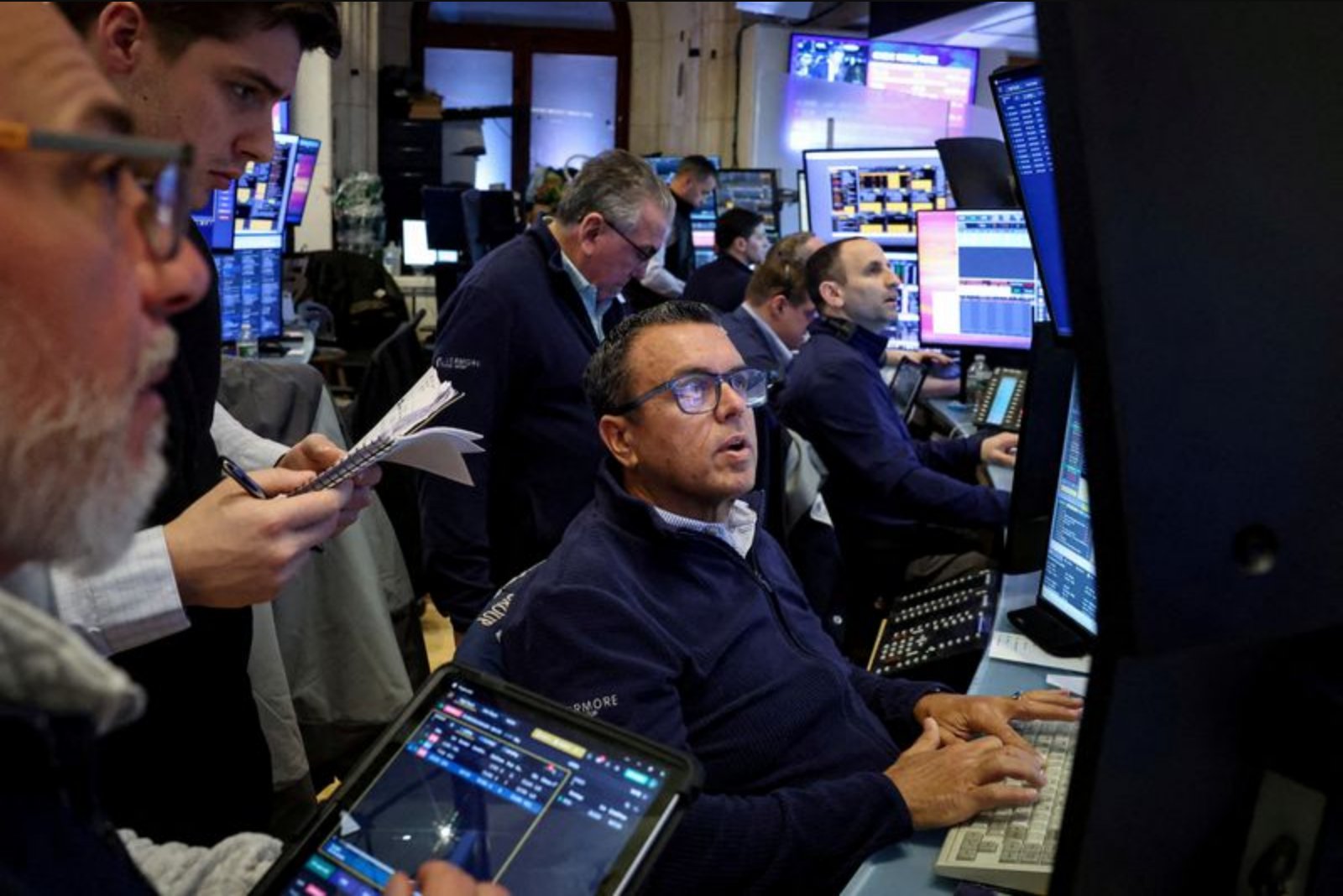
Wall Street posted one of its worst sessions since the Iran conflict began, with the S&P 500, Dow and Nasdaq each falling by roughly 1.5% on Thursday. That decline followed days of intense volatility in energy markets as concerns grew around potential disruptions to shipping routes and an expanding tanker conflict. Despite the squeeze in commodities, U.S. equity markets have been comparatively calm over the past two weeks relative to Asian and European bourses, which experienced sharper moves amid the energy shock.
One interpretation among market participants is that investors are pricing in a pullback in direct U.S. engagement - sometimes dubbed the 'TACO' trade, an acronym standing for the belief that "Trump always chickens out". But commentators caution that even a retreat from active U.S. involvement may not blunt the economic and market consequences once supply chains and regional dynamics have already been disrupted.
Historic oil volatility
The episode in oil markets was extraordinary. On Monday, Brent crude experienced a record intraday swing of $35, at one point approaching $120 per barrel and subsequently tumbling below $90. Prices then remained turbulent through the week, culminating in a 9% surge on Thursday that pushed benchmark crude back above $100 per barrel amid heightened rhetoric from Tehran including warnings that crude could reach $200.
Against this backdrop, the International Energy Agency - representing 32 member countries - advanced a coordinated drawdown of 400 million barrels from strategic reserves, the largest collective release of its kind. While such an emergency measure was substantial, market participants responded as if it were only a temporary alleviation of supply pressures. Observers described the release as a very large Band-Aid rather than a definitive solution to supply concerns.
Market functioning has been complicated by disconnects between physical markets and paper trading. The physical side of the business has often shown more acute dislocation than futures trading, underscoring difficulties in assessing true market stress. Even an inadvertent social media message from a senior U.S. energy official - Chris Wright - proved enough to move prices lower on Tuesday, highlighting the sensitivity of the market to snippets of information.
Regional vulnerabilities and refined product tightness
Asia remains the region most exposed to disruption because it imports the vast majority of its energy from the Middle East. Traders and refiners are reporting the tightest squeezes not necessarily in crude itself, but in refined fuel products such as gasoline, diesel and jet fuel. These product shortages can create localized shortages and price dislocations even when global crude balances appear manageable on paper.
In a related policy response, the United States has temporarily relaxed certain restrictions on purchases of Russian oil and petroleum products, a step aimed at broadening supply options amid the tightening. While that action may relieve some near-term pressure, it does not resolve the structural uncertainty created by the conflict.
Implications for energy forecasts and the consumer
The current dynamics have effectively invalidated near-term forecasts of an oil supply glut. The market moves also invite reconsideration of prior arguments about the relative reliability of fossil fuels versus renewable energy during geopolitical stress. On the consumer front, U.S. motorists are already feeling the effects - average gasoline prices rose about 20% since the outbreak of hostilities to reach $3.58 per gallon as of Wednesday.
Inflation, central banks and upcoming policy meetings
Inflation data released midweek provided some context on the macro backdrop. The U.S. consumer price index rose 2.4% in the 12 months through February, unchanged from the prior month, even as the month-over-month figure recorded a modest uptick. Because this CPI data predates the escalation in the Middle East, markets largely treated it as less informative for the immediate shock.
Attention will turn to personal consumption expenditures (PCE) inflation data, due for release today, which is the Federal Reserve's preferred inflation gauge. Given the recent energy-driven price pressures, the PCE figure is expected to receive closer scrutiny and is likely to remain comfortably above the Fed's 2% objective.
Next week brings a dense calendar of central bank decisions, including meetings at the Federal Reserve, the Bank of England and the European Central Bank, in addition to the Reserve Bank of Australia and others. Of those, only the RBA is widely expected to implement a rate hike. Nevertheless, market participants emphasize that the crucial element will be communications - how policymakers interpret the new shock and frame future policy paths amid what many are calling the most significant crisis since the pandemic.
Private credit strains and wider financial market implications
Beyond energy markets, investors are increasingly uneasy about stress emerging in private credit. Major banks have begun marking down the valuation of loans extended to private credit funds - a signal that the illiquid corners of credit markets may be experiencing repricing. JPMorgan this week disclosed markdowns to some loan values tied to private credit vehicles.
Observers note unsettling parallels between current private credit dislocations and the kinds of vulnerabilities that surfaced in subprime mortgage lending in the lead-up to the 2007-09 global financial crisis. The comparison is not a prediction of a repeat meltdown; rather, it serves as a reminder that exogenous shocks frequently expose concentrated pockets of risk within financial markets. Those pockets can be especially potent when they sit in markets with limited transparency and liquidity.
Where to look next
Market participants will be watching several data points and signals closely over the coming days: PCE inflation prints, the tone and guidance from the central banks meeting, and any fresh indications about physical fuel flows and refined product availability. In addition, further indications of valuation shifts in private credit portfolios and bank exposures to those positions will be important to monitor for broader financial-stability implications.
For practitioners seeking deeper, data-driven coverage of commodities and related market flows, resources tracking open interest and market balances can provide useful context. One such compilation to consider is Reuters Open Interest, which aggregates detail on market positioning and physical flows.
Recommended reading and listening from the markets desk
- Jamie McGeever, ROI Markets Columnist - a recent analysis that examines why the current crisis in the Middle East is likely to have enduring economic and market effects.
- Gavin Maguire, ROI Global Energy Transition Columnist - a report from JPMorgan titled "Fighting Words" that surveys major themes in energy markets.
- Anna Szymanski, ROI Editor-in-Charge - a Breakingviews piece by Hugo Dixon that assesses the ramifications of the Iran conflict for Europe and argues for policy responses to strengthen and unite the continent.
The audio and podcast picks coming out of the markets desk include a Bruegel think tank podcast in which former central bank officials discuss policy responses to energy shocks, a Foreign Affairs episode exploring U.S.-Iran relations with foreign policy experts, and a wide-ranging conversation with Nobel laureate Joe Stiglitz covering economic impacts from the conflict, artificial intelligence and trade policy.
Concluding observation
The combination of volatile oil markets, tightening refined-product spreads, rising gasoline costs for consumers and early signs of private credit repricing presents a layered challenge for investors and policymakers. How central banks and fiscal authorities read the persistence of these shocks, and how transparent and liquid private credit markets prove to be under stress, will influence market stability in the weeks ahead. For now, the path of the conflict and its knock-on effects remain key unknowns shaping market positioning.