
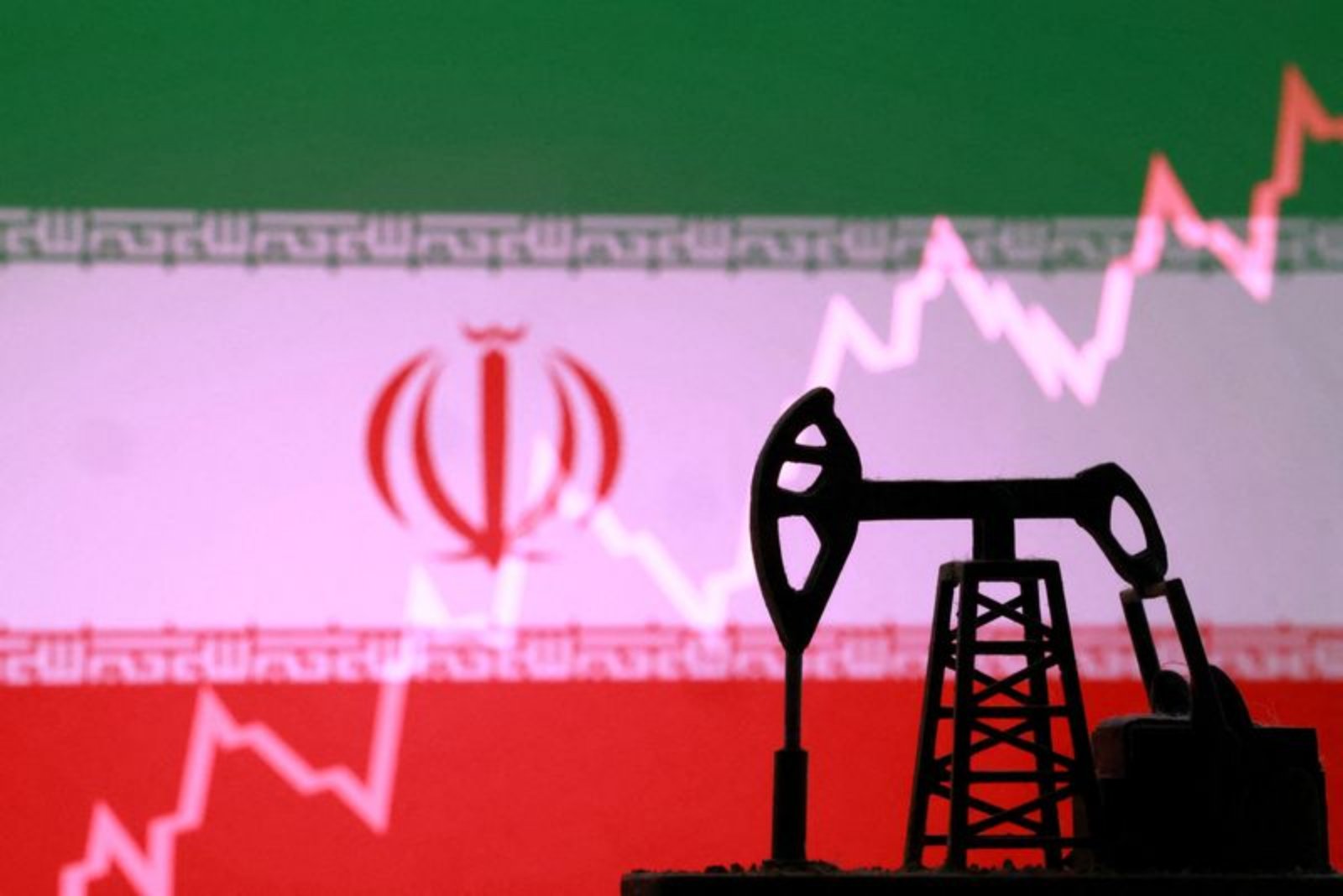
Financial markets and U.S. crude producers moved rapidly this week to lock in gains after a sharp move higher in oil prices following air strikes and retaliatory strikes in the Middle East. The rush to hedge led to record trading volumes in energy futures and options on Monday, and exchanges reported unusual activity into Tuesday as volatility spiked.
On Monday, investors exchanged a record 12.7 million energy futures and options contracts on the Intercontinental Exchange, ICE said on Tuesday, as oil futures rallied to multi-month highs during the session. Traders also pushed ICE Low Sulphur Gasoil - the global benchmark for refined oil products - to a record 1.3 million futures and options contracts, surpassing the prior high set on June 13, 2025, when Israel and Iran also traded air strikes.
Benchmark fuels saw sharp price moves. U.S. diesel futures settled nearly 12% higher on Monday, outperforming both U.S. crude and gasoline futures, which settled over 6% and nearly 4% higher, respectively. Market participants pointed to the Middle East as a key factor for diesel, noting the region is a major supplier of the fuel and that diesel inventories have fallen after strong winter demand for heating and power generation during a harsh season.
Additional volumes were seen in Brent contracts as well: around 4.8 million Brent futures and options contracts traded on March 1 on ICE, the highest level since June 2025, according to exchange data.
Producers rush to hedge at market open
At Monday's market open, a wave of U.S. oil producers coordinated with banks and major trading houses to lock in higher crude prices. Attention centered on the Strait of Hormuz, a strategic shipping corridor through which roughly 20% of global oil supplies flow.
West Texas Intermediate crude futures rose 8% at Monday's open while Brent crude futures jumped 11% as market participants adjusted positions.
"We had a queue of oil producers and also a set of dealers ready to trade at 5 p.m. on Sunday, anticipating a price increase. It was standby, everybody's ready, finger on the button, let's get going," said Matt Marshall, president of Aegis Hedging, which handles hedging for roughly 25-30% of U.S. output, according to internal estimates.
The U.S. produces 13.73 million barrels per day of crude, according to the latest government data. Marshall estimated that despite the weekend timing, about a quarter of Aegis's oil-producing customers were watching at the open and had coordinated with the firm and counterparties to put hedges in place.
Many producers using the Aegis platform opted for swaps, contracts that allow them to convert a sudden rise in market prices into a fixed price based on crude futures levels. These instruments provide an immediate mechanism to protect production revenue against sharp intraday moves.
Prior to the open, some analysts expected oil might open above $90 a barrel or even approach $100, though Brent ultimately opened around $81.60 and WTI at $75. Marshall added that if the Strait of Hormuz were to remain disrupted for an extended period, U.S. producers would likely pursue further hedging opportunities, calling the situation "primarily about the Strait."
Implications for refined fuels and supply-sensitive sectors
Diesel's relative strength during the move reflected both its supply sensitivity and the recent drawdown in inventories following a cold winter. Market participants and analysts highlighted that refined fuel markets can react more sharply than crude when a key exporting region faces disruption, particularly when inventories have already tightened.
Trading desks, hedging firms, and producers coordinated rapidly to translate the sudden price jump into secured contracts, while exchange records show the scale of activity across crude, product, and refined product benchmarks.
Given the volumes recorded and the concentration of flows through the Strait of Hormuz, the episode underscores the role of both geopolitical risk and inventory dynamics in driving short-term volatility across crude and refined fuel markets.