
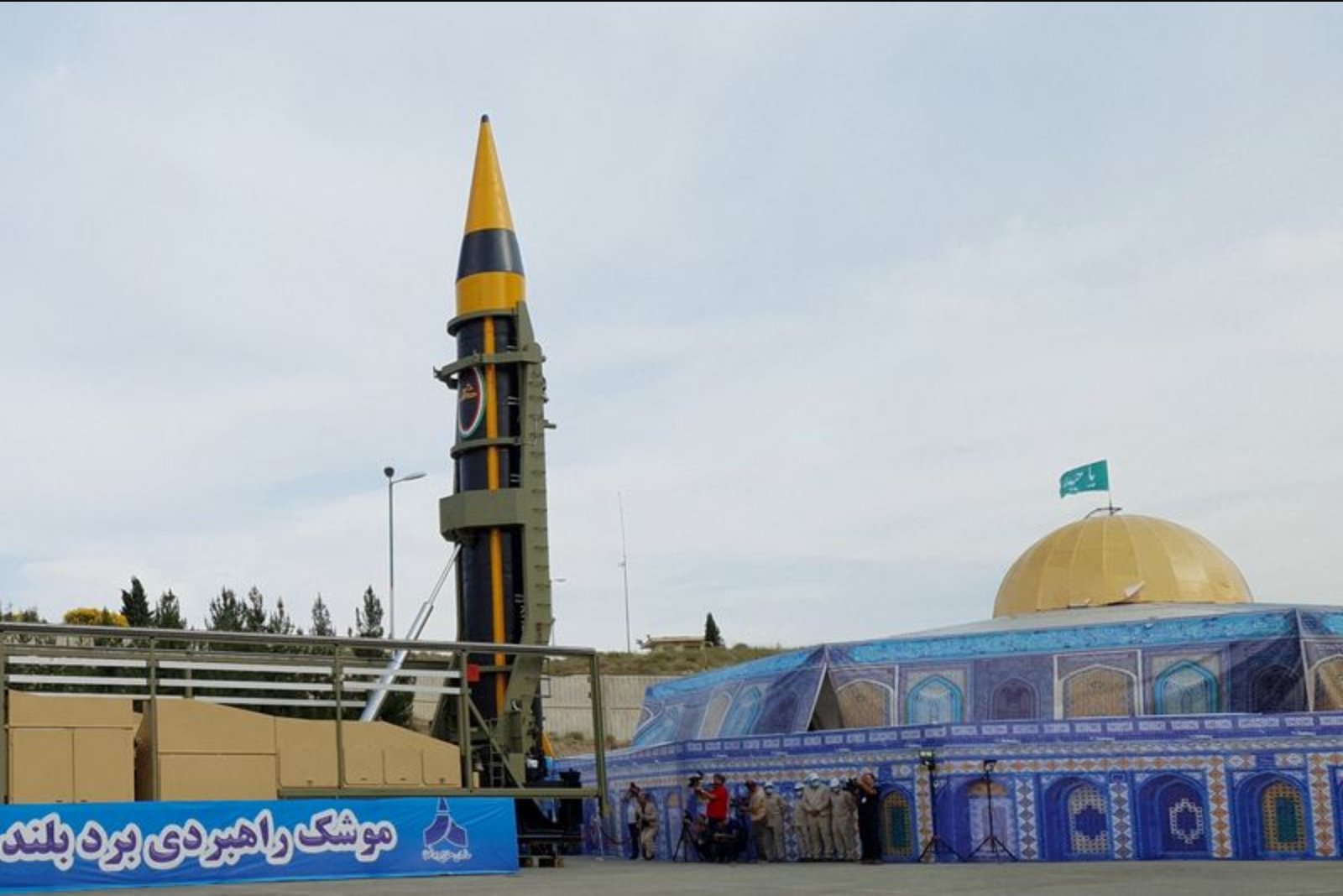
Lead
Iran has long maintained that its ballistic missile force is a non-negotiable element of national defence as talks with the United States resume in Oman. The system is among the most extensive in the Middle East and has been deployed in recent conflicts and demonstrations of capability.
Recent combat use and damage assessment
The most recent notable employment of Iranian ballistic missiles occurred during a 12-day conflict in June 2025 with Israel, when Tehran launched salvoes that struck central and northern parts of Israel, killing dozens and damaging multiple buildings and residential blocks. Post-conflict analysis by the Institute for the Study of War and the AEI Critical Threats Project concluded that Israel "likely destroyed around a third of the Iranian missile launchers" in that engagement. Iranian officials have since asserted that the damage has been repaired and that the nation's missile capabilities are now stronger.
What defines a ballistic missile?
A ballistic missile is a rocket-propelled weapon that is guided during its initial ascent and then follows a largely ballistic - that is, free-fall - trajectory under gravity for most of its flight. It can carry warheads that are conventional or, potentially, biological, chemical or nuclear, to varying distances. Classification rests on range and design, spanning short-range to intercontinental types. Western governments view Iran's ballistic missiles as both a conventional military hazard to regional stability and a potential delivery system for nuclear munitions should Tehran pursue atomic weapons; Tehran denies any intention to build nuclear bombs.
Stockpile size and posture
The U.S. Office of the Director of National Intelligence has assessed that Iran holds the largest stockpile of ballistic missiles in the Middle East. Iranian leaders have indicated they impose an internal range cap of 2,000 km (1,240 miles), which they say suffices to protect the country and covers the distance to Israel. Many of the country's missile facilities are concentrated in and around Tehran, and analysts report at least five known underground "missile cities" located in provinces including Kermanshah and Semnan, as well as in areas near the Gulf.
Missile types and declared ranges
Open-source analyses and Iranian statements list several long-range systems said to be capable of reaching Israel. The Center for Strategic and International Studies identifies the following systems and ranges: Sejil - 2,000 km; Emad - 1,700 km; Ghadr - 2,000 km; Shahab-3 - 1,300 km; Khorramshahr - 2,000 km; Hoveyzeh - 1,350 km.
Semi-official Iranian media published an April 2025 graphic naming nine missiles it said could reach Israel. That graphic listed models including Sejil, which it stated could travel at more than 17,000 km (10,500 miles) per hour with a range of 2,500 km (1,550 miles); the Kheibar, with a range of 2,000 km (1,240 miles); and the Haj Qasem, with a range of 1,400 km (870 miles).
Separately, the Arms Control Association has catalogued Iran's ballistic inventory with ranges for several systems, listing Shahab-1 at an estimated range of 300 km (190 miles); Zolfaghar at 700 km (435 miles); Shahab-3 at 800-1,000 km (500 to 620 miles); Emad-1, described as under development, with a range up to 2,000 km (1,240 miles); and a Sejil model under development with an expected range of 1,500-2,500 km (930 to 1,550 miles).
Strategy, production and technological trends
Iran frames its missile programme as a central deterrent and a retaliatory option against potential adversaries, including the United States and Israel. Research and analysis have pointed to Iranian efforts to expand subterranean missile infrastructure, including depots with transport and firing systems and underground production and storage facilities. Iran reported that in 2020 it fired a ballistic missile from an underground site for the first time.
Analysts note that years of reverse-engineering have enabled Iran to experiment with stretching airframes and applying lighter composite materials, techniques intended to increase missile range. In June 2023, Iranian officials presented what they described as a domestically produced hypersonic ballistic missile. Hypersonic systems travel at least five times the speed of sound and follow complex trajectories that complicate interception.
International assessments have indicated Iran's programme draws heavily on North Korean and Russian designs and has benefited from Chinese assistance, according to analysts cited in open reporting. In addition to ballistic systems, Iran possesses cruise missiles; one example identified in public reporting is the Kh-55, an air-launched weapon described as nuclear-capable with a range up to 3,000 km (1,860 miles).
Operational use beyond Israel
Iran has used ballistic missiles in multiple operations beyond the June 2025 Israel conflict. In response to U.S. participation in the June hostilities, Tehran launched missiles at the U.S. Al Udeid air base in Qatar, providing advance warning and reporting no casualties. Washington announced a ceasefire hours later. In January 2024, Iran's Islamic Revolutionary Guard Corps said it used missiles to strike what it described as Israel's intelligence headquarters in Iraq's semi-autonomous Kurdistan region and said it had also fired on Islamic State positions in Syria. Tehran has also said it struck two bases belonging to a Baloch militant group in Pakistan.
Claims and counterclaims concerning responsibility for past attacks remain part of the record cited in public reporting. Saudi Arabia and the United States have said they believe Iran was behind a 2019 drone and missile strike on Saudi oil facilities; Iran denied those assertions. In 2020 the Islamic Republic launched missiles at U.S.-led forces in Iraq, including at the al-Asad air base, saying those strikes were retaliation for a U.S. drone strike that killed Major General Qassem Soleimani, a senior commander of the Revolutionary Guards.
Conclusion
The information presented in official statements and publicly available analyses portrays a multifaceted Iranian missile programme: large in scale, dispersed across hardened and subterranean sites, and composed of varied systems with ranges that extend to several regional capitals and strategic targets. Iranian officials assert that the force remains a core deterrent and that recent damage has been addressed. Analysts note continuing development aimed at increasing survivability and range, including moves toward hypersonic-capable systems and adaptations in materials and design.
Given the programme's prominence in Iran's defence posture and its repeated operational use, the missile force remains a central element in regional security calculations, and it is explicitly described by Iranian leaders as a red line in diplomatic engagement.