
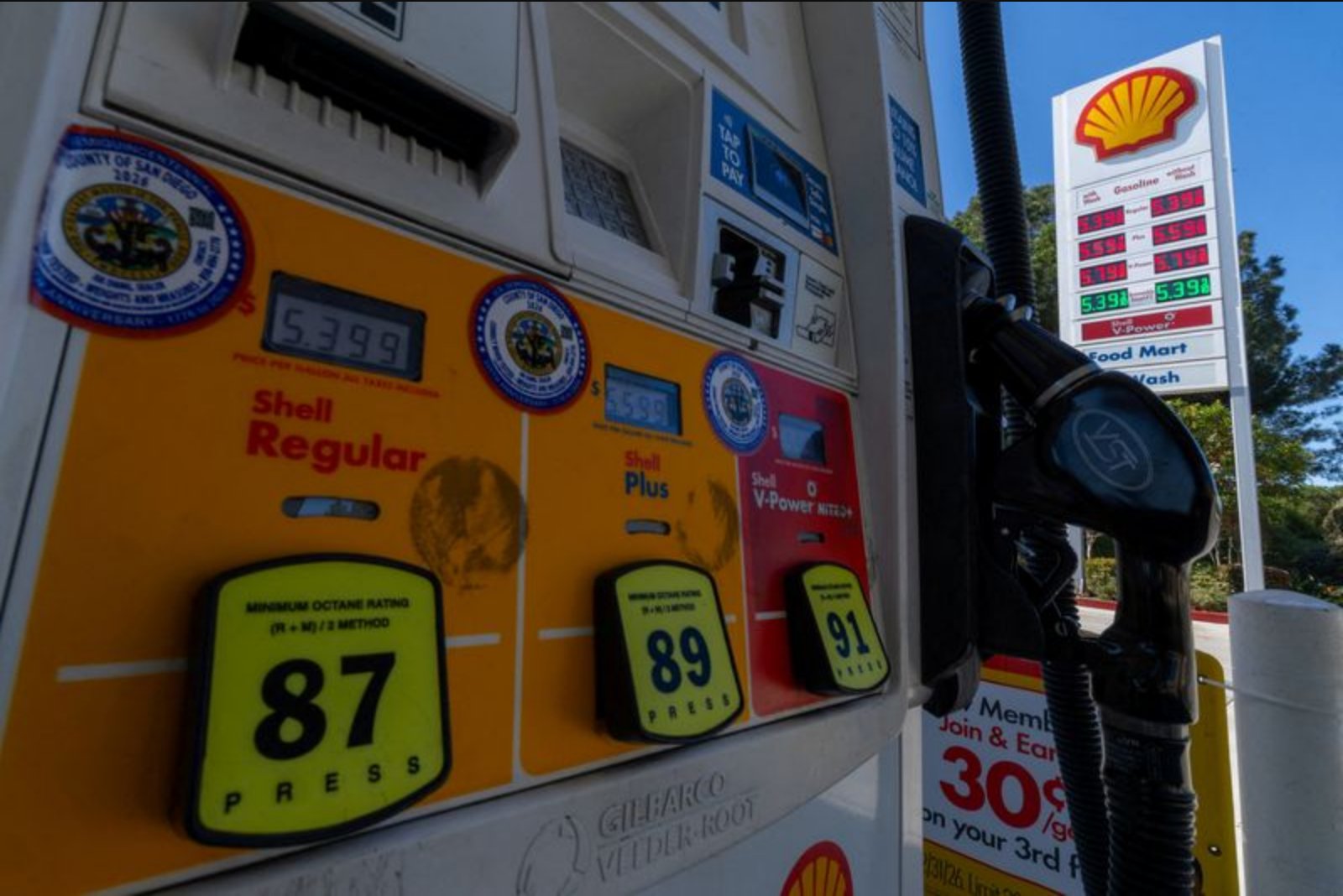
A recent Reuters/Ipsos poll, completed over a four-day period and closing on Monday, reveals that a substantial portion of the American public expects gasoline prices to climb in the months ahead after coordinated military strikes on Iran.
Overall, 67% of respondents said they anticipate U.S. gasoline prices will worsen over the next year. That figure includes 44% of self-identified Republicans and 85% of self-identified Democrats who said they expect gas prices to rise.
The poll also found broad expectations of an extended U.S. military role in Iran. Sixty percent of those surveyed said they believe U.S. military involvement will "go on for an extended period of time." In addition, nearly half of respondents - 49% - said the war in Iran will have a mostly negative impact on their personal finances. That group includes about one-third of Republicans and two-thirds of Democrats. Roughly one in three Republicans said they were uncertain about how the conflict would affect their finances.
The strikes, conducted on February 28, involved coordinated action by U.S. and Israeli forces and resulted in the death of Iran's leader, the poll noted. Public approval of the operation remained low: 29% of Americans approved of the strikes in the latest poll, a modest change from a 27% approval rating recorded in an earlier Reuters/Ipsos survey taken in the hours immediately following the start of the military campaign. Both polls have margins of error of about 3 percentage points.
Respondents voiced skepticism about the clarity of the administration's objectives. Some 64% of those polled said the U.S. president had not clearly explained the goals of American military involvement. That perception crossed party lines, encompassing one in four Republicans and nine in 10 Democrats who said the goals had not been clearly communicated.
The poll also captured shifting economic indicators tied to the strikes. Since the onset of the military campaign, U.S. gasoline prices have risen by roughly 50 cents a gallon. The hostilities have coincided with the deaths of at least seven U.S. soldiers. Energy prices were observed to be rising daily across the United States and internationally during the week preceding the poll, including over the weekend while the survey was in the field.
Analysts cited in the poll's context expect higher fuel prices to persist for weeks or months even if the conflict concludes quickly. Policymakers in Washington are reportedly exploring measures to address surging prices, though U.S. policy options may have limited influence over global oil markets. On Monday, the president told reporters that the military operation in Iran was "ahead of our initial timeline by a lot."
Politically, the poll highlights risks for the president and his party ahead of the November midterm elections. The results underline potential vulnerabilities for Republicans as Democrats aim to win control of at least one chamber of Congress.
The online survey sampled 1,021 adults nationwide. The findings reflect public sentiment during a period of heightened energy price volatility and active military operations.
Additional context from the poll
- 67% of respondents expect gasoline prices to get worse over the next year; breakdown by party: 44% of Republicans, 85% of Democrats.
- 60% expect U.S. military involvement in Iran to extend for an extended period.
- Approval of the strikes stands at 29%, nearly unchanged from 27% recorded immediately after the campaign began; both polls carry margins of error of about 3 percentage points.
- 49% foresee a mostly negative financial impact from the conflict on their personal finances, including one-third of Republicans and two-thirds of Democrats; about one in three Republicans remain unsure of the effect.